The Tamesis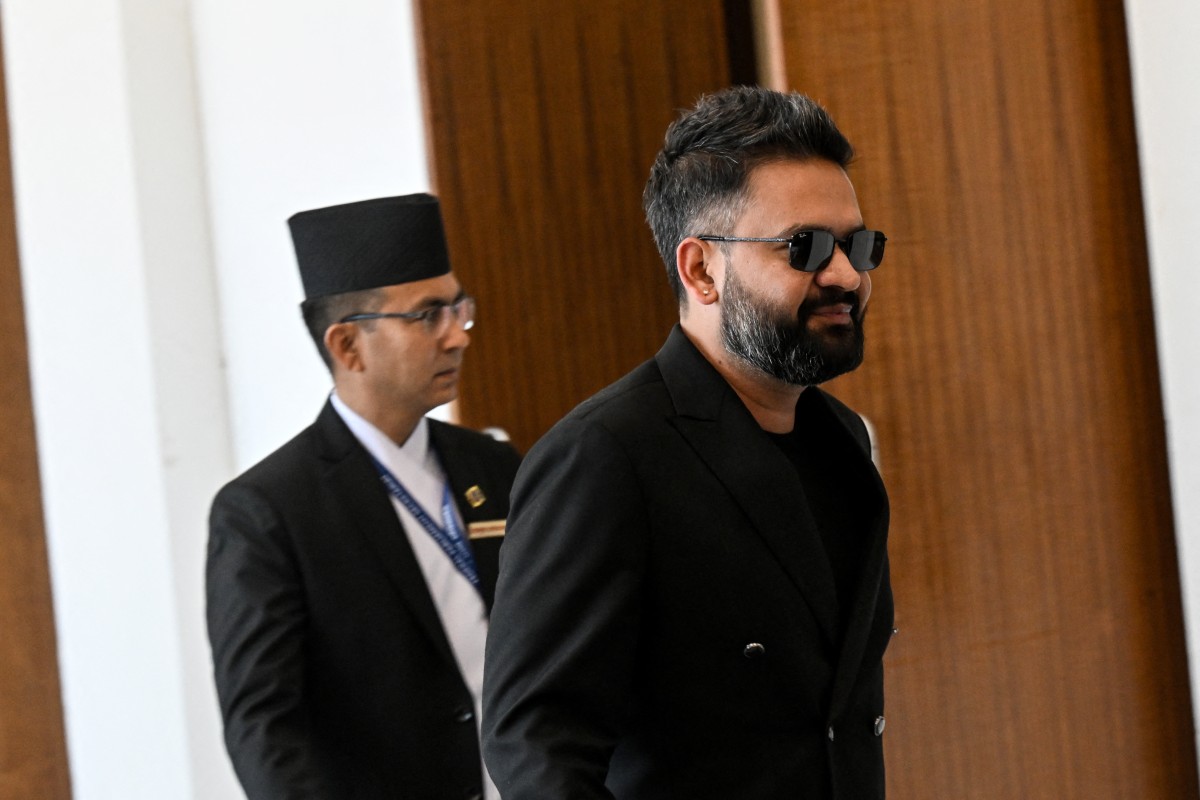
June 3, 2026
kathmandu – Prime Minister Balendra Shah has not once addressed the federal parliament since taking office on March 27, not even during the mandatory weekly question and answer session. Pressure on him to break his silence and hold the Legislature accountable has been growing steadily. Yet when the Shah did so on Sunday, instead of aligning himself with his critics, he unleashed a swarm of stinging bees. Replying to two separate questions in Parliament, Shah first said that efforts were underway with India to resolve the long-running dispute over the territories of Kalapani, Limpiyadhura and Lipulekh. fair enough. But he then added that not only India has invaded Nepal’s territory, but Nepal has also invaded Indian land in many places. He also said that since many of the current border disputes with India stem from the Treaty of Sugauli signed with British India in 1816, his government is trying to involve the UK in border discussions between India and Nepal. There are problems with both of these statements. There is no official record of India raising the issue of “Nepal intrusion”, according to border experts and former senior state officials who have spoken to their Indian counterparts. The Prime Minister’s statement thus enhances India’s leverage in future border negotiations.
Prime Minister Shah is also wrong to want to involve the UK in bilateral issues between Nepal and India. First, India has repeatedly said it will exclude third parties from all its border negotiations — whether with Pakistan, China, Bangladesh or Nepal. India will not take kindly to Nepal’s overtures for UK involvement and any such effort would only spoil the atmosphere for bilateral border talks. The strange thing about both statements is that there was no need for the Prime Minister to speak off the cuff on such a sensitive topic from the podium of a sovereign parliament. Perhaps, as a press release issued by the Ministry of Foreign Affairs late on Sunday put it, Shah’s statement was mainly related to the “encroachment on the Das Gajja area”. [no-man’s land] and ‘cross-border occupation’… As Nepal and India adopted the principle of fixed borders in riverine border areas when delimiting borders, a situation arose where citizens of one country farmed or lived in the territory of the other country. ” In other words, he didn’t mean anything malicious when he spoke.
But when the head of the government speaks on such a sensitive topic that directly affects Nepal’s sovereignty and national interests, such excuses simply do not hold water. Had he used the term “cross-border holdings” instead of “appropriation” there would have been no controversy. These nuances often determine the success or failure of negotiations between countries. Prime Minister Shah also seems unaware (or indifferent) of the sensitivities of Nepal’s nearest neighbours. India is known to dislike third parties mediating bilateral disputes with its neighbours. The executive head of a country that has to maintain a difficult geopolitical balance to preserve its sovereignty cannot speak so lightly when it comes to Nepal’s relations with major powers, especially India. We hope Prime Minister Shah will be more cautious in this regard in the future. But the geopolitical genie unleashed by his Sunday statement will be difficult to coax back into the bottle.