The Tamesis
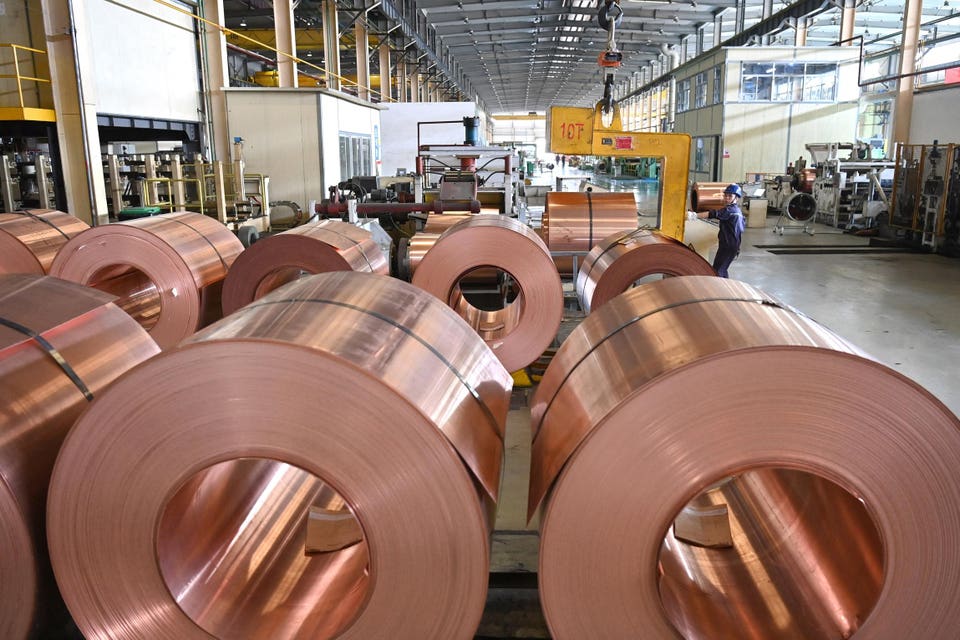
Copper plate coils at a factory in Zhejiang Province, China. (Photo by STR/AFP via Getty Images)
AFP via Getty Images
Inventories have returned as a driver of prices for key metals such as copper and aluminum, preventing sharp falls even as the world slides into recession due to tight oil supplies.
Investment bank Morgan Stanley last week identified the impact of countries rebuilding critical metals inventories as one factor offsetting concerns about traditional industrial demand.
Copper prices rise, not fall
Copper prices have continued to rise over the past four weeks, rising 12% to $6.03 per pound as concerns about a global economic recession have grown amid disruptions in Persian Gulf oil exports.
There are many factors that influence copper prices, including increased mining and processing costs due to high oil prices, but the type of economic downturn that is starting to sweep across the world is often a precursor to lower copper prices, which are sometimes used as an indicator of overall economic activity.
Morgan Stanley said copper benefited from a tight supply-demand balance and “geopolitical risks driving a build-up in strategic inventories.”
The bank said the recent stock builds were worrying investors, but the current stockpile of 1.3 million tonnes “does not appear to be significantly higher than between 2014 and 2019, as stocks are primarily held by exchanges rather than bonded stocks (for trading).”
Copper cathode. Photographer: Oliver Bunic/Bloomberg
© 2025 Bloomberg Financial Limited
What’s happening in the copper market could spread across the metals industry as supply chains face pressure from war in the Middle East and rising transportation costs.
Inventory runs counter to modern economic theory, which is rooted in Japan’s “just-in-time” manufacturing and effectively shifts the cost of holding inventory from consumers to suppliers.
But this practice of buying raw materials only when needed was exposed as a false economy in 2011, when China first imposed a ban on rare earth exports, a Chinese tactic aimed at controlling supplies of the commodity that has resurfaced recently.
Building stockpiles to cushion the country from possible future supply shortages has become official U.S. government policy through its $12 billion “Vault Project,” which aims to build strategic stockpiles of 60 metals and minerals deemed critical to the economy, including rare earths, copper, graphite, titanium and zinc.
Potential suspense for the future
Mining executives have mixed views on the Vault project and the broader move to build strategic inventories, with some welcoming the creation of additional buying support and others concerned about the inventory becoming a future glut that could depress prices.
Randy Smallwood, chairman of Canada’s Wheaton Precious Metals, said free markets work for a reason, which means he’s always worried about intervention.
Duncan Wainblad, chief executive of Anglo American, said mechanisms such as Project Vault could create excesses and distort commodity markets.
Investor concerns that metals prices could fall sharply if the world falls into recession are offset by a return to strategic stockpiles triggered by the Persian Gulf.