The Tamesis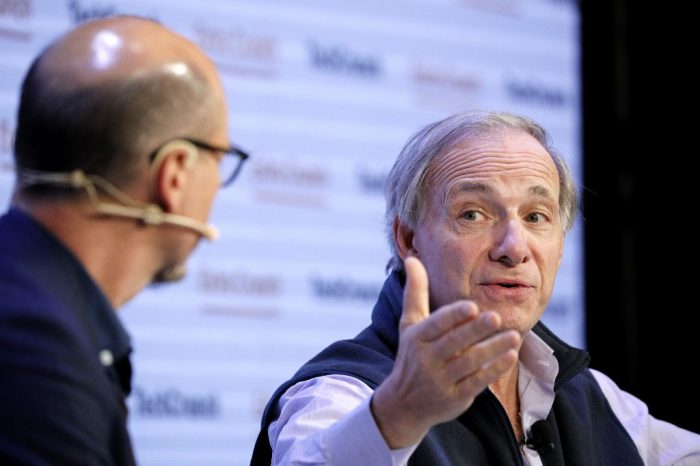
Most Asian markets fell on Thursday after disappointing forecasts from chip giant Broadcom stoked concerns about a boom in artificial intelligence, but developments in the Middle East were slightly more upbeat.
New attacks by Iran and a lack of progress in talks to end the war and reopen the Strait of Hormuz added to the pessimism, but news of a ceasefire between Israel and Lebanon sent oil prices lower.
Stock markets followed Wall Street’s decline, with technology companies – the driver of global share prices surging to record highs in recent years – taking a hit after Broadcom forecast third-quarter chip revenue below expectations.
See also: Nvidia’s Huang urges top wages for workers amid Samsung bonus row
Meanwhile, stronger-than-expected U.S. data fueled speculation that the Federal Reserve may raise interest rates.
Tokyo, Seoul and Jakarta all fell
Asian stocks fell on the heels of losses on Wall Street, also driven by profit-taking, with tech-heavy Tokyo and Seoul, which have led gains this year, among the hardest hit.
Hong Kong, Shanghai, Sydney, Singapore, Mumbai, Wellington and Taipei also posted losses.
The rupiah topped 18,000 per dollar for the first time, with Jakarta plunging more than 3% to its lowest level since 2021 amid worries about the country’s economy.
However, London, Frankfurt and Paris rose.
Dario warning
The U.S. outlook has renewed concerns that companies may be investing too much in artificial intelligence and that valuations are too high.
investment magnate ray Dalio issued a warning on Wednesday Nvidia’s capitalization has exceeded $5 trillion, and the boom may turn into a bubble that will eventually burst.
“All great technological changes create bubbles,” he said in an interview on Bloomberg Television.
“No one gets it exactly right. You either spend a lot of money to capture your market share and not worry about whether it’s too much, or you don’t spend enough and you lose your market share.”
Positive US jobs data
Meanwhile, U.S. data showed that despite rising energy prices, U.S. companies added the most jobs last month since the beginning of last year. This comes ahead of the release of the closely watched non-farm payrolls report this weekend.
Speculation is growing that Friday’s strong data – which will exacerbate a war-induced surge in inflation – could put more pressure on the Federal Reserve to raise interest rates.
“For traders… strong growth is no longer as simple as it once was,” wrote Stephen Innes of SPI Asset Management.
“For much of the past year, markets have been trading as if a rate cut was always just around the corner.
“Instead, the combination of flexible employment, business activity data and rising energy prices is increasingly forcing investors to consider the opposite outcome.
“After months of hand-wringing, traders finally seem to have come to terms with the fact that the Fed’s hawkishness, combined with the backdrop of increasingly hawkish global central banks, looks more like a tightening cycle than a rate-cutting cycle.”
Trump remains optimistic despite Iran attacks
Crisis in the Middle East continues to plague Iran, with Iran’s foreign minister saying “no substantial progress” has been made in talks with the United States to end the war.
Meanwhile, Iran has targeted the main U.S. naval base in the region in Bahrain and Ali Salem Air Base in Kuwait, fueling concerns about the two countries’ fragile truce.
Another attack at a civilian airport in Kuwait killed at least one person, caused severe damage and forced the suspension of flights for several hours.
However, President Donald Trump struck an upbeat tone, telling reporters at the White House: “In fact, I heard the negotiations themselves are going well.
“It could happen over the weekend.”
Nonetheless, Israel and Lebanon agreed on Wednesday to implement a ceasefire “on condition that the Iran-backed militant group Hezbollah completely ceases firing and withdraws its operatives from southern Lebanon.”
The announcement follows US-led talks in Washington, with more talks to be held later this month “to reach a comprehensive agreement”.
Both major crude oil contracts, which have climbed back to $100 this week, were down around 1%.
Key figures around 0810 GMT
North Sea Brent crude oil: fell 0.6% to $97.24 a barrel.
West Texas Intermediate crude oil: fell 0.5% to $95.53 a barrel.
TOKYO – Nikkei 225: down 1.4% to 67,470.69 (close).
Hong Kong – Hang Seng Index: down 1.5% to 25,253.40 (close).
Shanghai – Composite Index: fell 0.6% to 4,057.78 (closed).
LONDON – FTSE 100: up 0.2% to 10,349.87.
USD/JPY: fell from 160.07 yen to 159.90 yen.
NEW YORK – Dow: down 1.2% to 50,687.07 (close).
- AFP Additional editing and input by Jim Pollard
See also:
‘Tokens cost more than employees’: Companies rethink AI spending
Samsung shares rise on UnionPay deal, but legal test looms
Robots may have naked ambitions, but humanoids need clothes too
Nvidia will spend US$150 billion per year on “AI Epicentre” in Taiwan
Chinese young people use artificial intelligence to subsidize the establishment of personal companies
Xiaomi will invest US$9 billion in artificial intelligence to embrace the “new era”
4,000 CEOs say AI has no impact: Study spurs massive sell-off
Researchers say artificial intelligence doesn’t make work easier, it just makes it harder
The idea of artificial intelligence superintelligence is a ‘fantasy’ – US researchers