The Tamesis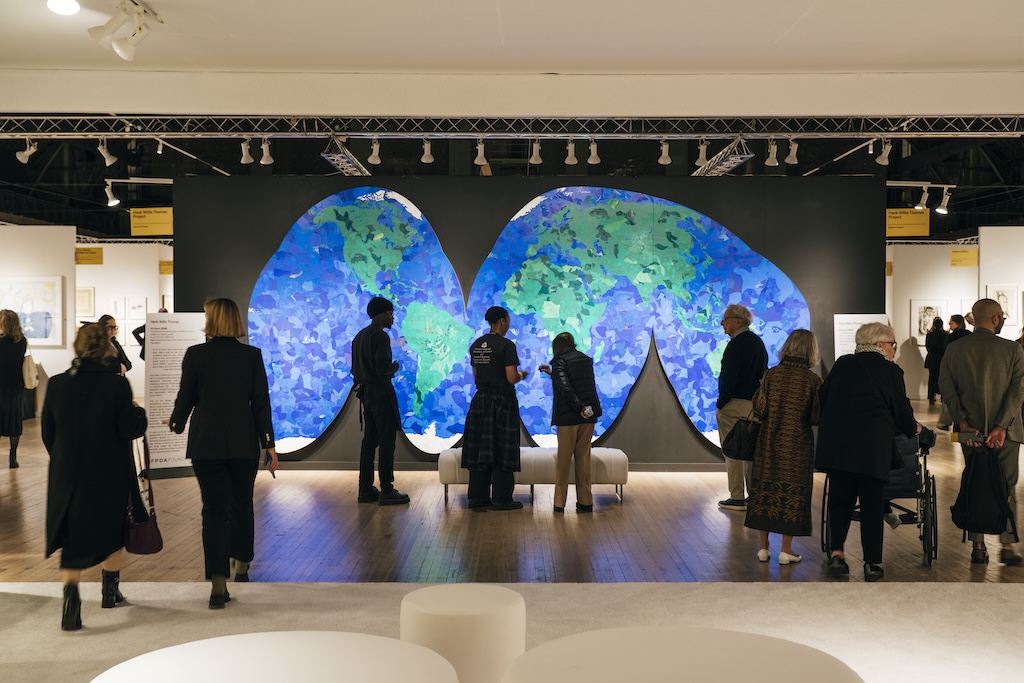
The 2026 annual IFPDA Print Fair concluded on Sunday with record attendance and strong sales, providing a first look at what to expect when print-based fairs begin to overtake them.
This year’s show, held at the Park Avenue Armory, attracted more than 21,000 visitors over four days, including about 5,000 on opening night, and ticket sales were up 20 percent from last year, according to organizers.
What’s more important, though, is not the crowds but the show’s changing identity.
Related articles

After a membership vote last year, the organization officially expanded to include drawing dealers and changed its name to the International Fine Prints and Drawings Society. The shift reflects broader changes in the way collectors and institutions approach works on paper, although the market has been slower to catch up.
On the show floor, the change felt incremental rather than radical. Some dealers prefer this approach, mixing drawings into their booths, while others stick to prints. The result was that the show looked much like it always has – busy, focused and anchored by solid mid-market sales.
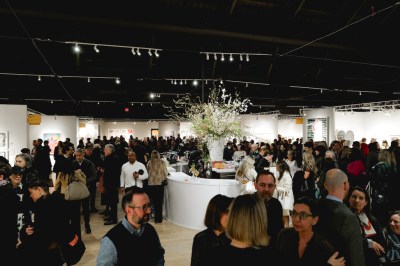
A large group of visitors at the VIP opening ceremony of the IFPDA Print Expo.
Photo Jason Lowrie/IFPDA Print Fair
More than 30 prints and works are on display at the Hauser & Wirth booth, with prices ranging from $5,000 to $250,000. Two Palms, one of New York’s top printers, sold 28 Cecily Brown etchings for $7,500 each. The gallery also features cast-paper works by Mickalene Thomas, which sell for $80,000 each. Elsewhere, dealers reported six-figure sales, including works by David Hockney and Rashid Johnson at Galerie Maximillian, as well as a steady stream of low-priced material.
This pattern sounds familiar. Printmaking has been one of the most resilient areas of the market in recent years, partly because younger buyers and collectors are priced out of paintings and sculptures but are able to purchase prints from blue-chip brands at lower prices. Much of the growth has come from volume rather than trophy prices – many titles are still at a level of development that still feels within reach.
But this part of the market has its own pressures. as the latest UBS Art Market Report points out that rising costs make it more difficult for dealers operating at lower prices to maintain shows – especially in print and photography – where margins are thinner and sales are more important to cover costs. At the same time, the share of prints and multiple works has quietly increased, accounting for about 12% of dealer sales by value, although paper works have declined slightly overall.
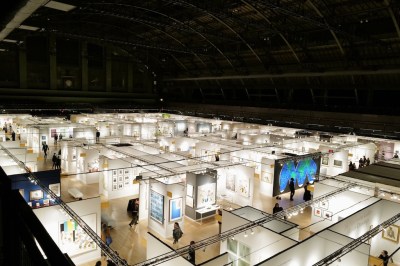
Aerial view of the IFPDA Print Expo at the Park Avenue Armory.
Photo Jason Lowrie/IFPDA Print Fair
You can see this mix in the crowd as well. The fair attracted more than 100 curators to the newly launched Summit and featured a series of events with artists including Julie Mehretu, Hank Willis Thomas and Derrick Adams, as well as an event honoring Christophe Cherix, MoMA’s director since September, and the museum’s former chief curator of paintings and prints.
For IFPDA executive director Jenny Gibbs, the campaign was intentional. “My goal is to be a superhuman print world that brings people together to share knowledge and make connections,” she told art news Via email, indicate the week’s mix of institutional programming and off-site events. “Not coincidentally, the goodwill and excitement surrounding these events translates into very, very strong sales.”
Gibbs added that collectors do not make a clear distinction between prints and paintings. “Collectors and institutions have responded to the material holistically, often moving fluidly between editions and unique works on paper, which is very consistent with the way the field is evolving,” she said.
Whether this shift will meaningfully reshape the show remains an open question. For now, early returns suggest continuity over transformation: the show remains rooted in the part of the market where most of its activity currently takes place, even as that part becomes increasingly difficult to sustain.