The Tamesis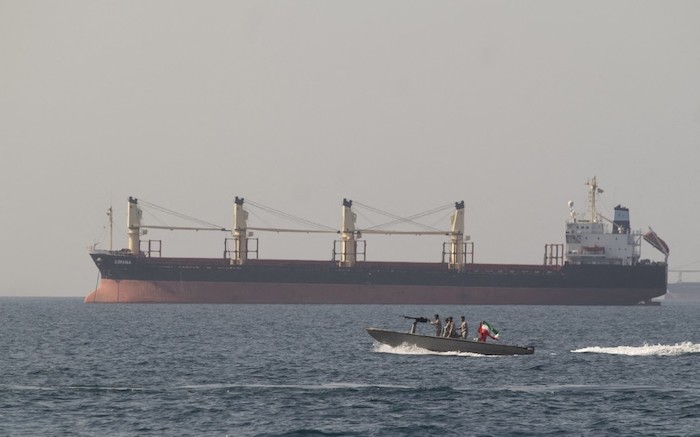
Investors are betting – and large numbers of people across Asia hope – that peace talks between the United States and Iran will resume in Pakistan on Wednesday.
Oil prices fell on Tuesday and stocks rose in Asia on hopes of a deal to end wars in the Middle East and reopen the Strait of Hormuz to oil and gas shipments, despite uncertainty and some provocative comments from Tehran.
Washington expresses confidence in restarting talks in Islamabad, while Reuters According to the report, sources in Pakistan and Tehran said that Iran “viewed positively” the second round of negotiations, despite Iran’s threat not to participate in the second round of negotiations. The U.S. Navy seized a ship on Monday Travel to Iranian port.
See also: China’s top streaming site criticized for ‘database’ of AI actors
U.S. sources said Vice President Vance will fly back to Pakistan on Tuesday, while wall street journal It said Iran had told regional mediators that it would also send a delegation tonight (April 21).
North Sea Brent crude fell about 1% on the news as a two-week ceasefire was set to expire on Wednesday, while Asian and European markets were higher.
“Investors are reluctant to consider the worst-case scenarios of the conflict in the Middle East, while markets are optimistic that the US/Iran ceasefire will be extended,” Kathleen Brooks, research director at trade group XTB, told AFP.
However, Iran’s position remains uncertain, accusing Washington of violating the two countries’ fragile truce by blocking the country’s ports and seizing a ship.
U.S. President Donald Trump similarly accused Tehran of violating the ceasefire by harassing ships in the Strait of Hormuz. The Strait of Hormuz is the transit passage for about one-fifth of the world’s oil.
Military officials told the New York Times that the U.S. Navy Defeat 27 ships attempts to enter or leave Iranian ports since the blockade of the Strait of Hormuz began last week.
They included a six-hour standoff and the strafing of the MV Touska, an Iranian-flagged ship that was subject to Treasury Department sanctions due to a history of illegal activity. Reuters It was said to be suspected of carrying civilian and military cargo.
Iranians don’t want to appear weak
at the same time, CNN reports Earlier today, the United States and Iran appeared to be on the verge of reaching a deal to end their seven-week war earlier this month, until President Trump began posting about the talks on social media, purportedly revealing details that had yet to be finalized.
“The Iranians don’t like it when the U.S. president negotiates through social media and makes it look like they’ve signed off on issues they haven’t agreed to and issues that are unpopular with people at home,” a person familiar with the matter told CNN, adding that the Iranians were particularly worried about looking weak.
If the report is true — and Trump is likely to call it “fake news” — it suggests that reaching a lasting solution acceptable to both sides may be tricky. Getting Iran to agree to a deal may be just one of the difficulties facing U.S. negotiators.
But despite the uncertainty, analysts said investors on Tuesday seemed largely optimistic that the two sides would eventually reach a deal to reopen the strategic strait.
“Oil prices remain below $100 a barrel, which suggests there is cautious optimism that conflict in the Middle East will not intensify,” said Russ Mould, investment director at AJ Bell.
“However, the longer oil prices stay in the 90s (dollar per barrel) range … the greater the potential for inflationary shocks and volatility in global economic activity,” he said.
Asian markets rise
Seoul led Asian gains, rising 2.7% to hit a record high, as technology stocks rebounded and the Kospi hit multiple pre-war records.
Tokyo (0.9%), Mumbai (0.96%) and Taipei also rose sharply, as did Hong Kong (0.5%), Shanghai and Singapore.
Investors are also watching the confirmation hearings for Kevin Warsh, Trump’s choice to lead the Federal Reserve.
His testimony could shed light on the direction of U.S. interest rates in the coming months as the world’s largest economy faces inflation risks and growth headwinds.
But at the same time, first-quarter profits for dozens of companies significantly beat expectations, bolstering investor optimism that a war in the Middle East would not disrupt tech-led economic growth.
In Japan, defense companies saw healthy buying after Tokyo said it would relax decades-old export rules, paving the way for the sale of lethal weapons overseas.
Key figures around GMT 1100
North Sea Brent crude oil: fell 0.9% to $94.59 a barrel.
West Texas Intermediate crude oil: fell 1.1% to $88.60 a barrel.
TOKYO – Nikkei 225: up 0.9% to 59,349.17 (close).
Hong Kong’s Hang Seng Index: rose 0.5% to 26,487.48 (close).
Shanghai – Composite Index: up 0.1% to 4,085.08 (close).
NEW YORK – Dow Jones: unchanged at 49,442.56 (close).
USD/JPY: rose from 158.88 yen to 159.19 yen.
See also:
Peace talks hit by US seizure of Iranian cargo ship
Hopes for peace in Iran rise, Tokyo’s Nikkei hits record high
Iran war also chokes trade with Middle Eastern importers
China slams port blockade, calls for intensified US-Iran talks
Vance flies away after talks with Iran fail, Saudi Arabia restores pipeline
Iran ceasefire has little impact on damaged Hormuz ships
Energy crisis triggered by Iran war fuels renewable energy boom, IEA says
Asian fuel importers eye Saudi ports amid uncertainty over Strait of Hormuz
Asia ‘worst hit by energy crisis’ due to Iran war
India’s demand for wood, coal poor as gas prices soar due to Iran war
War with Iran could hit some of Asia’s biggest economies hard
Iran war sends gas prices soaring, Asia ramps up coal power generation