The Tamesis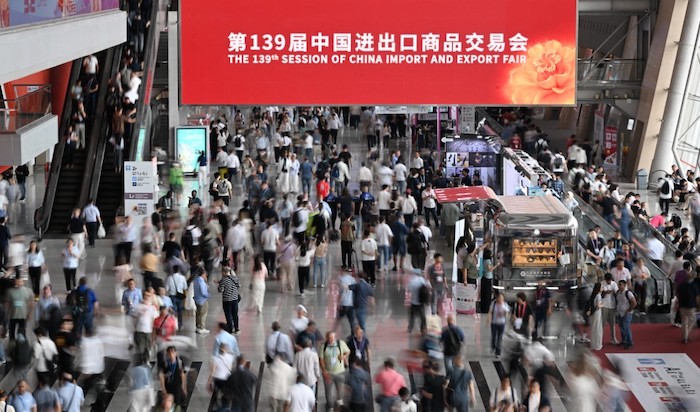
The war waged by the United States and Israel against Iran does more than hinder the transit of tankers supplying oil and gas to countries across Asia.
It has also disrupted trade with countries in the Middle East and other parts of the world by intercepting ships carrying tons of fertilizer and large amounts of other cargo traveling to and from many business partners.
That was evident when AFP reporters spoke to Chinese exporters and buyers from the Middle East on Wednesday on the opening day of the Canton Fair, one of the world’s largest trade shows.
See also: China slams port blockade as calls for more US-Iran talks grow
The mood was pessimistic as the war reduced orders and caused prices to rise.
Suppliers and buyers at a trade show in southern China were wary as they weighed the rising costs of ice cream machines, household appliances and cars since the war began.
The show provides foreign buyers with the opportunity to meet face-to-face with Chinese manufacturers, evaluate their products up close, establish new supply agreements and consolidate old contacts.
“We are afraid to place an order”
But standing next to a row of fryers and ovens, Li Jin, a kitchenware company sales manager, told AFP that some Middle Eastern customers were “scared to place orders” while shipments from other regions had yet to arrive.
Since the United States and Israel launched attacks on Iran on February 28, Tehran has effectively closed the vital waterway, and many cargo ships that normally pass through the Strait of Hormuz to the Middle East have been stranded.
Washington announces blockade of Iranian ports Hopes that the trade route was about to reopen were dashed on Sunday after peace talks with Tehran failed.
Li said new orders from customers in the Middle East, where his company typically exports 20% to 30% of its products, have dried up.
“If there was no war, we would have a steady stream of new orders coming in,” Li said.
Rising raw material costs also prompted the company to raise prices to make up for lower profit margins, she added.
“Wait and see mode”
Zora Wang, a sales manager at a factory machinery sales company, said customers are still in a “wait-and-see” mode.
“Although they sent out inquiries, the actual purchase intention in the short term is not strong,” Wang told AFP.
But Wang said many of her clients work with freight forwarders (third-party logistics and shipping agents) to use other shipping channels or overland routes to ensure goods can still reach the Middle East.
Ahmed Alibasha, the Syrian general manager of a Chinese trading company, said customers in the Middle East “don’t want to order now” and purchases from the region have plummeted by more than 50% since the conflict began.
“We prefer calm, quiet and security because more security means more business,” Ali Basha told AFP. He hoped that if the war ends, business will pick up.
More peace is coming
U.S. President Donald Trump told the New York Post on Tuesday that a new round of talks with Tehran could take place in Pakistan “in the next two days” while a fragile ceasefire between Washington and Tehran remains in place.
Meanwhile, Chinese car exporters in a fashion showroom told AFP that the conflict had caused them to shift business to other regions, including South America and Africa.
This year’s Canton Fair, held twice a year in Guangdong province, China’s manufacturing hub, saw a record number of exhibitors with 32,000 products, state media said on Wednesday.
Buyers, including from the Middle East, flocked to the massive exhibition center in search of new suppliers.
Saudi Arabian business owner Abdallah Mebarkia scours his vast halls for televisions, washing machines and household appliances to sell to dealers in his country.
Container prices double
He told AFP that the war in the Middle East had had a “serious impact” on his business, adding that his shipping costs were now up between 50 and 70 percent, which was a big “headache”.
Shipping prices have risen as ships remain in the bay for fear of being attacked after setting sail, while others take long and costly alternative routes to avoid the Strait of Hormuz.
About a fifth of the world’s oil and gas normally passes through the strait, and its closure has pushed up the price of transportation fuels.
Mebakia said the Hormuz blockade had also caused “significant delays” and some of his cargo remained stuck in key waterways.
Jordanian business owner Asad Mohammad Abbas Asaad, who was inspecting beverage machines and mixers at a supplier’s booth, lamented the higher shipping costs, which have doubled the import price of these goods.
Buyers at the Canton Fair expressed hope that the war would end soon, reducing trade turmoil and wider instability in the region.
“We always want peace,” Assad said.
- AFP By Jim Pollard Additional editing
See also:
Vance flies away after talks with Iran fail, Saudi Arabia restores pipeline
Iran ceasefire has little impact on damaged Hormuz ships
Energy crisis triggered by Iran war fuels renewable energy boom, IEA says
Asian fuel importers eye Saudi ports amid uncertainty over Strait of Hormuz
Asia ‘worst hit by energy crisis’ due to Iran war
India’s demand for wood, coal poor as gas prices soar due to Iran war
War with Iran could hit some of Asia’s biggest economies hard
India races to secure supplies as new attacks threaten ‘energy war’
Iran war sends gas prices soaring, Asia ramps up coal power generation
Iran war trumps sanctions, Indian refiners snap up Russian oil
Iran threatens to ‘destroy world economy’ as more ships attacked