The Tamesis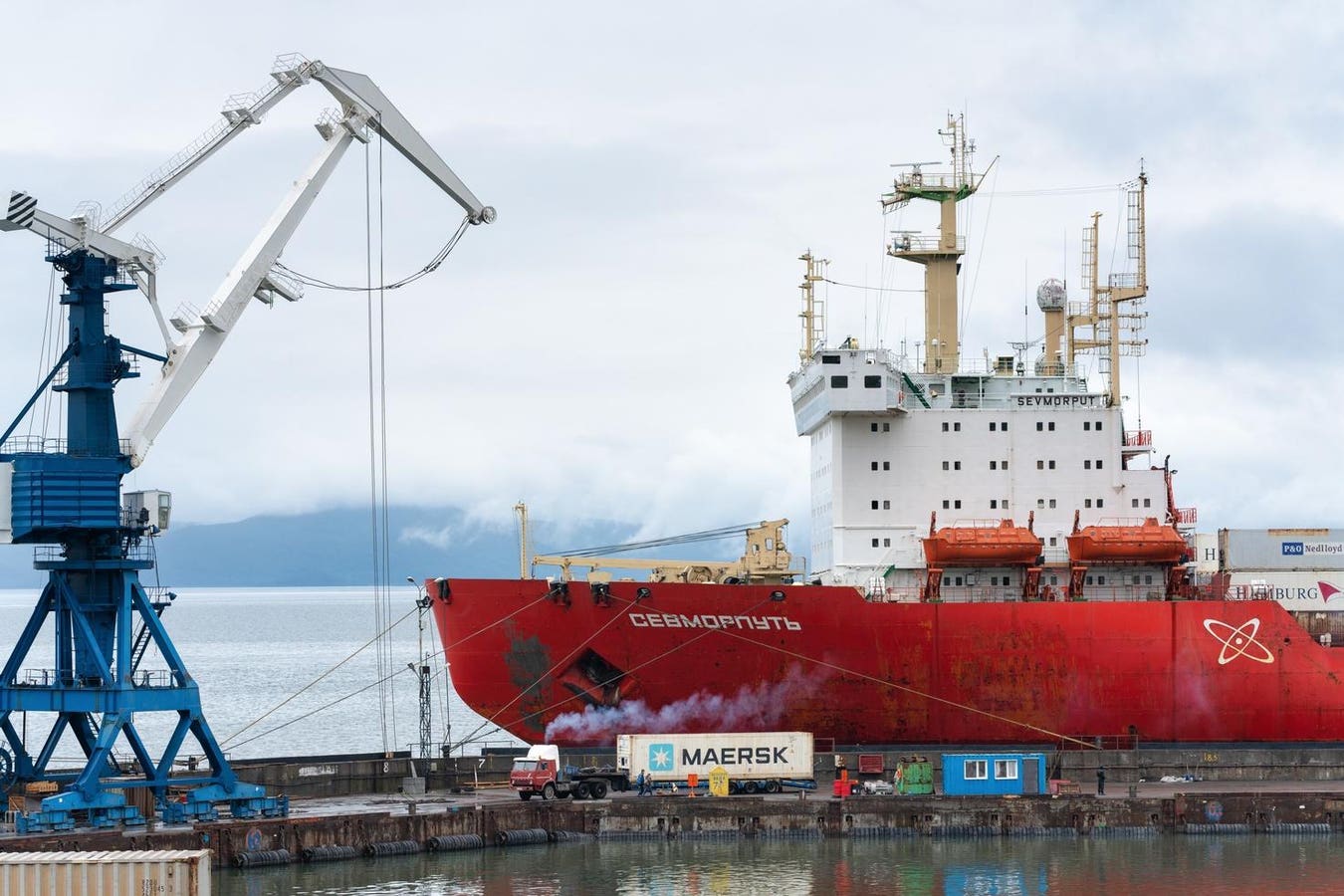
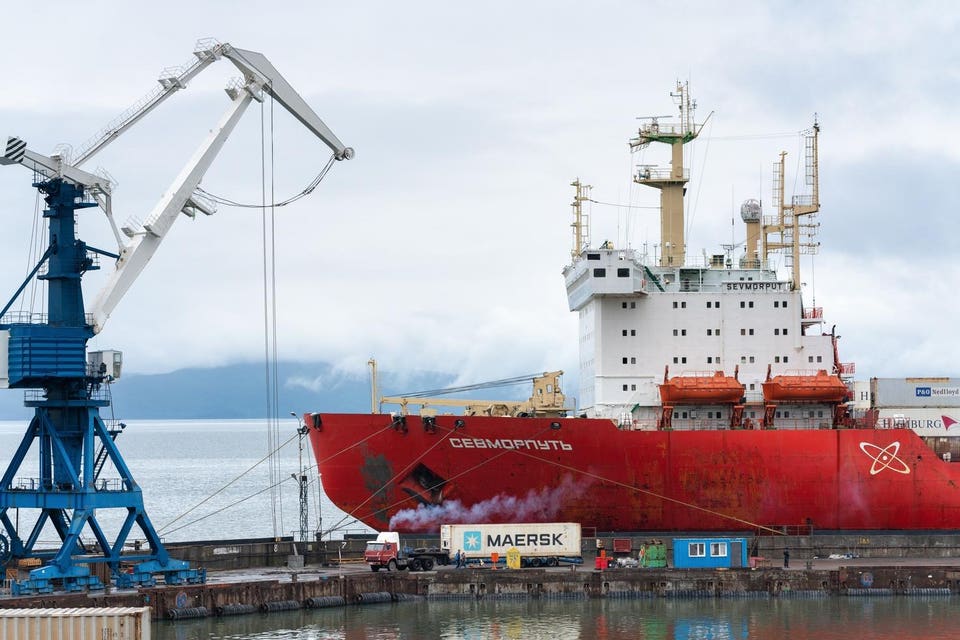
Sevmorput – nuclear container ship of the Russian company FSUE Atomflot. Container terminal commercial seaport. Russian Far East Kamchatka Peninsula Pacific Northern Sea Route – August 26, 2019
Getty
Iran still claims sovereignty over the Strait of Hormuz despite a U.S. blockade and weeks of negotiations. Russia and China are watching eagerly. Before the U.S. blockade began, Iran gave Russian and Chinese ships priority passage through the strait, although it charged some ships a $2 million toll and blocked others from entering entirely. To protect their interests, Russia and China in April vetoed a U.N. Security Council resolution to reopen the strait. But the veto is not just about Hormuz: Moscow and Beijing have bigger goals 5,000 miles to the north. Granting Iran sovereignty over the Strait of Hormuz would open the door for Russia to assert its claim to the most important sea lane you’ve probably never heard of: the Northern Sea Route. Allowing Russia to control the Northern Sea Route would threaten U.S. national security interests, global commerce, and global freedom of navigation.
The Northern Sea Route runs through the Arctic, connecting the Bering Strait to the east and the Barents Sea to the west. The river remains impassable for much of the year, but melting ice has made it increasingly navigable, linking Asian goods to European markets. Shippers are looking to the Northern Sea Route as an alternative to the dangerous Suez Canal route. The journey is shortened by about 5,600 kilometers, saving 10 to 15 days. The Northern Sea Route is shallower than the Suez River, which means not all large cargo ships can use it. However, it could provide a new home for the undersea cables that carry much of modern digital commerce. These cables can be laid seasonally by small ships, making the Northern Sea Route important for economic development.
How Russia controls access to the Northern Sea Route through the Arctic
Russia is using the law to assert control of the Northern Sea Route: deliberately misusing the law to achieve strategic or military interests. Moscow has illegally interpreted the United Nations Convention on the Law of the Sea and claimed much of the Northern Sea Route as its internal sovereign waters. Russia has enshrined these claims into its domestic law, providing the legal basis for it to make any unauthorized foreign passage illegal.
Like Iran in the Strait of Hormuz, Russia already imposes illegal tolls and other restrictions on ships passing through the Northern Sea Route. Ships passing through the waterway must pay Russian tariffs and comply with strict pollution rules and strict insurance requirements. Russia also forces foreign private ships in the Northern Sea Route to use Russian ice pilots and icebreaker escorts. Russia therefore effectively determines which ships use the Northern Sea Route. Russia’s 2022 “Warships Law” also requires foreign warships to notify 90 days in advance when passing through the channel, only one warship can pass through the route at a time, and requires submarines to surface. The law clearly violates the United Nations Convention on the Law of the Sea. The Warships Law also means that any warship sailing on the Northern Sea Route without Russian permission will violate Russian domestic law. Therefore, any foreign warship passing through the Northern Sea Route faces the risk of a violent conflict with Russia.
How China supports Russia’s illegal claims to the Northern Sea Route through the Arctic
China supports Russia’s illegal maritime claims. Beijing and Moscow are increasingly moving together to expand their military presence in the Arctic. In September 2024, Chinese icebreakers successfully passed through the Northern Sea Route. In 2025, Russia announced that it was training Chinese sailors to operate in polar conditions, and Moscow and Beijing agreed to cooperate on the Polar Silk Road project. In addition to demonstrating military cooperation against the United States, China’s support for Russia’s Northern Sea Route claim is in return for preferential use of the route and the sanctioned oil and liquefied natural gas it carries.
China is likely to continue to support Russia’s strategic goals in the Arctic. Beijing needs the Northern Sea Route to evade sanctions and boost its energy security. In return, it provides Moscow with diplomatic cover, economic investment in Northern Sea Route infrastructure and increased military support. Given the potential for laying undersea cables in the Northern Sea Route, Russia’s control of the waterway also supports China and Russia’s desire for cyber sovereignty – threatening a free and open internet.
Why the Strait of Hormuz is crucial for Russia to control the Northern Sea lanes through the Arctic
Granting Iran sovereignty over the Strait of Hormuz would embolden Russia in the Arctic. Iran has accomplished in a matter of months what Russia has tried to do in the Northern Sea Route for years. Iran has declared control of the strait, deciding which ships pass through, imposing strict tariffs and regulations and allowing partner countries priority access. Thanks to the example of Iran, Russia knows that if it flexes its military muscles to reinforce its claims to the Northern Sea Route, it will have strong leverage in negotiations with the United States and Europe. Russia’s veto on the Security Council, combined with China’s, ensures that the Security Council will never authorize the use of force to thwart its Arctic ambitions.
The United States should continue its efforts to promote global freedom of navigation by protesting Russia’s claims to the Northern Sea Route. Washington has been protesting diplomatically against Moscow’s claims since 1963, a necessary step to ensure that Russia’s claims do not materialize under international law. Increased diplomatic efforts and coordination with NATO allies will put more pressure on Russia. The United States could also promote international navigation standards through the International Maritime Organization to prevent Russia’s domestic regulations from becoming de facto global rules. This coordination must occur before the increasing commercial value of routes creates competitive incentives. U.S. preparations for freedom of navigation operations through the Northern Sea Route will further pressure Moscow and demonstrate that the United States is serious about keeping Arctic waters free and open.
The whole world is paying attention to the Strait of Hormuz. Moscow is also looking north. Ensuring that Iran has no legal or de facto sovereignty over the Strait of Hormuz would set an important precedent for the Northern Sea Route and other global chokepoints. To avoid a crisis on NATO’s northern flank, the United States and its allies must step up their challenge to Russia’s claims to the Northern Sea Route before the ice melts.