The Tamesis
There is speculation that the United States will hold further talks with Iran on ending the war in the Middle East despite President Donald Trump’s blockade of Iranian ports.
Trump’s move on Monday drew a flurry of criticism from allies and foes, who said it risked exacerbating an oil crisis that has devastated economies around the world.
China on Tuesday accused the United States of “dangerous and irresponsible” behavior over the port blockade, with President Xi Jinping saying Beijing would play a “constructive role” in promoting peace in the Middle East.
See also: Oil prices rise on fears US blockade of Iranian ports will extend war
But sources revealed Reuters Tuesday U.S. and Iranian officials are likely to return to Islamabad this week to resume talks to end the war after a breakdown in talks over the weekend led Washington to impose a blockade on Iranian ports.
An official from the Iranian Embassy in Pakistan said the next round of talks between the two sides may be held this week or early next week.
Tehran effectively closed the crucial Strait of Hormuz for much of March, allowing passage only to ships serving countries it considers friendly.
but after Talks between the two sides failed on SundayTrump has since threatened to sink ships entering and leaving Iranian ports and the Gulf coast.
Initially, this raised concerns that the ceasefire would be broken and the conflict would continue. But that changed after 1400 GMT on Monday, when port blockade Take effect.
Later, Trump said Iran has made contacts and is “very keen” to reach a deal.
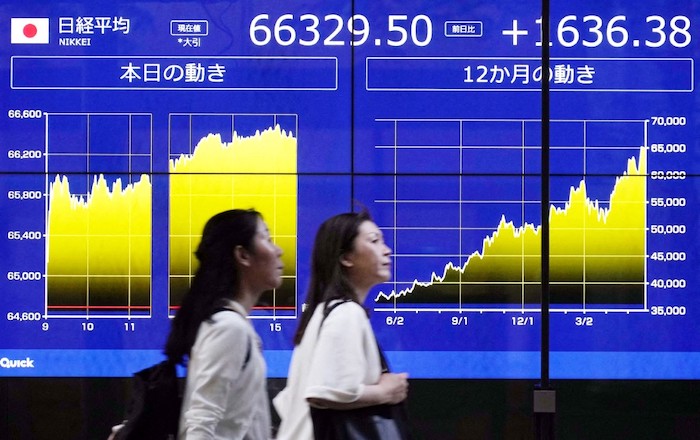
That sent oil prices down to mid-$90 a barrel on Tuesday, with some Asian markets rebounding in afternoon trading.
China’s exports take a hit
Meanwhile, China has been watching developments closely – and is eager to calm the shockwaves in the global economy.
“The United States’ increased military deployment and targeted blockade actions will only intensify tensions, undermine the already fragile ceasefire agreement, and further endanger the security of passage in the Strait of Hormuz,” Chinese Foreign Ministry spokesman Guo Jiakun said at a press conference.
“This is dangerous and irresponsible behavior,” he added.
Despite its vast oil reserves, data released on Tuesday showed China has taken severe economic blow Export growth in March has dropped to 2.5%, a sharp decline from the 21.8% growth in January and February.
That’s because the war has rocked global energy and transportation systems and eroded the purchasing power of consumers in China’s main export markets. Shipments of steel, aluminum and low-value goods have been hardest hit.
However, exports of electric vehicles, solar and wind green technologies, and semiconductors remain resilient as they offer alternatives to fossil fuels or benefit from the boom in artificial intelligence and data centers.
this international energy agency There was also a warning on Tuesday that crude demand could see its biggest drop in the second quarter since the Covid-19 pandemic devastated the global economy in 2020.
The International Energy Agency said in an April report that the oil price surge caused by the Gulf War would force many countries and industries to limit oil use, and “as scarcity and price increases continue, demand destruction will spread.”
The European Commission also warned that the continent may face aviation fuel supply problems “in the near future”, especially if the war with Iran continues.
Xi Jinping meets with Prince of Abu Dhabi
Analysts say Trump’s blockade is aimed at starving Iran of cash and pressuring Beijing, Iran’s oil biggest buyer, to force Tehran to open the strait, through which a fifth of the world’s oil flows in peacetime.
Tehran’s ambassador to the United Nations called Trump’s blockade a “serious violation” of Iran’s sovereignty.
On Tuesday, Xi Jinping spoke publicly about the war for the first time, echoing those warnings by calling for the national sovereignty of Middle East and Gulf states to be “respected.”
Xi Jinping delivered a speech when he met with Sheikh Khalid bin Mohammed bin Zayed Al Nahyan, Prince of Abu Dhabi, in Beijing. He vowed that China would continue to play a “constructive role” in promoting peace talks.
China also took a firm stance on Tuesday against Trump’s threat to impose new tariffs on Chinese products entering the United States following reports that Beijing was supplying or intending to supply weapons to Iran.
Trump, who is scheduled to visit Beijing next month for talks with Xi Jinping, said on Sunday he would impose a 50% tariff on Chinese goods if China provides military aid to Tehran.
But Chinese Foreign Ministry spokesman Guo Wengui said the reports were “completely fabricated.”
“If the U.S. insists on using this as an excuse to impose additional tariffs on China, China will definitely take resolute countermeasures,” Guo said.
Leaders from various countries gathered in Beijing
China welcomes a series of leaders from countries affected by war in the Middle East to visit Beijing this week, Agence France-Presse reported on Tuesday.
Vietnamese Foreign Minister To Lam and Russian Foreign Minister Sergei Lavrov also arrived in the Chinese capital on Tuesday, hoping to strengthen cooperation on conflicts and bilateral issues.
Russia’s Foreign Ministry said Lavrov and China’s top diplomat Wang Yi would discuss the situation in the Middle East during the meeting, after the two sides agreed to work together to de-escalate tensions during a phone call this month.
Spanish Prime Minister Pedro Sanchez will also visit Beijing this week, a visit that will focus on bilateral trade relations.
Sanchez told reporters on Tuesday that China could play an “important role” in the Middle East, while Xi Jinping warned against a return to the “law of the jungle” in international relations, state media reported.
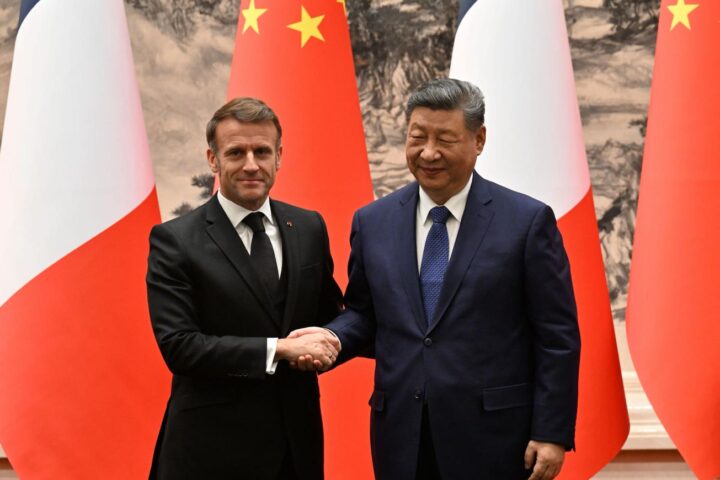
Xi Jinping said during the meeting at the Great Hall of the People in Beijing: “China and Spain are both principled countries that emphasize justice. The two sides should strengthen communication, consolidate mutual trust, cooperate closely, and jointly oppose the world’s regression to the law of the jungle.”
- Jim Pollard and AFP
See also:
Vance flies away after talks with Iran fail, Saudi Arabia restores pipeline
Iran ceasefire has little impact on damaged Hormuz ships
Energy crisis triggered by Iran war fuels renewable energy boom, IEA says
Asian fuel importers eye Saudi ports amid uncertainty in Strait of Hormuz
Asia ‘worst hit by energy crisis’ due to Iran war
India’s demand for wood, coal poor as gas prices soar due to Iran war
War with Iran could hit some of Asia’s biggest economies hard
India races to secure supplies as new attacks threaten ‘energy war’
Iran war sends gas prices soaring, Asia ramps up coal power generation
Iran war trumps sanctions, Indian refiners snap up Russian oil
Iran threatens to ‘destroy world economy’ as more ships attacked