The Tamesis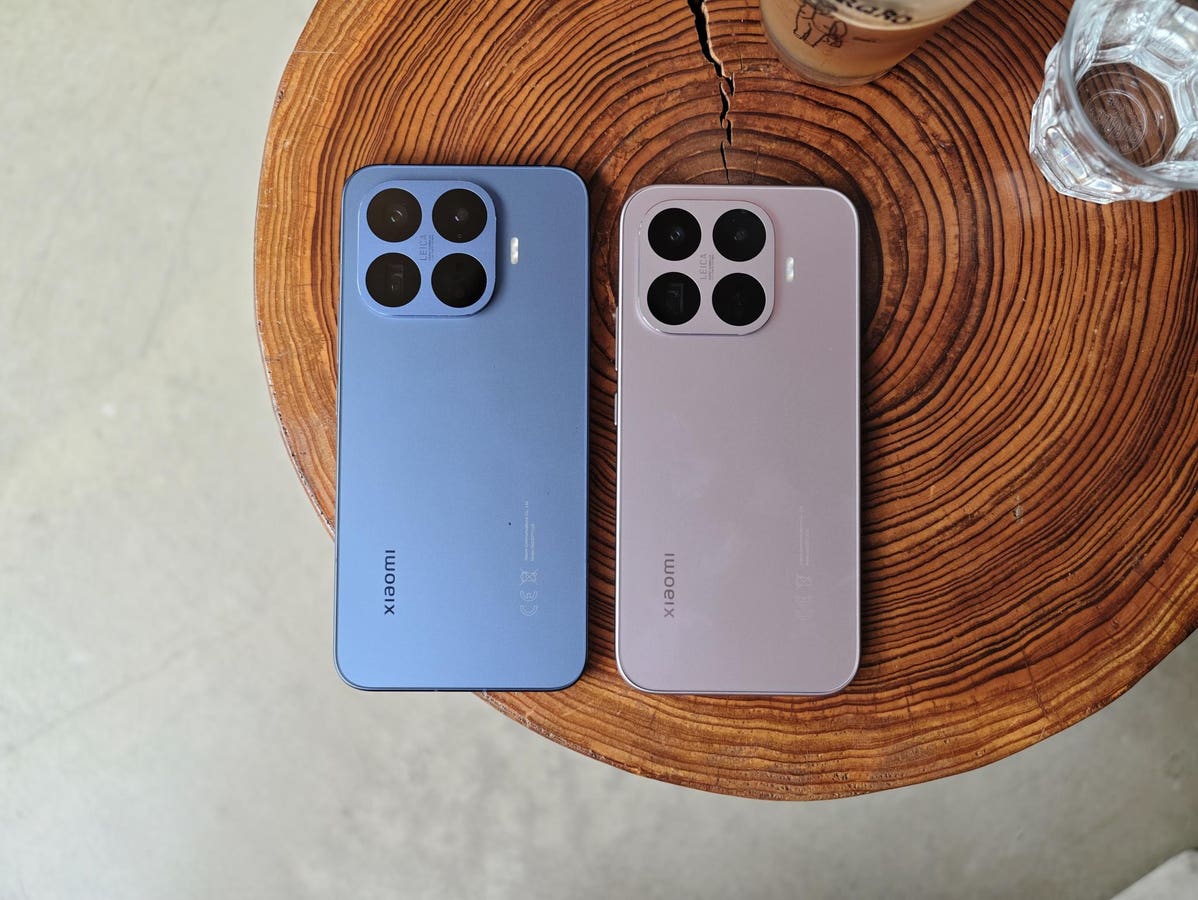
Xiaomi 17T Pro (left) and Xiaomi 17T (right)
This crime
Xiaomi’s latest phones, the 17T and 17T Pro, are now available, just eight months after the last iteration of the T series. Xiaomi officials stated that the early launch is due to the progress Xiaomi and Leica have made in their ongoing imaging cooperation. Personally, I wonder if this has something to do with the ongoing RAM shortage, which is said to throw the mobile market into disarray later on, or if Xiaomi is just trying to get out of the shadow of the iPhone, which in previous years has been available around the same week as the T-series launch.
Xiaomi’s T series, which ranks third among its phone lineup (behind the Ultra and Standard series), generally offers the best overall value for consumers outside of China, as Xiaomi phones are often significantly more expensive in Europe (and places like Singapore) than in their home country due to import duties and third-party carrier fees.
Xiaomi 17T and 17T Pro
Both phones share a similar unibody aluminum design and feature a flat display. The Pro has a larger 6.8-inch OLED panel with a refresh rate of up to 144Hz, while the smaller non-Pro has a 6.6-inch OLED display with a refresh rate of up to 120Hz. Both panels are wrapped in thin bezels and are bright at up to 3,500 nits, but only the Pro screen can dim down to 1 nit (easier on the eyes when used in a dark room).
Xiaomi 17T Pro display
Xin Ben
Both phones are powered by MediaTek’s Dimensity chips, with the Pro model using the latest and highest-end 9500 chip, while the standard model uses the 8500 Ultra. Both phones also feature an excellent 115mm periscope zoom lens that takes great portraits, but the main camera is slightly different, with the Pro model using a newer sensor developed in-house by Xiaomi.
Xiaomi 17T Pro and 17T
Xin Ben
The Pro also comes with a larger 7,000 mAh battery, compared to the 6,500 mAh battery in the non-Pro version. This is the difference between the two models.
Xiaomi 17T Pro vs Xiaomi 15T Pro
Now, let’s take a look at how the 17T Pro differs from the just eight-month-old 15T Pro: the new model has a slightly newer chip (MediaTek 9500 vs. 9400+) and main camera sensor (LightFusion 950 vs. 900). In my opinion, both changes are very minor. The bigger update comes in battery capacity, with the new Pro’s 7,000 mAh battery significantly larger than the previous phone’s 5,500 mAh. Despite having a much larger battery, the new phone is only slightly thicker at 8.3mm instead of 7.9mm, likely due to advances in silicon-carbon battery technology.
The new battery also charges faster and supports reverse charging. In terms of hardware differences, everything else from the display panel to the memory to the zoom lens remains the same. But the new phones (17T Pro and 17T) get a very interesting and useful new software feature: Leica Live Moment, which is really just “Live Photos” on the iPhone, but with Leica branding.
Essentially, the 17T phone records a brief video clip before and after you press the shutter button for a traditional photo. Therefore, you can capture not only still images but also short videos every time you press the shutter button.
There are many benefits to this: because you have a short video of when the image was taken, you can select different frames from the video to serve as still images. So if you were to take a picture of a friend and they blinked, you could easily select the frame a quarter of a second before or after they opened their eyes. Or, if you’re taking photos of a lively scene, each still photo you take will also include a short video clip for social media use. You can see below that I took a photo of a cyclist and I was able to go back into the Leica Live Moment video clip and select a still photo from multiple frames.
When taking a photo, select a frame from the short video clip automatically recorded by Xiaomi Mi 17T Pro. Xiaomi calls it Leica Live Moment.
benzing
It’s worth mentioning that Live Photo is not new, Android brands including Xiaomi have offered this feature in the past, but their results were never as good as Apple’s version. For example, on Samsung phones, turning this feature on sometimes affects HDR processing. On previous Xiaomi phones, Live Photos could only capture the moment after the shutter, not the moment before. This so-called “Leica Live Moment” works really well and looks as polished as an iPhone.
Xiaomi 17T Pro main camera shooting
Xin Ben
There’s also a range of filters inspired by Leica imaging processing to add extra pizzazz to photos and videos. While the Mi 17T Ultra is still Xiaomi’s mobile camera, the 17T Pro is a great camera in its own right. I particularly enjoy shooting 115mm portraits and street photography.
115mm shooting with 17T Pro
Xin Ben
115mm shooting with 17T Pro
Xin Ben
Performance and battery life
The 17T Pro and 17T are powered by a powerful chip that can handle anything I throw at it. Xiaomi’s user interface is fast and smooth, with all of Google’s native AI features built-in.
Battery life on both phones is excellent, with the 17T Pro standing out thanks to its massive 7,000 mAh battery. In most cases, this phone can be used outdoors for a full day. 100W wired charging can charge the phone from zero to full in one hour.
Xiaomi 17T Pro’s 144Hz OLED display.
Xin Ben
The phones run Android 16 with Xiaomi’s HyperOS. HyperOS is fast and smooth, with a powerful multitasking system and solid customization options. I have a few minor nitpicks with the software, but overall the phone performs as expected for a flagship Android phone.
Both phones will go on sale in Europe and Asia including Singapore, Thailand, Hong Kong and Malaysia in the near future. Pricing will vary, but that should translate to about $500 to $600 for the standard version, and $800 to $950 for the Pro model. The higher end of the price will be European pricing, while the lower end will be Southeast Asian pricing.