The Tamesis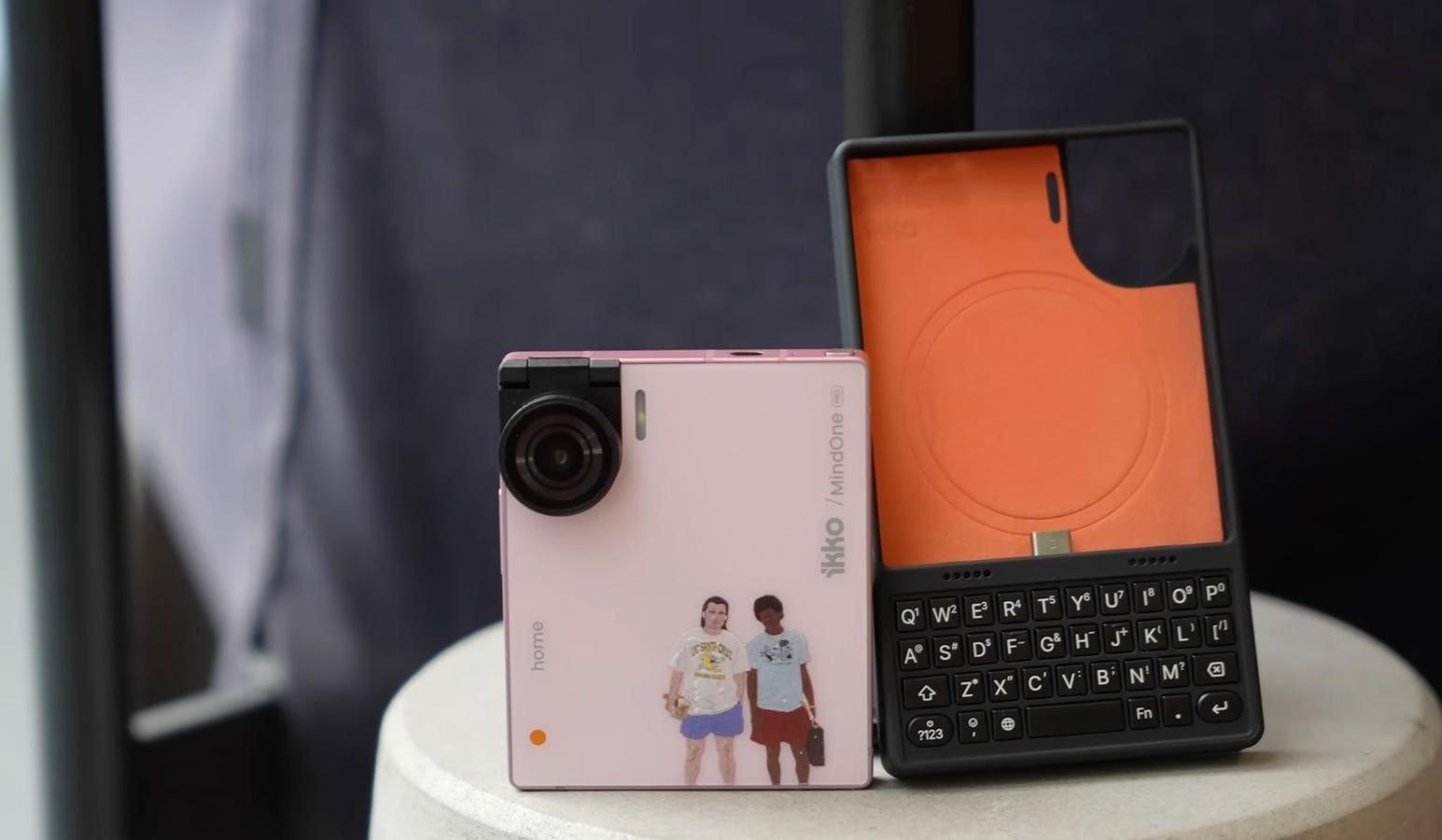
Ikko MindOne Pro (left) and snap-in keyboard case (right)
Xin Ben
Most smartphones these days have similar overall shapes and sizes. If you’ve held the largest iPhone 17 Pro Max, you already know how the Samsung Galaxy S26 Ultra or the Xiaomi Mi 17 Pro Max feel in your hand. If you’ve seen the Vivo X300 Ultra’s circular camera module, the similar camera bumps in the best phones from Oppo or Honor will look very similar.
Shenzhen-based Ikko is aware of this and is trying to explore what other companies are doing. Last year, it launched the MindOne Pro, a square phone that’s similar in size to a drink coaster (height and width, anyway, since the phone is obviously much thicker).
Ikko Mind One Pro Handheld
Xin Ben
The device launched on Kickstarter, raising more than $1.4 million, and began shipping to customers last November. Ikko showed off the phone at the Consumer Electronics Show in Las Vegas in January, attracting widespread attention from mainstream tech media.
I’ve been testing the MindOne Pro since last October, but didn’t write this review until a key accessory had also been shipped to consumers: the snap-on keyboard case.
The Ikko Snap-On Keyboard Cover for MindOne Pro comes in two colors.
Xin Ben
This case was promised during the Kickstarter campaign, so I feel like this standalone phone wouldn’t be complete without it. To its credit, the finished product is stunningly beautiful. With the phone in the case, we have a BlackBerry-style keyboard phone for those who still long for a physical keyboard on their mobile device.
Ikko MindOne Pro with keyboard
Xin Ben
Hardware overview
MindOne Pro was crowdfunded for $330, but now that crowdfunding has ended, the official retail price is about $420. Keyboard case is available for an additional $80. So judging from this pricing, you should know that MindOne Pro is not a flagship-level phone. In fact, Ikko is very openly marketing this as a secondary phone.
The device itself measures 3.39 x 2.83 x 0.35 inches (8.9mm thick), weighs 132 grams, and has a 90Hz LCD panel with a 4-inch diagonal display. The square panel is protected by sapphire glass and has plenty of brightness.
At this price point, this panel is still satisfactory. Powering this phone is a MediaTek Helio G99 – it’s a bit underpowered even at this price point, but considering this isn’t a workhorse phone, the chip is serviceable. The chip comes with 8GB of onboard RAM and can run productivity and social media apps absolutely flawlessly. I was even able to play some graphically intensive games like shadow fight 4 Mostly good. I stutter occasionally, but it’s nothing serious.
There’s a 50-megapixel Sony camera on the back with a 1/1.5-inch sensor built into a pivoting mechanism that allows the camera to flip to the front and double as a selfie camera.
50-megapixel camera.
Xin Ben
Ikko MindOne Pro with keyboard case.
Xin Ben
The camera module pivot is well constructed and stays in place at any angle without wobbling at all. The hardware feels very refined and premium for a smaller Shenzhen OEM. You can see more hardware (and camera examples) in video form below.
MindOne Pro runs Android 16 with an additional minimalist UI and comes with a set of AI features. The Android side is basically a regular Android phone and everything works fine, although there are occasional scaling issues since mobile apps are not designed for square screens. So in some cases, like Google Maps, if you bring up the side menu, it might obscure more than half of the map. These are issues that all phones with weird screen sizes have. If a multi-billion dollar company like Samsung can’t solve this problem with its foldable devices, I don’t expect Ikko to either. You just need to solve the scaling issue.
Google Maps on Mind One Pro
Xin Ben
Ikko Minimalist UI brings together the generative AI features that almost every phone has, but Ikko delivers them in a beautifully minimalist layout in a carefully curated space. Essentially, these features can do things like recognize photos, generate or rewrite blocks of text, or translate on-screen text into another language. There are also chatbots that can answer complex queries. The chatbot can be powered by ChatGPT or DeepSeek, depending on your preference.
One cool thing that Ikko offers its customers is free data connection when using its AI features. This is achieved via vSIM (virtual SIM), which Ikko is apparently paying for for consumers purchasing the device. I’m not sure how long Ikko will provide free AI data, the company isn’t saying.
To perform other mobile internet tasks, you can use your own data via nano SIM.
keyboard case
As mentioned earlier, Ikko recently released a keyboard case that not only provides a physical keyboard for the MindOne Pro, but also has a built-in hi-fi DAC (digital-to-analog converter) that allows people to plug in a 3.5mm headphone jack and listen to lossless audio with headphones.
Ikko keyboard case
benzing
Unfortunately I’m not an audiophile, but I did play some lossless flac files and they sounded really good on my headphones. As for how close the audio fidelity is to audiophile quality, that’s something I can’t comment on.
Mind One Pro Keyboard Case
Xin Ben
It’s worth mentioning that the phone itself doesn’t have a headphone jack – only the keyboard case does. The keys on the keyboard have noticeable click and travel. Those who prefer a BlackBerry-style keyboard should be able to type quickly on it.
Typing on the keyboard.
Xin Ben
The keyboard case also comes with a 500 mAh battery, which can provide some emergency power for the phone. The phone’s battery life is generally good, but not great. The battery has a capacity of only 2,200 mAh, so it’s small by 2026 standards. But if you’re just using it as an email/text machine, it’ll still last all day. If you use it to watch videos or play games, obviously the battery will drain faster.
Finally, I appreciate the transparency of Ikko’s marketing: they’re clear that this phone won’t replace your iPhone (or Android flagship). It works as a secondary phone when you want to catch up on some emails, or you’re just out of the house temporarily and don’t want to carry your main phone. I do see the appeal myself, as I often walk or run in the evenings, and for those brief hour-long outings, I don’t really want to carry a flagship phone that weighs 220 grams and bulges out of my pocket. I wanted something as light as possible that required minimal internet usage.
I’m glad the phone is still trying to be different because all flagship phones are very, very similar.