The Tamesis
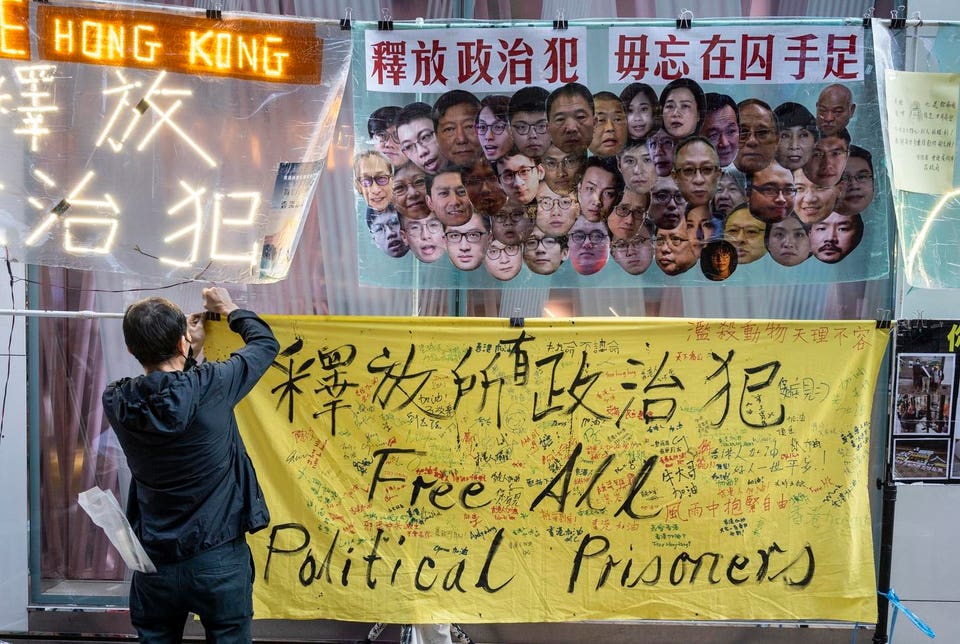
Hong Kong, China – December 11, 2021: A pro-democracy activist hangs a yellow banner that reads “Free all political prisoners” during a protest in Hong Kong. (Photo by Miguel Candela/SOPA Images/LightRocket via Getty Images)
SOPA Photo/LightRocket via Getty Images
When President Trump heads to Beijing to meet with Xi Jinping, economic and trade cooperation between China and the United States will become the top priority. But the president has signaled that won’t be the only priority, saying in a recent interview that he plans to press Xi Jinping to release prominent Hong Konger Jimmy Lai.
The president’s comments are a welcome sign that the United States intends to speak out for high-profile political prisoners held across China. Jimmy Lai, the 78-year-old founder of democratic news media Apple DailyHe has been held in near-constant solitary confinement for the past five years – a violation of international law and a cruel and unjust punishment for an elderly man in poor health.
If President Trump travels to China to raise political prisoner cases, it would send a clear signal about who has the upper hand in negotiations. The United States should be soberly aware that if China doesn’t want something — namely continued access to the U.S. market and economic cooperation between the two countries — it won’t sit at the negotiating table. If the CCP wants something badly, they have historically been willing to give something in return.
A bold move by the president would therefore be to press for the release of several high-profile political prisoners, including Jimmy Lai, Uyghur doctor Gulshan Abbas and Chinese Christian pastor Jin Mingri, among others. Abbas, for her part, has 24 American family members who want to see her released and reunited with her family in the United States. Pastor King has an American citizen daughter and two sons who just want to be reunited with their father.
If the president traveled to China after securing the release of several priority political prisoners, it would be a huge victory for the United States and a continuation of the president’s own record of securing the release of political prisoners and hostages in other contexts, including the release of Israeli hostages from Gaza and securing the release of political prisoners from Venezuela and Belarus.
The United States should use the leverage it has at this critical diplomatic moment to secure the release of priority political prisoners. That means using the range of diplomatic tools at its disposal, including the threat of sanctions, the coercion of tariffs and the possibility of a prisoner swap, to free them. Securing their release demonstrates the United States’ determination and willingness to do whatever it takes to ensure that the Chinese Communist Party does not have the final say over the fate of these individuals.
President Trump, Secretary Rubio, and others in the administration should view political prisoners not as secondary but as central to success at the summit. Releasing Jimmy Lai, Gulshan Abbas, Pastor Kim, and other priority political prisoners is not only the strategic thing to do, it is the right thing to do.