The Tamesis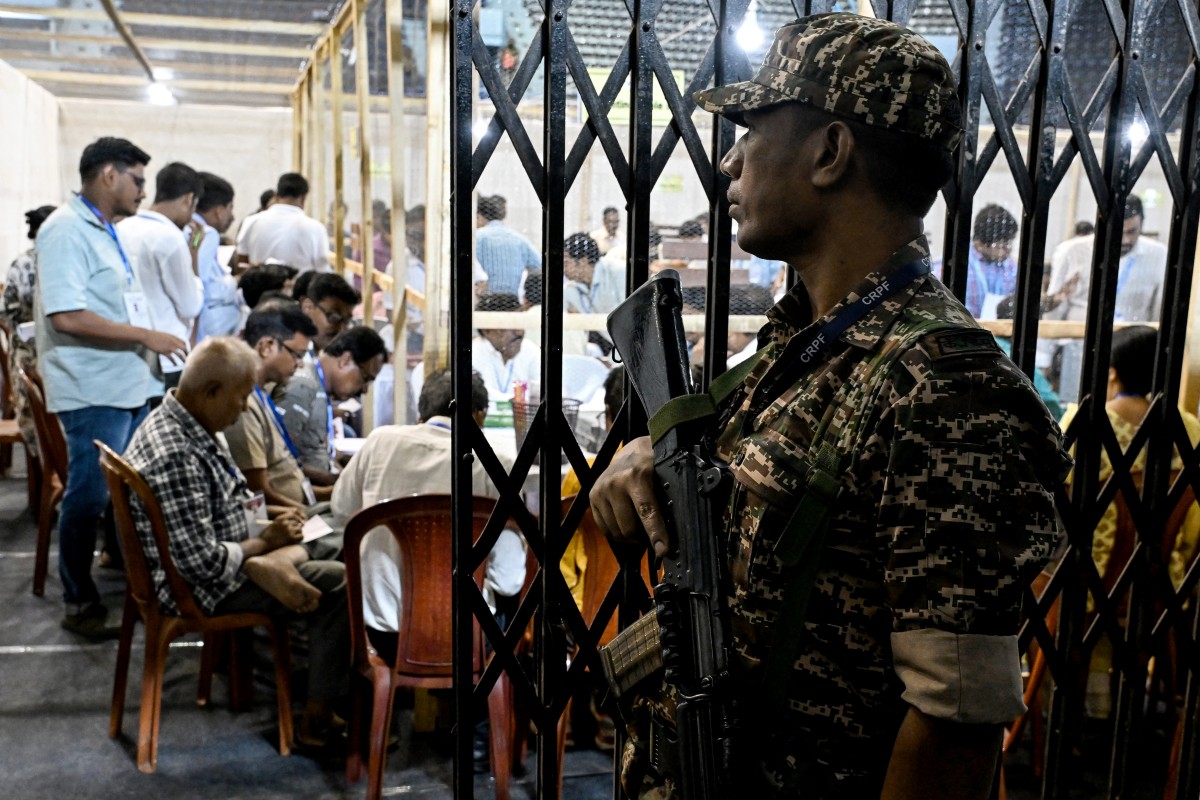
May 5, 2026
New Delhi – As the evening of May 4, 2026 dawned, the contours of a decisive political shift across India became unmistakable.
Assembly election results in five states went well beyond government formation calculations. They reflect a deeper shift in voter sentiment, one rooted in expectations about governance, economic security and credibility.
While Tamil Nadu, Kerala, Assam and Puducherry have each achieved results determined by their respective regional dynamics, West Bengal has emerged as the center of national political attention. Here, the end of 15 years of uninterrupted rule coincided with the rise of a new political force, marking one of the most significant electoral reversals in recent years.
Out of the 294 assembly seats in West Bengal, 293 went to polls. By the end of the count, the Bharatiya Janata Party (BJP) had an absolute majority, winning between 200 and 210 seats. The Trinamool Congress came to power in 2011, ending 34 years of Left rule, and was reduced to about 75 to 85 seats. The Left Front has only 5 to 7 seats, the Congress has only 3 to 5 seats and the Secular Front of India has 1 to 2 seats.
The scale of this shift will inevitably draw comparisons to 2011, when voters decisively voted for change. Fifteen years later, the same impulse seems to have resurfaced, but in a different political direction. All day long, television studios, editorial pages and policy discussions focused on one central question: Why is this shift happening, and why now?
Political analyst Biswanath Chakraborty has repeatedly emphasized that this result is not an overnight phenomenon, but the result of the accumulation of public sentiment over several years. He noted that while the welfare architecture of the current government has reached out to the masses, it has not translated into lasting political trust.
Voters are no longer satisfied with just immediate relief, he said.
They are increasingly driven by desires related to employment, stability and long-term development. In his words, voters seem to be looking for viable alternatives, and this election provides that outlet.
Similar reasoning was offered by Professor Anirban Chakrabarti of Jadavpur University, who described the prevailing mood in West Bengal as “welfare fatigue”. He noted that while state-funded programs bring tangible benefits, they do not address structural issues of economic opportunity, especially among educated youth. Rising unemployment, coupled with frustration with limited industrial expansion, created a sense of stagnation. He further pointed to a series of allegations of corruption, particularly in the recruitment process, which he said had eroded public confidence in the integrity of the institution and alienated the middle class.
Professor Sabyasachi Bhattacharya of Visva-Bharati University provides a nuanced explanation from a broader historical and sociological perspective. He said that while identity, culture and regional pride have traditionally played an important role in West Bengal’s politics, the 2026 elections mark a shift in material issues. He believes voters are no longer willing to ignore economic disparities for the sake of a symbolic narrative. Beneath the visible political discourse, a quieter but more decisive wave of rural discontent was building, ultimately finding expression through the ballot box.
Professor Udayan Bandyopadhyay of Calcutta University adds another dimension to the analysis by highlighting the anti-incumbency factor. He noted that long periods of time in office tend to create a natural cycle of public fatigue, which can be exacerbated if accompanied by administrative errors or accusations of malfeasance. In his assessment, the opposition was able to take advantage of this environment and present itself as organized and election-ready. He particularly emphasized the effectiveness of booth management and the strategic use of data-driven marketing campaigns.
Indeed, organizational depth has been one of the defining features of the BJP’s performance in this election. The party has steadily expanded its grassroots network in urban and rural Bangladesh over the past decade. This infrastructure, coupled with targeted outreach and digital mobilization, appears to have translated into electoral dividends.
Biswanath Chakraborty said the difference was not just the visibility of the campaign but also the precision of the action. The ability to identify, mobilize, and convert constituency groups at the micro level creates measurable advantages.
The role of central leadership has also become an important factor in shaping voter behavior. Campaign messages that combined development narratives with national political themes resonated with some voters, particularly those seeking alignment with broader policy frameworks.
The political response to the outcome reflects both assertion and introspection. BJP leader Suvendu Adhikari described the verdict as a mandate to fight corruption and what he called the politics of appeasement, stressing that voters chose governance and accountability. His speech framed the outcome as a collective decision by the people to pursue administrative reform and development. Chief Minister Mamata Banerjee, on the other hand, restrainedly acknowledged the verdict and said it would respect it and said the party would review its shortcomings.
The debate surrounding welfare programs has been at the heart of the analysis of the results. Initiatives such as direct benefit transfers and health insurance programs have undoubtedly expanded the nation’s social safety net. However, analysts believe that these measures, while effective in addressing immediate needs, are not sufficient to meet voters’ changing long-term aspirations, such as sustainable economic growth and job creation.
The marginalization of the left-wing Congress-ISF alliance also played a role. The coalition struggled with organizational coherence and voter transferability. As Udayan Bandyopadhyay points out, the inability to consolidate opposition votes allowed a large portion of anti-incumbency sentiment to consolidate behind a single challenger.
Apart from West Bengal, the results from the other four states add important context to the national picture. In Kerala, the Congress-led United Democratic Front secured a majority of 140 seats, winning about 75 to 80 seats and polling between 46 and 48 per cent of the vote, while the Left Democratic Front trailed with about 60 seats and 43 to 45 per cent of the vote. Assam reaffirmed the strength of the Bharatiya Janata Party-led National Democratic Alliance, which won about 90 to 95 of the 126 seats and about 45 to 47 per cent of the vote, while the Congress alliance had 30 to 35 seats and about 38 to 40 per cent. In Puducherry, the NDA secured 18 to 20 seats out of 30, equivalent to a vote share of around 44 to 46 per cent, while the Congress alliance remained limited to 10 to 12 seats. Tamil Nadu presents a different story, with new political outfit TVK leading by 100 to 110 seats out of 234 seats and garnering more than 30% of the vote, becoming a major force while established parties such as DMK and AIADMK lag behind.
Taken together, these results suggest that although regional differences remain large, broader patterns are discernible. State voters are increasingly driven by pragmatic considerations, evaluating governments based on their performance, transparency and future prospects, not just on identity or legacy. This trend is particularly evident in West Bengal. The same voters who pushed for historic change in 2011 are showing a willingness to realign their mission 15 years later.
As Biswanath Chakraborty succinctly observed, Bengal’s political culture did not confer permanent power on any single organization. Tasks are conditional, determined by performance and responsiveness. The 2026 elections are therefore a reaffirmation of democratic accountability, with powers both vested and withdrawn through the same electoral process. In short, this election is about more than an immediate transfer of power. It highlights the changing expectations of citizens from government, stressing the importance of sustained development, job creation, administrative integrity and political credibility.
The ruling in West Bengal is corroborated by patterns observed in other states, suggesting that voters are increasingly confident in their demands for results. This changing dynamic is likely to influence policy priorities and political strategies in the coming years. The message is clear. In a changing India, the durability of political power depends not only on past achievements but also on the ability to adapt, deliver and inspire confidence in the future.