The Tamesis
Jammark noted that it was not just Vietnam that was debating whether to allow waste to flow across the border. “This is an ongoing discussion among regulators,” he said. “But once the waste is properly classified into something we can use, it shouldn’t be classified as waste; it should be treated as raw material.”
Spanish recycler Coleo takes a different tack. It recently established a waste sorting and pre-treatment facility in Toulouse, taking advantage of France’s already paying for the process under its Extended Producer Responsibility (EPR) scheme. “For every ton of post-consumer textile waste processed, you earn euros,” explains strategy director Marc Puyuelo Huguet. “Then if you can prove that your finished product has been sold to a recycler, you get an additional success fee. We sell mainly to our machinery recycling center in Spain, which helps a lot.”
He added that when it comes to recycling, Spain is a favorable location because there is already a strong culture of reuse, which makes it easier to license recycling plants and cheaper to insure them.
Choose the right plot
Once a startup decides in which country to plant roots, it should choose a specific location. It’s equally complicated, Nobelius said. “We start looking at industrial parks because they are used to the permitting process and have infrastructure already on site such as roads, substations, energy and possibly even housing,” he said. “We want to work with a factory that has a chemical plant and knows how to handle chemicals.” Nobelius has personally visited dozens of industrial parks across Vietnam and will make a final decision in the coming weeks.
Some companies have developed precise procurement frameworks for production sites. “These decisions are not trivial,” said Peter Majeranowski, co-founder and CEO of Circ, who uses a system called “front-loading” to make his decisions. “You’re putting a lot of money underground that you can’t easily move. You’re building an asset that’s going to last at least 30 years. At every stage of the engineering and demonstration process, you’re understanding in more detail how much energy, gas and water you’re going to need, how you’re going to recycle it, the footprint and the layout. You’re thinking about the logistics of incoming and outgoing materials, where your customers are located, what the grid looks like, the rule of law in that country, and there’s a storytelling element: I love that we’re building a circular economy on top of a former coal coking facility.”
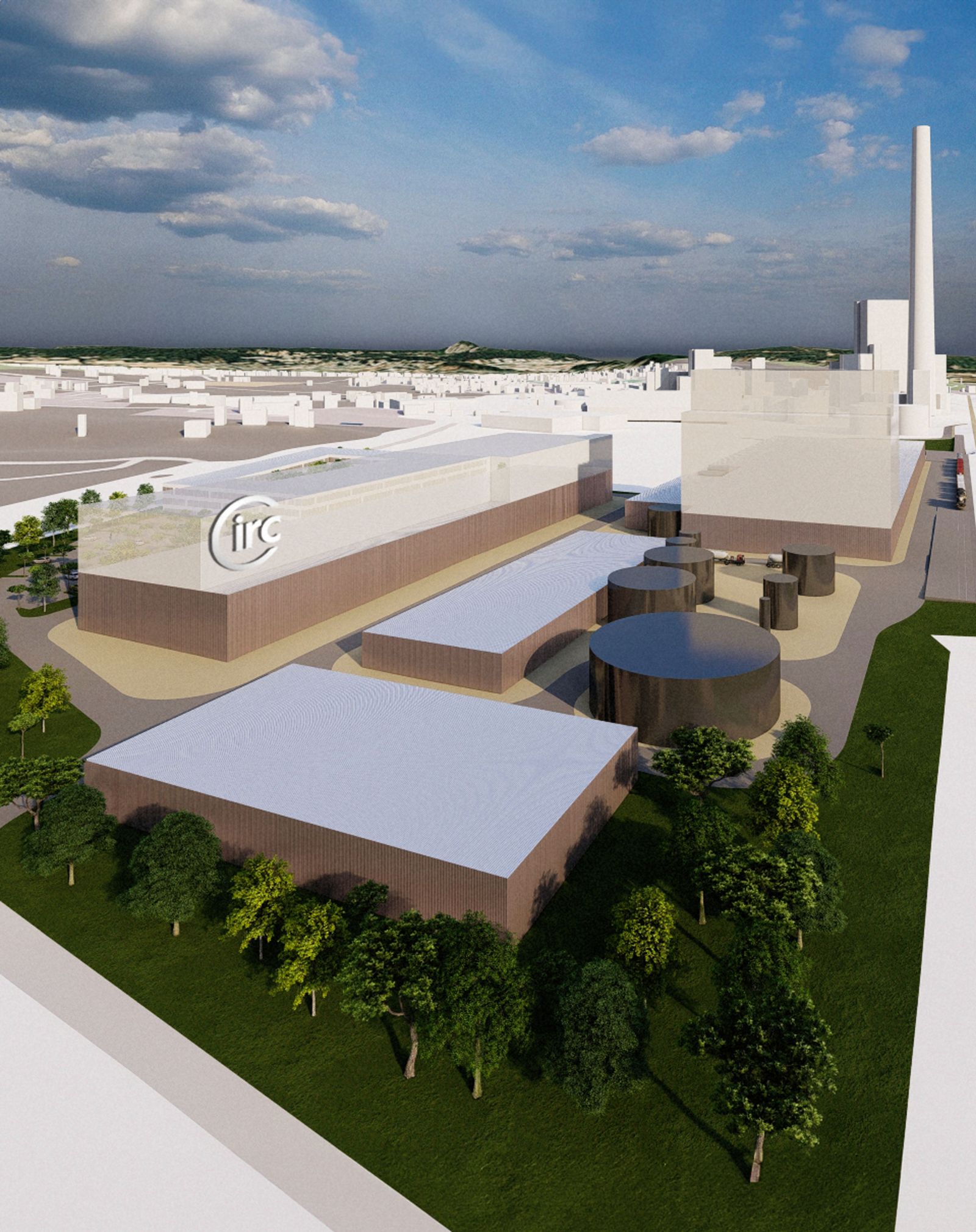
Architect’s rendering of Circ’s first commercial-scale production facility in Saint-Avolde, France, due to open in 2028.Photo: Circ