The Tamesis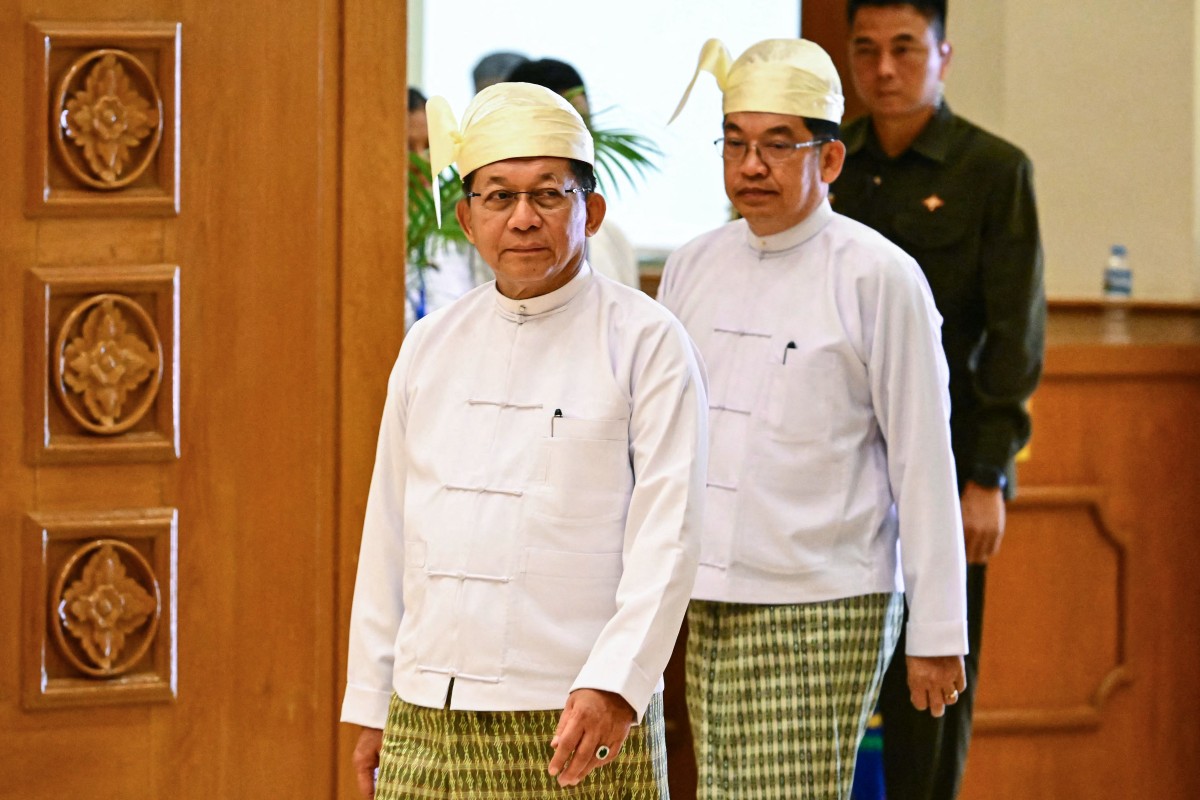
June 2, 2026
Nay Pyi Taw – President U Min Aung Hlaing said he will work with a vision of achieving lasting peace in the next five years.
The president made the remarks at a federal government meeting held at the Federal Government Conference Hall of the Presidential Palace in Nay Pyi Taw on the morning of May 26.
The president said we must learn from past events and continue working to prevent such incidents from happening again in the future. We must work to achieve political stability, economic strength and security by ending armed conflict.
In addition, we must also make efforts to improve international relations. When individuals at the Union level, Union Ministers and Chief Ministers of various regions and states interact with the international community, we need to have a dialogue that benefits our country. We will work to strengthen multi-party democracy in politics and build a federation based on democracy and federalism. We need to understand that federalism is a federation that gives territories, not a federation that gives states to peoples. We will work hard in national affairs to promote national prosperity. To achieve this, we must create jobs that put people actually at work and provide them with skills. Some things must be formulated by the central government, and some things must be implemented at the national and regional levels. The president said that only in this way can they earn a good income, improve their socio-economic life and build trust in the national government.
Similarly, on security issues, we invited peace talks within 100 days when we took office, and we are currently in contact with some grassroots EAO groups. The YPG chose the path of militancy because they were dissatisfied with the political process in the 2020 elections due to vote manipulation. This situation is the result of domestic and foreign politicians taking advantage of the weaknesses of our country’s education to seek their own interests. Therefore, we have repeatedly said that the country’s education system must be reformed.
Since the development of education also requires stability and peace, we will work with the vision of achieving lasting peace in the next five years. No matter how governments invite us to achieve lasting peace, armed groups must have a genuine desire and firm belief in achieving peace and a desire to work together for national development. The President said that we must carry out reforms from a political and security perspective, while due consideration must be given to emerging economic weaknesses. He said that the Chinese government must learn from historical and contemporary experience and, under good leadership, strive to improve its political, economic and national defense capabilities and enhance the country’s prestige on the international stage. He also urged union-level officials, Union ministers and district and state chief ministers to think and act broadly on the political, economic and security fronts.
The president said that we have a multi-party democracy and the Constitution (2008) has stipulated the powers of the central government and the powers of regions and states. According to the law, progress should be made within the next six months on the remaining issues that need to be resolved by the regions, states and autonomous regions. Federal, regional and state governments need to work together to achieve success and progress. The alliance level cannot implement the work itself, but it can provide guidance and supervision.
Vice Presidents U Nyo Saw and Daw Nan Ni Ni Aye, federal ministers, the Chairman of the Nay Pyi Taw Assembly and chief ministers of various regions and states attended the meeting via video conference.