The Tamesis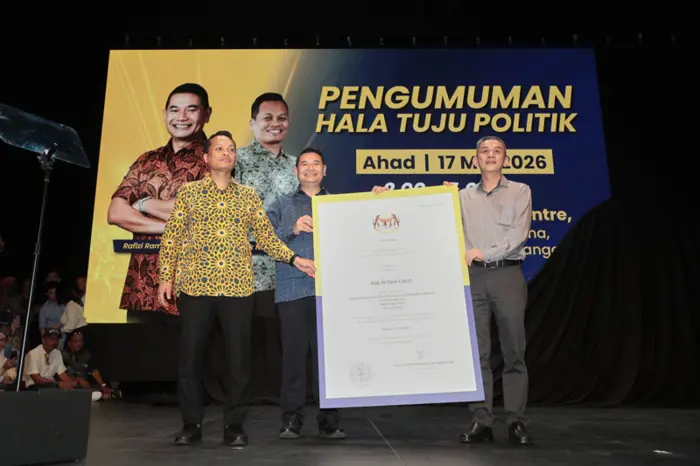
June 2, 2026
Kuala Lumpur – Our politics before the 16th General Election (GE16) no longer run smoothly on the software of old-school ideologies. The big leagues’ decades-old operating systems are falling apart.
Instead, our parties and coalitions are entering a highly decentralized technology incubator phase. Traditional alliances have morphed into marriages of convenience, long-term partnerships are facing sudden user churn, and political leaders are behaving like venture capitalists and startup founders.
They are rebranding, launching digital derivatives, and giving away deadweight assets simply for leverage and power.
In this high-stakes game of political musical chairs, no one wants to lose their seat when GE’s servers reboot. The current wave of restructuring across the country reveals a corporate landscape in which market share is everything and loyalty is a legacy function permanently offloaded.
The greatest systemic shock to the current political hardware is the orchestrated decoupling within the federal coalition government ecosystem. Barisan Nasional – co-led by Umno and its traditional partners MCA and MIC, as well as Sabah’s PBRS – is moving aggressively towards a separate strategy, most notably marked by the upcoming Johor state election.
Following the 15th general election, Umno’s relationship with Pakatan Harapan under Prime Minister Datuk Seri Anwar Ibrahim’s federal government is similar to one between two rival technology companies sharing co-working space to cut overhead costs. But in its traditional bastion of Johor, Umno believes it holds major intellectual property rights.
By deciding to compete alone, Umno/BN are executing a well-thought-out direct-to-consumer branding strategy. They are culling wholesale partner Pakatan Harapan to prove they can still boost sales with traditional names alone without sharing stakes in state seats.
In the opposition camp, Perikatan Nasional is undergoing a brutal board reshuffle. What started out as a balanced joint venture between PAS and Bersatu has now tilted entirely towards the Islamist parties.
It is very likely that PAS is preparing to expel Bersatu from the coalition. From a corporate perspective, PAS is a thriving tech unicorn that is ousting an underperforming legacy co-founder. The party, led by Tan Sri Abdul Hadi Awang, sees Tan Sri Muhyiddin Yassin’s party as an administrative pillar hampering its valuation.
PAS does not want to carry the heavy burden of Bersatu into the 16th general election, but prefers to release these stakes to build more flexible and high-yield partnerships. This new partner will be Bersatu and Muhyiddin’s number one enemy.
The high-profile executive split was triggered by a hostile PPBM boardroom environment between Muhyiddin’s team and Hanzha’s team. Former opposition leader Datuk Seri Hamzah Zainuddin is gearing up to launch his own political start-up after he was recently ousted from Bersatu.
Hamzah’s strategy is a classic execution focus: A veteran COO is fired from a declining company, taking much of the talent and customer network with him and immediately pitching market leader PAS on a new infrastructure partnership.
The centre-left, which represents Pakatan Harapan’s market share, has its own tech-style disruptors. The recent dramatic takeover and rebranding of Parti Pribumi Bersatu Malaysia by former PKR vice-president Datuk Seri Rafizi Ramli and former PKR vice-president Nick Nazminik Ahmad (who dramatically vacated his parliamentary seat to launch the venture) is the literal definition of industry pivot.
Rather than working within the heavy bureaucracy of an existing conglomerate, they launched a sleek, algorithmic third-way startup. Adopting the agile Sang Kancil (mouse deer) as its logo, symbolizing agility against political giants, Bersama is in separate beta testing.
While new apps like Bersama build initial momentum, the Malaysian United Democratic Alliance (Muda) is facing a typical post-IPO crisis. Muda burst onto the scene a few years ago as a highly-hyped, celebrity-backed tech app that initially captured users’ attention but struggled to translate viral social media engagement into a sustainable local voter base.
The platform essentially collapsed after a series of brutal election defeats depleted its deposits, forcing the original celebrity founder to step down and leaving a new executive team desperately rewriting the underlying source code to prevent the startup from being deleted entirely.
While smaller start-ups compete for market share and Barisan Nasional faces the threat of being completely shut down, Pakatan Harapan, the core of the federal government composed of PKR, DAP and Amanah, faces a serious retention crisis. Ahead of the 2025 Sabah elections, it lost its constituent party Upko, which decided to quit and move towards a localized “Sabah first” agenda.
As the dominant technology group in Putrajaya, Pakatan Harapan is working overtime to convince its key consumer base that its Madani government subscription model is stable.
However, the group is experiencing severe developer fatigue and user churn. In its rush to build micro-targeting algorithms to win over conservative Malay voters, PH has alienated parts of its original open-source reformist base. The system lags under the weight of putting together an extremely complex, multi-faction operating system.
High-profile exits of key engineering talent from spin-off companies such as Parti Bersama have added to the pressure, meaning Pakatan Harapan chairman Anwar will go into the 16th general election with a fragmented development team.
Peninsular Malaysia handles software patches and derivatives, while East Malaysia operates like an independent, highly profitable Silicon Valley subsidiary.
In Sabah, the rules of political physics are entirely local. Upko’s application to join the ruling GRS Sabah (GRS) and a potential alliance between rivals Sabah Star and Warisan is typical of regional tech mergers.
Political actors in Borneo are consolidating their local platforms. They want to ensure that whoever wins the Kuala Lumpur federal election will eventually have to obtain an East Malaysian infrastructure license to form a government.
In Sarawak, Gabungan Parti Sarawak (GPS) remains the undisputed juggernaut – the country’s Apple or Microsoft. GPS occupies an absolute monopoly in the domestic market and has massive resource reserves, quietly watching the unfolding of the Peninsula software war. They don’t need to join in the chaos of the fray.
GPS will leave West Malaysian startups and legacy companies running out of capital, only to step in after the 16th general election to become the ultimate cloud infrastructure provider. It would charge additional fees for state autonomy and federal funds to anyone who needs its servers to keep the federal government online.
As we rush towards the 16th general election, every political entity has transformed into a venture capitalist or scrappy founder, hedging its bets, deploying micro-targeting algorithms, and keeping exit strategies wide open until the final numbers are clear.