The Tamesis
Iran attacked two oil tankers in the Persian Gulf and Strait of Hormuz on Thursday and threatened to “destroy” the world economy, overshadowing international efforts to lower oil prices.
Iran has been using Unmanned surface vessel loaded with explosivesThe drones, also known as “maritime drones,” are designed to attack ships on key oil and gas sea routes, according to maritime authorities and analysts who spoke to Reuters.
Thursday’s attacks sent oil prices surging above $100, with most Asian markets falling, despite news that the International Energy Agency would release a record amount of strategic crude.
See also: Iran says ready for $200 a barrel as three more ships rammed
“Wars in the Middle East are causing the most severe supply disruptions in the history of global oil markets,” the International Energy Agency said in a monthly report today.
On Wednesday, the IEA said members had agreed to release 400 million barrels of oil from their reserves, the largest ever release.
But the move, aimed at alleviating concerns that multiple Middle Eastern countries are blocked from energy supplies through the Strait of Hormuz, will have a limited impact on global prices.
Iran appears to be increasing its efforts to disrupt supplies in the region. Two oil tankers were attacked in Iraqi waters on Thursday, although Baghdad has said it is cutting production due to the crisis.
Kuwait and Saudi Arabia issued similar statements, while Bahrain said Iran had carried out attacks on its oil tanks.
Saudi Arabia said it intercepted a drone heading for the Sheba oil field and that the drone also hit oil tanks at Oman’s Salalah port, suspending operations at the port, AFP reported.
A container ship off the United Arab Emirates was hit by an “unidentified projectile,” Britain’s maritime agency said in an alert on Thursday.
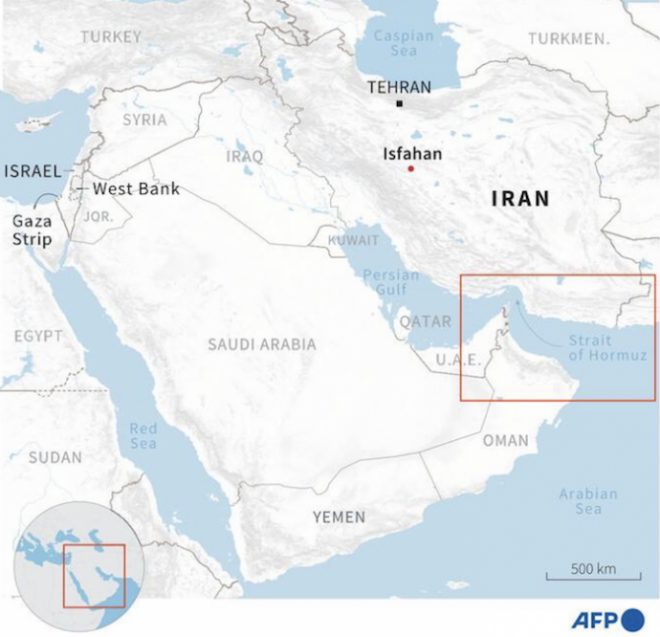
Maritime drones used by Ukraine in its war with Russia are also used by Houthi rebels in Yemen on the Red Sea because experts say they can carry more explosives than aerial drones and have the ability to immobilize commercial ships.
Iran is also believed to have laid dozens of mines in the strait, and the United States subsequently shot down at least 16 minelayers. CNN reports, Al Jazeera Reuters quoted U.S. intelligence officials as saying.
The latest attack sent Brent crude to a high of $101.59 a barrel on Thursday, while WTI surged to just under $96. Earlier this week, the two benchmarks rose 30%, peaking at nearly $120.
Both sides later gave up gains, but with no sign that hostilities will end soon, analysts say $90 to $100 a barrel could become the new normal for some time. Commonwealth Bank of Australia warns If the crisis continues, the price could reach $150 It’s been months.
Iran has released new footage showing the moment a U.S. oil tanker in the Persian Gulf was hit by an unmanned vessel. https://t.co/pDPjCGKTpN pic.twitter.com/886ifbihQG
— Arya Yadhar (@AryJeay) March 12, 2026
The Islamic Revolutionary Guard Corps threatens to launch a long-term war of attrition
Iran says it is ready for a long-term war of attrition that would “destroy” the world economy and threaten any U.S. or allied ships.
The Revolutionary Guards on Wednesday threatened to attack “economic centers and banks” linked to U.S. and Israeli interests.
The two countries “must consider the possibility of a prolonged war of attrition, Destroy the entire U.S. economy and the world economy”Ali Fadavi, adviser to the commander-in-chief of the Guards, told state television.
Iran’s Tasnim news agency also published a list of potential technology targets, including offices of Amazon, Google, Microsoft and Nvidia in the Gulf countries and Israel.
Saudi Arabia, the world’s largest oil exporter, is likely to be hit hard by the conflict as most of the 7 million barrels of oil it exports daily through the Strait of Hormuz have been significantly reduced.
The east-west pipeline that runs across the country and leads to the Red Sea port of Yanbu has a capacity of 5 million barrels per day, but that is less than half of the crude oil Saudi Arabia produces daily and may become a target in the coming weeks.
If the blockade lasts for more than a few weeks, China’s economy could also take a major hit despite diversifying its sources of crude oil.
Iran has Shipped nearly 12 million barrels of oil to China The ship has been crossing the channel since the war began, CNBC reported, citing the co-founder of TankerTrackers.com. But the energy monitor said that was likely still well below normal levels.
Fertilizer supplies, airlines also hit
Analysts also say a long-term disruption to shipping across the strait will have a severe impact on farmers in China and a range of other countries in Asia and Europe. The strait transports about one-third of the fertilizer used in global food production.
Another industry that has been hit hard is aviation. Many airlines have had to reconsider flying across the Middle East, while rising fuel costs have boosted their profits.
Air New Zealand said on Thursday it would cut 1,100 flights over the next two months, while Hong Kong carrier Cathay Pacific unveiled new fuel surcharges on most routes, roughly double existing ones.
Wellington also said on Thursday it was considering using decades-old laws to restrict vehicle use if fuel supplies were reduced.
Australian officials announced that they would Adjust fuel quality standards to allow higher sulfur content The move will free up about two months of domestic supply.
Asian markets fall
The spike in oil prices has stoked fears of another spike in inflation and a potential rate hike, after central banks have been considering cutting interest rates last month.
That put pressure on stocks, which resumed their retreat Thursday.
Tokyo, Hong Kong, Shanghai, Sydney, Seoul, Mumbai, Wellington, Singapore, Taipei, Manila and Jakarta all fell into heavy losses. London, Paris and Frankfurt also opened lower.
Stephen Innes of SPI Asset Management wrote: “At a time when geopolitical alarms still sound around the Strait of Hormuz, dumping oil barrels from emergency stocks is more of a symbolic gesture than a solution.”
“It may dampen volatility for a few hours, but it cannot change the geometry of risk when the world’s most important shipping artery is threatened.
“In trading desk language, the IEA release is the equivalent of pointing a garden hose at a refinery fire.”
Still, Trump reiterated his insistence that the strikes had effectively defeated Iran.
“They were almost at the end,” he told reporters after an address to supporters, in which he declared: “We won… we won – the game was over in the first hour.”
However, the Israeli military said the operation was far from over and there were still “a large number of targets.”
Key figures around 0815 GMT
West Texas Intermediate crude: up 4.0% at $90.72 a barrel
North Sea Brent crude: up 4.4% to $96.04 a barrel
TOKYO – Nikkei 225: down 1.0% to 54,452.96 (close)
Hong Kong – Hang Seng Index: down 0.7% to 25,716.76 (close)
Shanghai – Composite Index: down 0.1% to 4,129.10 (close)
LONDON – FTSE 100: down 0.6% to 10,296.02
USD/JPY: fell from 158.92 yen to 158.89 yen
- Jim Pollard and AFP
See also:
Oil falls, Asian markets rise as Trump says war will end ‘soon’
Oil prices top $100 a barrel as Asian leaders rush to limit impact of war
Middle East crisis pushes up oil prices, rout intensifies in Asian markets
War with Iran could hit some of Asia’s biggest economies hard
Russian oil share of India imports falls to lowest since end-2022
Former rapper to form Nepal’s first majority government in decades
China beats U.S. again in global patent battle, Huawei maintains lead