The Tamesis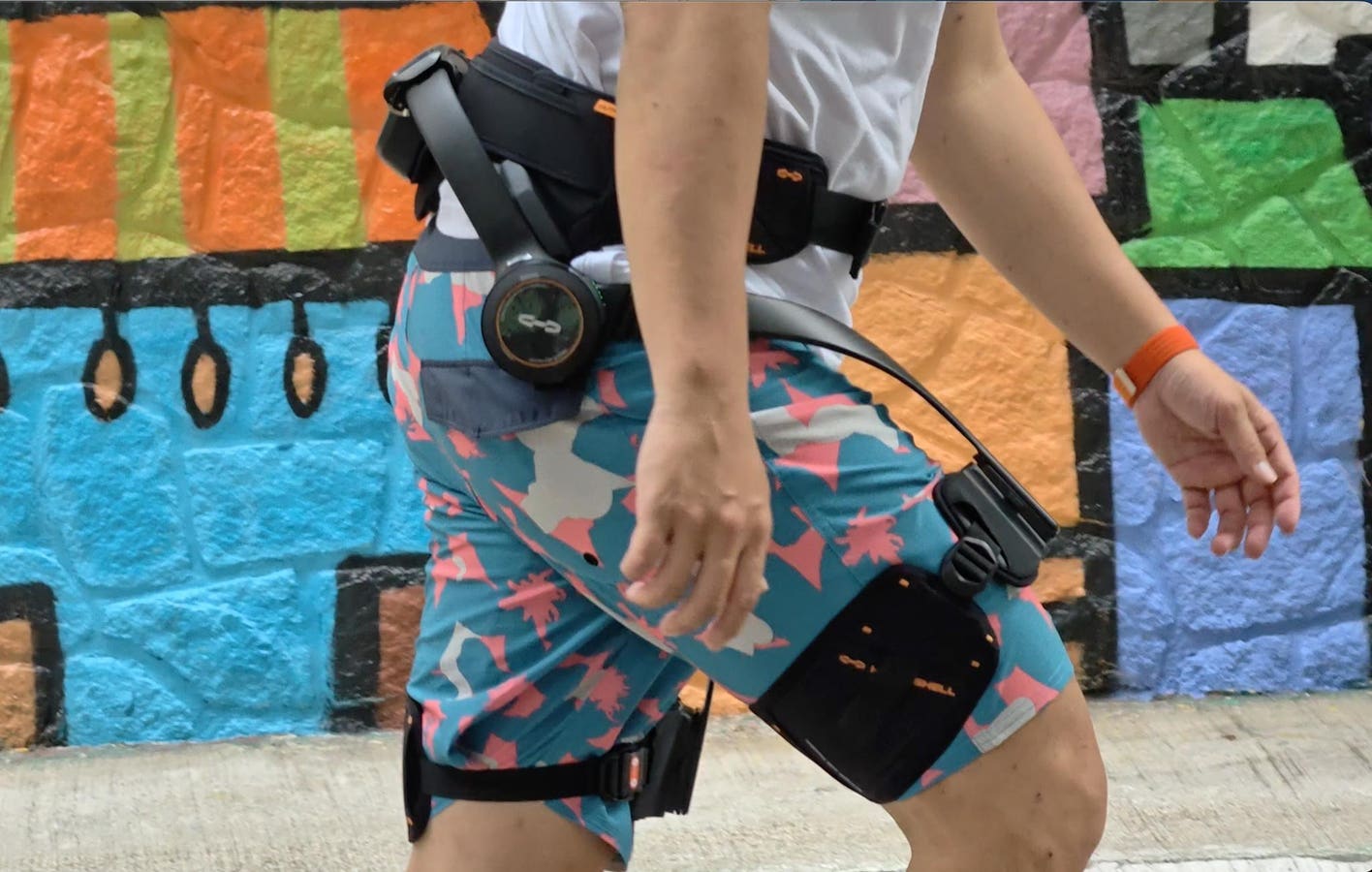
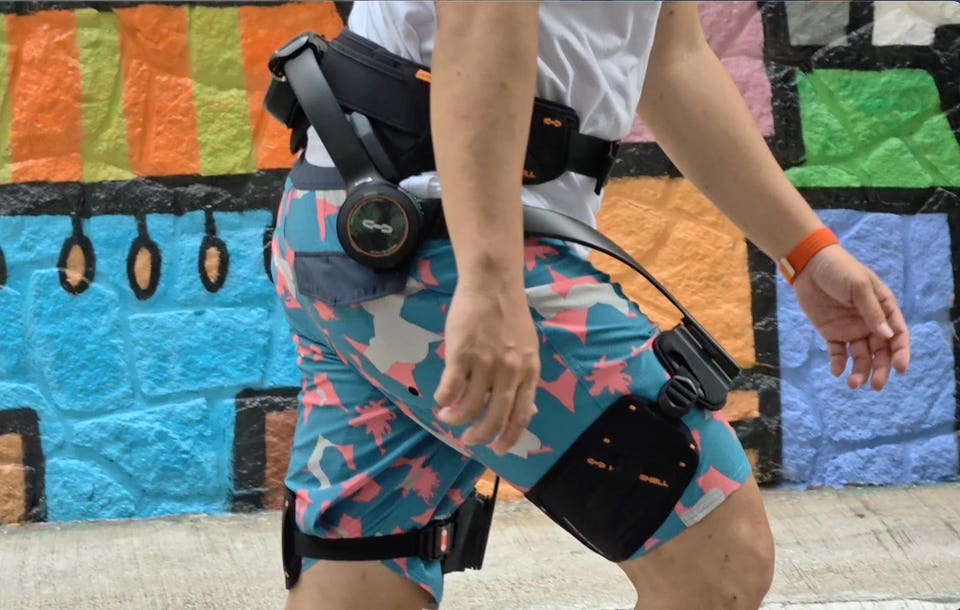
Hypershell X Ultra S on my lower body
Xin Ben
A new battleground has emerged in consumer wearables. We’ve seen smart watches, smart glasses, and even smart toothbrushes. Now we are developing exoskeletons. Yes, they are “smart” too.
The leader in this young but rapidly growing field is arguably Shenzhen-based Hypershell, which released its first consumer exoskeleton a few years ago and is now back with a new flagship model, the X Ultra S.
The X Ultra S is essentially a hip-worn device with a strap that wraps around the wearer’s thigh. It’s mostly made of aluminum, with some titanium and fabric components.
The entire device is very light, weighing 3.9 pounds on its own and 4.9 pounds with the removable battery pack.
Hypershel X Ultra S
Xin Ben
Once the exoskeleton was on me and powered up, I felt absolutely no weight because the Hypershell X Ultra S essentially provided support and power to my hips and thighs. This device essentially provides a slight power boost to my natural movements. For example, if I’m walking up stairs, the padding behind my hamstrings will push on my thighs as I try to go up.
What sets the Hypershell X Ultra S apart from the company’s previous products is a new artificial intelligence software called HyperIntuition, which tries to understand the context of what I’m doing and adjusts accordingly.
Wearing the Hypershell X Ultra S on the mountain
Xin Ben
This was my first time testing a Hypershell product (or any exoskeleton), so I had to ask a Hypershell representative how HyperIntuition differed from previous software. The representative said that previous Hypershell software worked in steps: it sensed the wearer’s movements and then reacted to align. But “HyperIntuition works as a continuous system, and adaptation happens continuously in real time.”
Since I have no previous experience to draw from, I can only say that the current X Ultra S really surprised me with how smart it is. As a test, I deliberately jogged up the stairs, stopped midway, turned around and walked down the stairs. The device adapts immediately and provides different supports. This was easy to notice because I could feel the exoskeleton transitioning from pushing my hamstrings upward (for climbing stairs) to providing resistance to my quads as I walked down the stairs.
Likewise, when I suddenly lunged during a previous walk, the X Ultra S adapted immediately.
Doing lunges on the X Ultra S
Xin Ben
Clearly, the purpose of the Hypershell X Ultra S is to help people move more easily. To this end, Hypershell’s marketing claims that the device can reduce the wearer’s average heart rate by up to 42% and reduce oxygen consumption by up to 39%. But these numbers vary from person to person, depending on their fitness level. For me, I did notice that I could run up the stairs for longer periods of time before running out of breath (a form of exercise I do once a week or so). I don’t have the professional tools to measure how much oxygen I’m taking in, but interestingly, I do feel like this suit makes running easier.
With the Hypershell X Ultra S, walking up stairs feels even easier.
benzing
It is worth mentioning that the X Ultra S is also the first consumer exoskeleton to obtain TÜV certification and SGS safety certification. The Hypershell X Ultra S is available globally starting today, but I don’t have pricing as of press time.
Hypershell X Ultra S
Xin Ben
The previous model sold for $1,800. Hypershell also makes several other lower-end models that are less expensive, but I haven’t tested those yet.