The Tamesis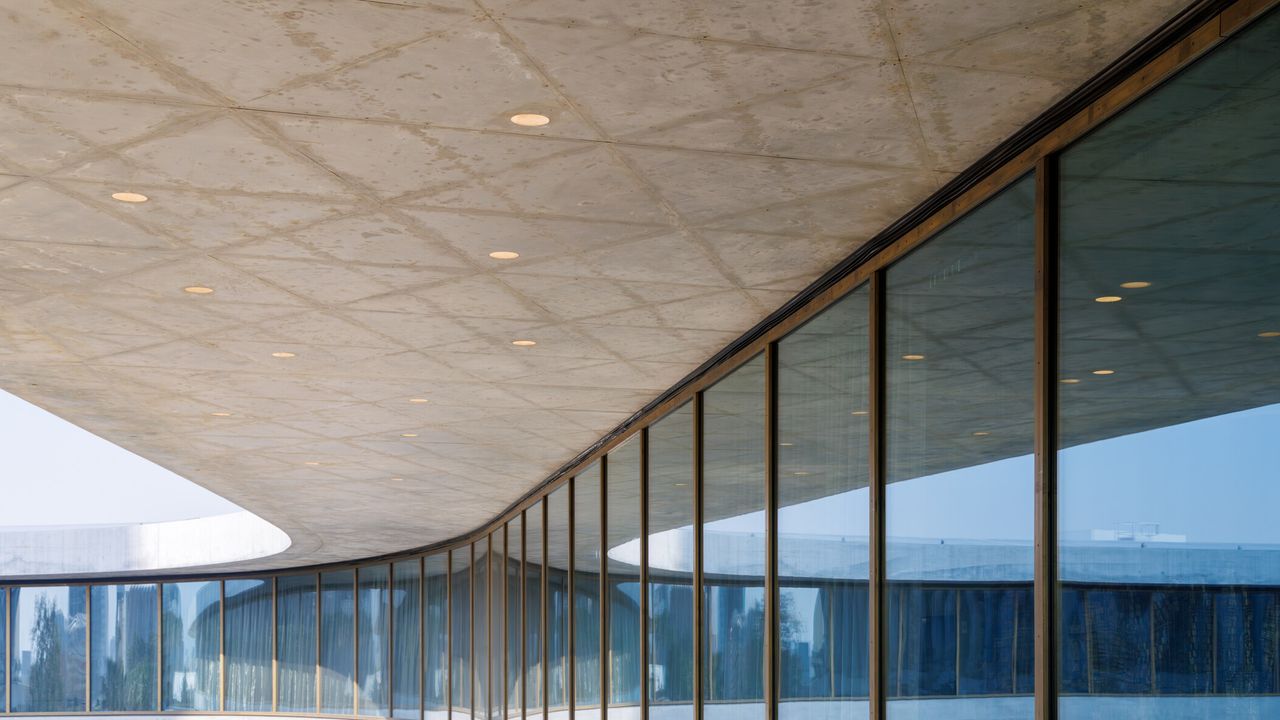
The Los Angeles County Museum of Art’s new David Geffen Gallery doesn’t so much sit on Wilshire Boulevard as it hovers above it, a long, blotchy concrete structure that spans the street and is held aloft by a massive, widely spaced core. At ground level, the building feels almost impossibly large, with much of its base obscured.
After more than 20 years in the making, the new David Geffen Gallery opened with a ribbon-cutting on Sunday, followed by a two-week preview period for members. (The project will open to the public on May 4.) Designed by Pritzker Prize-winning Swiss architect Peter Zumthor, known for his deep, atmospheric architecture, the project replaces much of the Los Angeles County Museum of Art’s (LACMA) midcentury campus with a single, sinuous structure. It was the brainchild of longtime director Michael Govan, who joined the Los Angeles County Museum of Art in 2006 and immediately set out to create a museum without hierarchy, placing objects and artworks from different places and time periods in direct dialogue with each other. (The museum’s education center, restaurant, and museum store are located beneath the span of the main structure.)
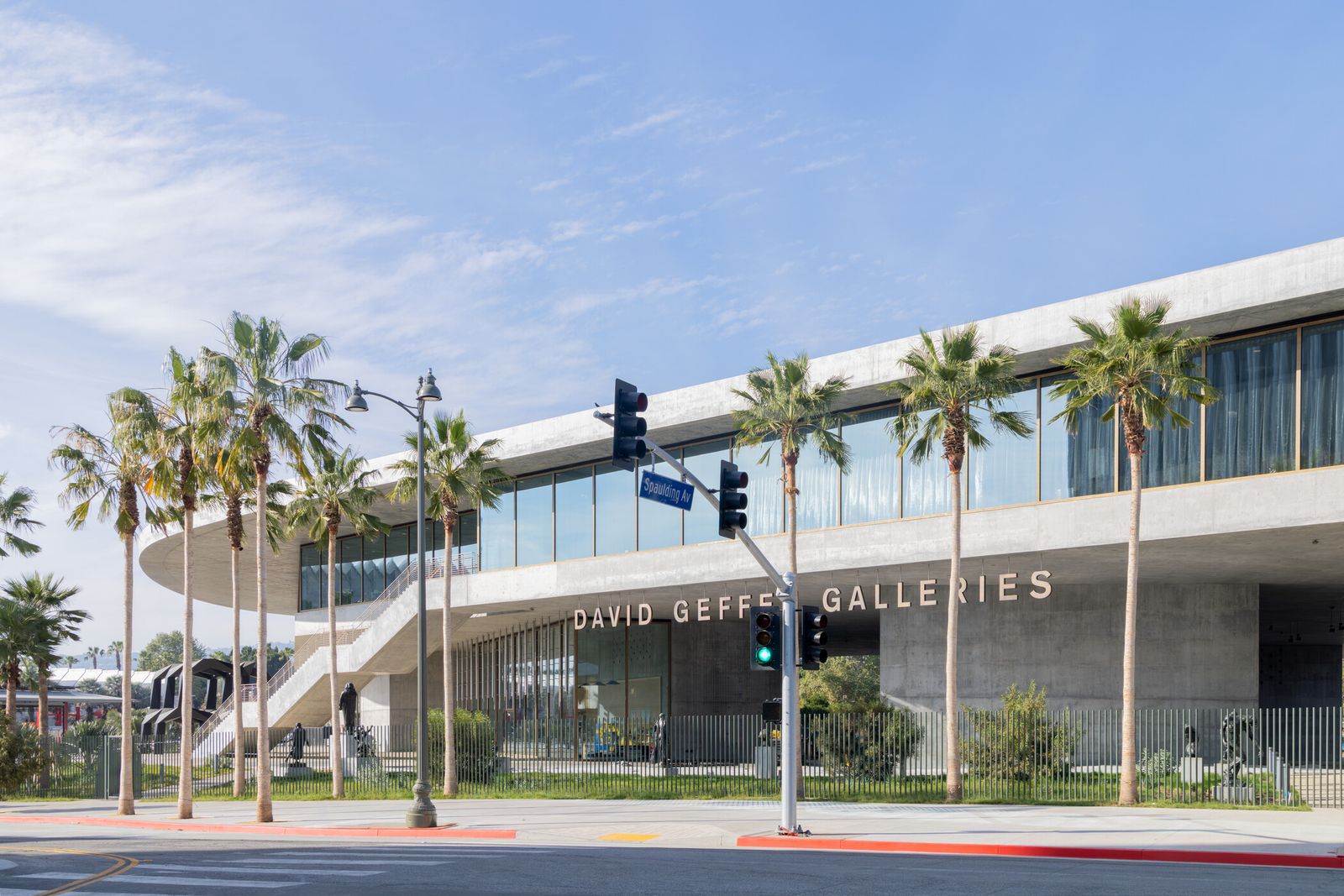
Photo: Ivan Benn
Artist Mariana Castillo Deball was commissioned to create a work that meets visitors before they arrive at the gallery. Her plaza installation is etched into the ground, unfolding on pale, sand-colored concrete and features the tracks of local animals and fragments of Quetzalcoatl, the Mesoamerican feathered serpent drawn from murals in the Teotihuacan archaeological complex in Mexico. Thin sloping lines run across the surface, recalling the sand of a Zen garden.
Born in Mexico City, Castillo Deball has built his practice around fragments—objects, archives, and histories dispersed and displaced over time—often drawing on archeology and museum collections to trace how meaning is constructed and passed on. The image of Quetzalcoatl has long been understood as a union of earth and sky, a form that connects the world, and here it feels almost literal. The building rises above the artwork, suspended and vast, while the plaza remains grounded to honor the creatures that once roamed the land of Los Angeles.
“I think it’s a metaphor for the museum—that museums are made of fragments,” Castillo de Bar said. “When I first spoke to Michael, he explained to me that he saw the museum as an archipelago. You no longer have continents like you used to see in museums.”
In a border state built on immigration and cultural exchange, immigration enforcement poses a constant threat, and Castillo de Barr’s work also makes this reality visible, embedding the labor of immigrant workers directly into the museum’s surface.