The Tamesis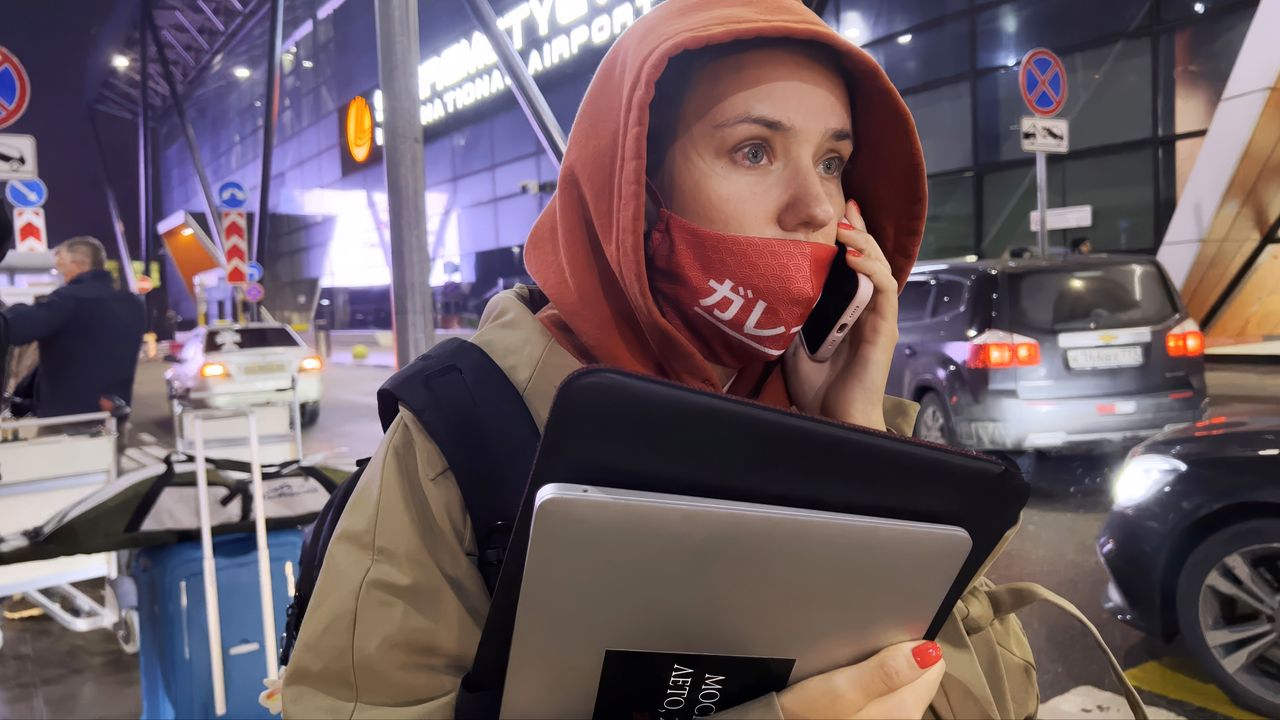
I think that’s what allowed me to tell this story in this super intimate way. The people I photograph are journalists, but I am not a journalist. In my films, I am not a provider of information; I’m a storyteller. I approached my unpopular friend Just like when I make a fictional film – instinctively, my impulse is to show people living their lives, to show them feeling their emotions in the context in which we actually live – at work, at home, on the commute home – and to shoot people in close-up, capturing faces in the way actors do, except they’re experiencing something incredibly real.
The documentary really had a cinematic feel to it and I loved that you chose to show people with their children at home, it made me feel so familiar with the truly intergenerational experience of contemporary Russian activism.
Absolutely. Home is where people gather; they gather in each other’s kitchens, go to friends’ houses to work together, form a community, and sit around in the kitchen at night talking. I wanted to capture all the life surrounding everything and give a sense of places and worlds that have disappeared or been scattered in exile.
What surprised you most during the making of this film?
Well, there’s a big answer and then there’s a small answer. Obviously, all of us were shocked by Total War. Russia invaded Ukraine in 2014 and the war has been going on for almost eight years, but strangely the world has become accustomed to the extent to which Russia has hosted the World Cup in the meantime. The kind of war that Russia launched on February 24, 2022—and has now lasted an unimaginable four years—even though… no one really believed that would happen. No matter how many people say it’s coming, it’s going to happen and you’re still in a state of absolute shock when it happens.
Until then, the first chapter of the film will be called Life as a foreign agentUntil Russia launches this horrific criminal war in Ukraine, this would be a movie about these journalists, known as foreign agents, trying to figure out: How much longer can we keep working in our country? Should we leave tomorrow or yesterday? How do we face all this repression? How do we keep working and keep living?
Then, when Russia invaded Ukraine, everything changed because they shut down all independent media and all journalists asked themselves: How are we going to cover another day? How do we report it when they tell us we can’t call it a war? How do we report on a Russian bombing of an apartment building while the Department of Defense claims they did not hit any civilian targets, when you clearly stated that they did hit any civilian targets? All of them face decisions like, do we go to the airport? Or do we go to work? The decision was clear: go to the airport, because if you stayed and worked another day you might go to jail and you wouldn’t be a useful journalist, so they all went into exile.