The Tamesis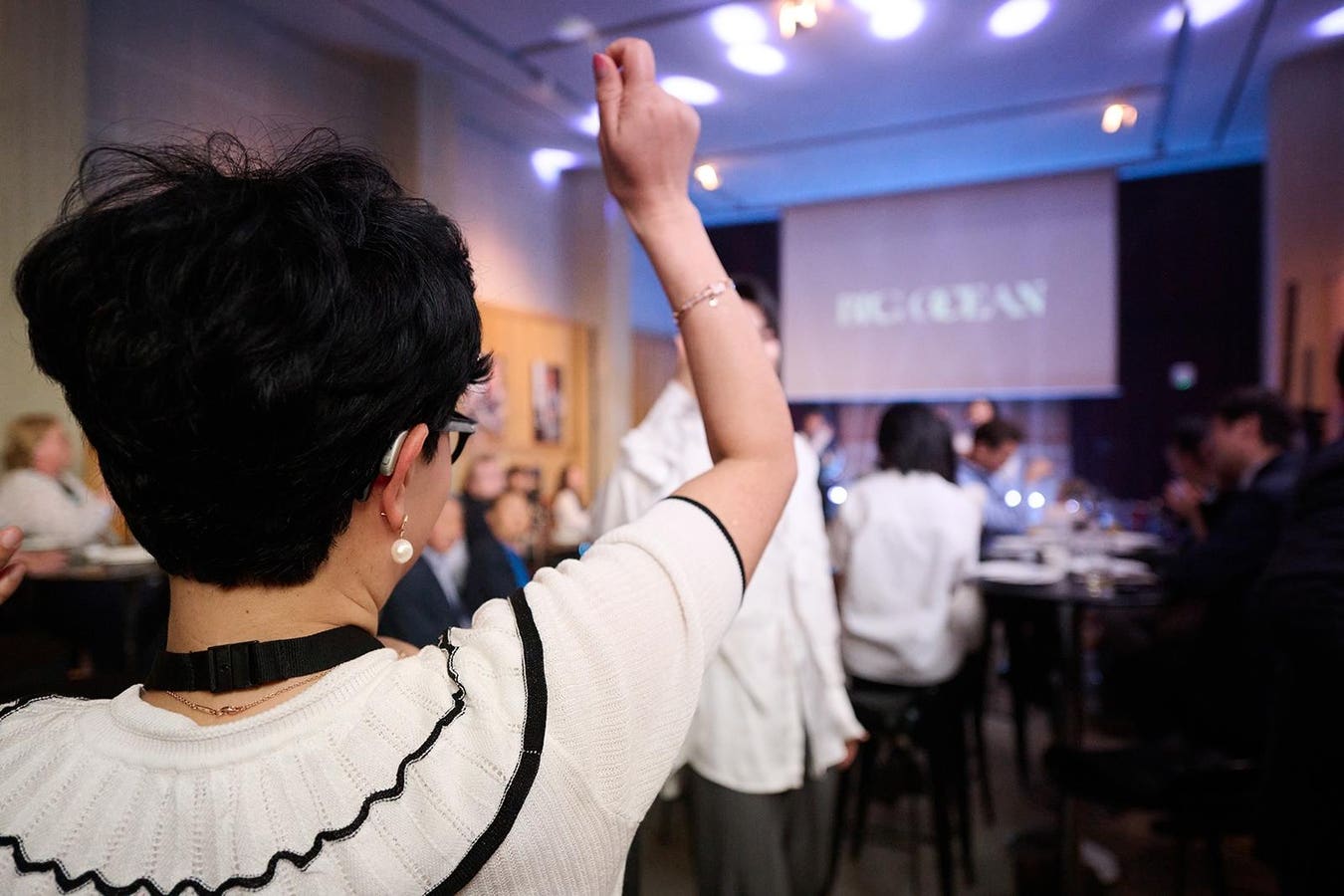
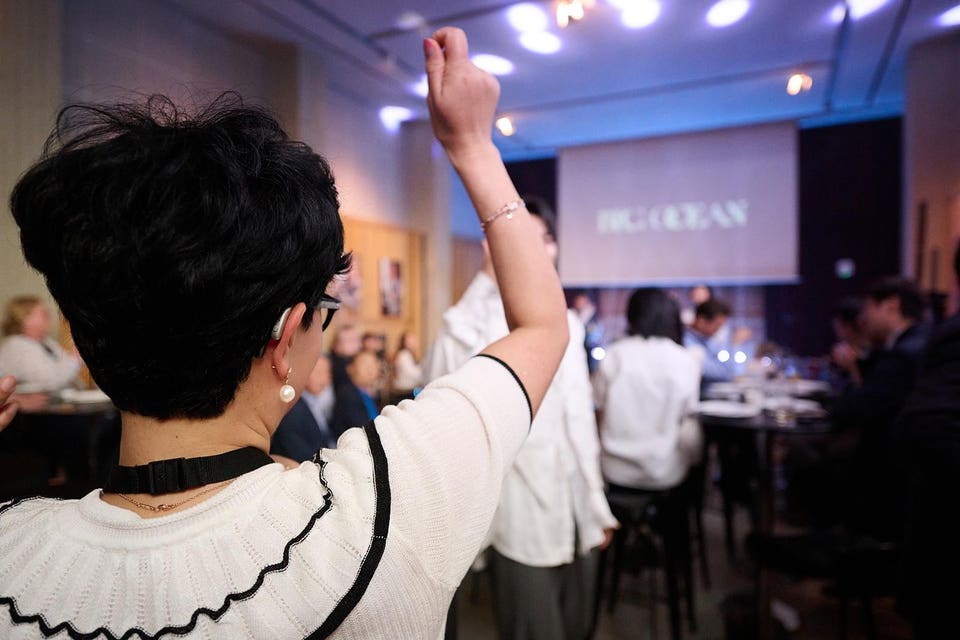
A woman wearing a hearing aid enjoys a Big Ocean performance at Kind Seoul, South Korea.
GN Group
It’s a pretty unique and fantastic combination. Deaf K-pop bands, Seoul jazz clubs and permanent Auracast installations reveal the market’s true woes.
Earlier this week, I found myself at an intimate club in Seoul called Jazz Mercy Seoul.
I participated in Korea The 37th World Congress of AudiologyThe GN Group brought together hearing professionals, technology partners, media, industry leaders, and deaf and hard-of-hearing people from South Korea and abroad for what it called the Seoul Conference.
In theory, this is a demonstration of Auracast™, the Bluetooth broadcast audio technology that’s starting to appear in public spaces around the world.
What I witnessed felt much bigger than that.
The night’s performers were Big Ocean, the first K-pop boy band whose members all suffer from hearing loss. Kim Ji-seok, PJ, Lee Chan-yeon Through a combination of singing, dancing, Korean Sign Language (KSL) and extraordinary talent, he has gained a loyal following. Their fans have helped propel the band onto the global stage, earning recognition from Billboard and a spot on Forbes Asia’s 30 Under 30 list.
What struck me was not just the performance, but the way it was delivered. This is the room itself. KindSeoul just became Korea’s first permanent Auracast facility. Throughout the venue, people can listen directly to multiple audio streams. One of them performed live. Another provided Korean-English translation. Some listeners are connected via hearing aids, while others use earbuds or headphones. Those without compatible equipment can use the venue’s receivers.
Deaf, hard of hearing and hearing people can sit side by side and experience the same performance in a way that suits their individual needs.
It’s a powerful demonstration of accessible technology and, more importantly, a lesson in market creation.
The obstacle is never the product
The hearing industry has been working to improve technology for decades. Devices are getting smaller, smarter, more connected, and more powerful. Yet adoption rates often lag behind innovation rates.
As a lifelong hearing aid user, I have seen this disconnect occur most of my life. Standing in that room, I found myself wondering if the industry had misunderstood the problem.
The obstacle was never the product. The barrier is permission.
In much of Asia, hearing loss has long been associated with significant social stigma. Many people see it as an inevitable sign of aging that needs to be hidden rather than discussed. Despite the availability of increasingly sophisticated solutions, millions of people who could benefit from hearing technology have never pursued it.
However, the Asia-Pacific region is one of the fastest growing hearing markets globally. The contradiction is obvious. Opportunities are always there. What’s missing is a cultural shift.
I also found myself wondering where I was.
In 1950, Korea was at war, with much of the country in ruins and an uncertain future. Today, Seoul ranks among the world’s great modern cities, and Korean culture has become one of the country’s most influential exports.
K-pop is not just about entertaining the world. It reshaped people’s perceptions of Korean culture. Now, unexpectedly, it may help reshape how people think about accessibility, including about hearing loss.
The appearance of the ocean is no accident. The group was created by Pai Xing EntertainmentIts founder and CEO Haley Cha champions the idea that music can connect people no matter how they hear it. This is why Big Ocean is so important.
For decades, the hearing industry has been marketed largely from a needs perspective. The message is often simple: You have a problem and this technology can help solve it. The challenge is that people rarely crave needs but rather possibilities.
The Big Ocean represents a different narrative. Their hearing aids and cochlear implants were not hidden, nor was their hearing loss viewed as an issue that needed to be overcome before participation could begin. Rather, it’s just part of who they are as performers. The message of their success extends far beyond music. For young people in South Korea and beyond, hearing technology is no longer seen as a symbol of limitation. It can be part of a modern, connected and ambitious life.
When culture changes, markets begin to change.
Culture grants permission. Infrastructure creates markets.
Culture alone is not enough, permission must also be given. Infrastructure determines whether the license becomes a market.
Andreas Anderhov, President of Asia Pacific and Global Sales of GN Group, described this challenge in a way that impressed me. As he pointed out at the event, misconceptions about hearing loss don’t just affect people’s perceptions. They also shape the way environments are designed, often overlooking the complexities of hearing in dynamic, noisy environments. Here, KindSeoul is no longer just a music venue. One small but impactful detail of the evening was probably the one least visible to the audience, the Auracast.
Powered by Ampetronic’s Auri™ system, the venue provides Auracast broadcasts as part of its regular operations. What attendees experienced that night was not a one-time event. From now on, it has become part of the way KindSeoul delivers music and programming.
This distinction is important because markets do not change in response to demonstrations. Infrastructure changes when they become part of everyday life. If Big Ocean represents the cultural aspect of market creation, KindSeoul represents the infrastructure aspect. The effects extend far beyond hearing loss. The long-term vision is simple. People will increasingly use hearing aids, earbuds, headphones and devices they already own rather than borrowing specialized equipment from venues.
Accessibility starts to look less like accommodation and more like infrastructure. More like Wi-Fi.
Build ecosystems, not just technology
What impressed me was the natural role GN plays in integrating the ecosystem, not just technology showcases. The company brings together performers, business leaders, technology providers, hearing care professionals, media, and people who are deaf and hard of hearing to experience Auracast with others in the room.
The industry often discusses conference room accessibility. Seoul feels different because the people the technology is designed to serve are in the room experiencing it firsthand. I’ve seen this before. Similar collaborations have emerged around Auracast deployment: frankfurt airportMultiple stakeholders, including Samsung, Google, Sittig and Fraport, have come together to bring broadcast audio into real-world environments.
The lesson is that markets rarely emerge from a single innovation. They arise when multiple stakeholders act together. As Big Ocean changes perceptions and KindSeoul provides the venue, GN connects the two ecosystems with a focus on engagement, context and real-world listening experiences. Often, companies focus on the product and ignore the environment required for adoption. Successful markets require culture, infrastructure and partnerships. They need places where consumers can experience the future firsthand. This is what happened in Seoul.
Why this is more important than listening
As the evening wore on, I found myself thinking less about listening technology and more about culture, specifically jazz. As someone who loves jazz, I realize that technology has faded into the background, which is exactly what good infrastructure should do. All that’s left is the show itself. This is probably the most striking aspect of what KindSeoul has built. Whether the music is jazz, K-pop, classical or rock, now more people can experience it on their own terms. People with hearing loss, visitors who need an interpreter, and lifelong music lovers can all share the same performance in the same room.
Finally, this story is not about Auracast. It’s about cultural acquisition. This is about ensuring the live music experience is accessible to as many people as possible, no matter how they listen.
Sitting in a Seoul jazz club, bouncing my head to the music, I realized I wasn’t listening to a hearing technology demonstration. I have witnessed the evolution of a market where advances in technology, shifting cultural perceptions, and an evolving ecosystem ultimately converge.
A new generation has decided that hearing loss does not belong in the shadows. At the same time, infrastructure is arriving to support this transformation, and an ecosystem of organizations is coming together to make it a reality.
This is how the market truly opens up. It’s not technology that advances alone, it’s culture that changes, infrastructure changes with it, and people come together to create experiences that others want to be a part of.
Every business leader waiting for a difficult market to arrive should be paying attention to what’s happening in Seoul. Markets don’t appear on their own. People changed the story and then built systems to support it.