The Tamesis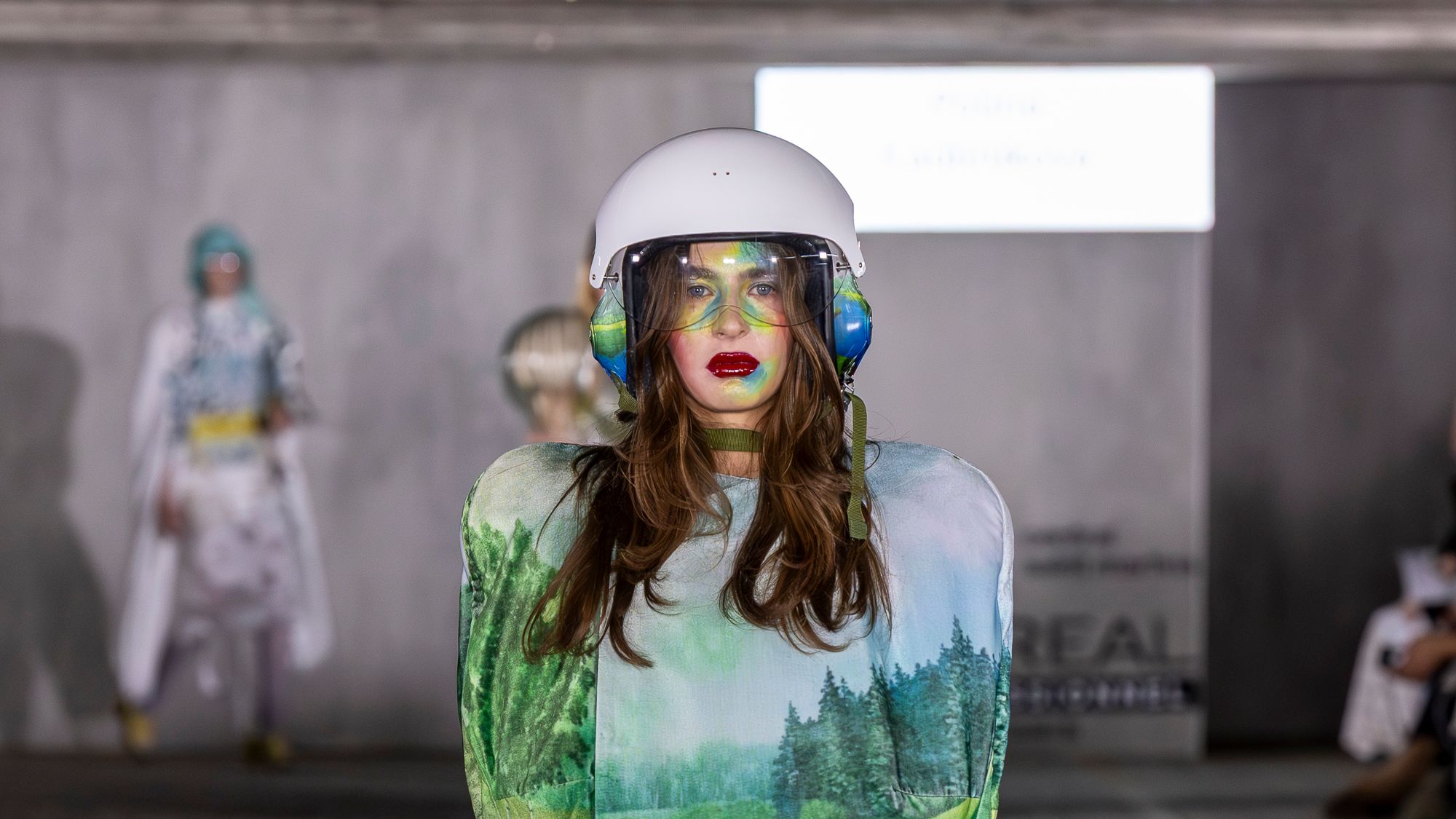
For the first time in 15 years, the Central Saint Martins BA graduate show has left King’s Cross station and ventured south of the river to Peckham. Despite the inclement weather, the streets surrounding the venue were filled with a summery vibe: jewel-toned buzzballs adorned the sidewalks, and the trembling sounds of African dance and dolby hooks cut through the air from cars whizzing by. Ascending a flight of pink Pepto Bismol stairs (past a small group of protesters), crossing a panoramic roof and re-entering a vast parking lot – students in the CSM Bachelor program prepared themselves for a spectacle: a performance that historically contemplates the world it has shaped and suggests what might come next, unfettered. Friends, family, editors, and esteemed alumni sat in the concrete space, and the atmosphere was relaxed and cheerful.
Several of the 40 designers from at least 27 different countries and CSM’s fashion-related projects will go on to study for master’s degrees, while others will work in the studio, events and communications departments. But the BA Show is a place where you don’t have to worry about contending with commercial demands (yet), succumbing to capsule clothing edits, or serving on the altar of algorithms and affiliate programs. This group is certainly not loyal to the demigods of quiet luxury either – in the industrial realm, colors become harsh, textures and techniques come to the fore, and very personal storytelling becomes more explicit.
As course director Sarah Gresty (who has been teaching the program for a decade) points out, the 2026 lineup grappled with their own identities to weave a more personal picture of real-world issues. The show opened with womenswear student Polina Kadilnikova, a Ukrainian designer who returned to her country while working on her collection and found inspiration in those who broke away from the norm, took up arms or cared for others. The first helmeted model walked the catwalk, her arms tightly wrapped in a tunic painted with a watercolor of a lush forest. A tin dress with naturalistic swirling cutouts is both armor and prism of the past. This year, Kadyrnikova won first prize with a strong individual performance, judged by popular vote, which felt even more powerful.
The H&M Sustainable Fashion Award-winning Harley Angrabeit brought excitement to London’s Ridley Road Market and its well-dressed uncles and aunts, creating a trippy, overstimulated busy Saturday feel in cobalt blue, crushed pink, houndstooth and flammable labels. A red fishnet vest was transformed into a speaker, while a pillow skirt was given structure with an oversized hanger. Receipts flew out of the bodice of a handbag dress, which was affixed with a selection of glittering market jewelry. The visual impact is strong and the atmosphere is high.
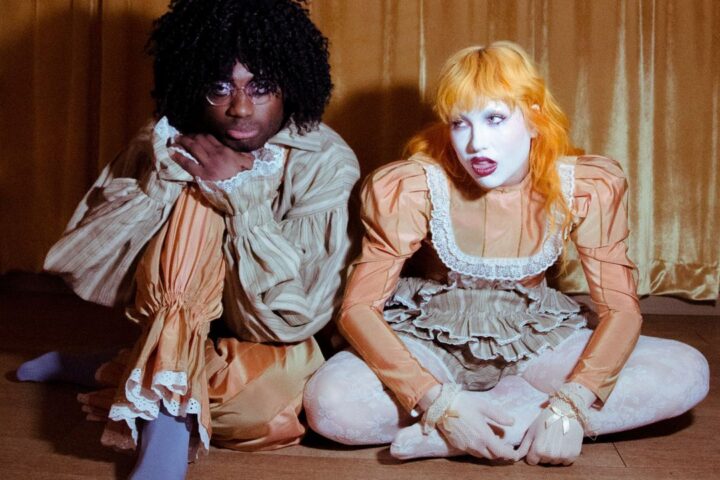
From former Savile Row tailor Daniel Haworth’s collection of ball-buttoned paper doll dresses and fluted hems to Cassie Ambroz’s models taking to the catwalk in candy-coloured spiral legwarmers and ultra-puffy dresses, the space taken up was literal and free. Buzz Shatford closed the show with a cast of snarky neon beauty queens in latex skirts and furry puff hems.
Even the more subtle ones have a clear point. With its twisted tailoring and flawless embroidery, Shane Elias’s menswear has an almost traditional quality, with a hint of Slimaneism (and Elias’ own background as a musician). It easily slots into the Dover Street Market rails. Matches fashion scholar and couturier Julie Pereira Martins put on a theatrical performance—one model walked with an egg and a spoon in her mouth, another laughed uncontrollably, another screamed—but her Pina Bausch-style dresses and rosebud skirts were imbued with a sophisticated ballet quality.
The entire edit of designers, regardless of their majors and backgrounds, have experimented with their own prints and textiles — and Gresty says the students have been eager to create something unique and personal. Chi Wei’s beaded boleros, boleros and bows brought sensuality, while printmaking student Finlay Maguire’s dandies captivated with the color and textural florals of Dries Van Noten. Iraqi designer and BFC scholar Zahra Al-Najjar showed printed trousers made from vintage Arabic magazines, and delicate dresses painted with her interpretation of Farsi. Matteo Dunkley, who specializes in knitwear, invented a technique for embedding wax in knitted fabrics, resulting in a flattering, malleable, shimmering material: a structured, bow-cinched, layered hem perfect for any fun new fashion star on the press tour. Greta Guise Smith created a hand-applied latex cape and fanned rubber cape for sensitive dominatrixes to sanctify their movements, while Julia O’Callaghan debuted a buttery latex fringed dress for a look that was part pagan goddess, part hipster.
The wow moment came from Yuki Naka, another H&M Sustainable Fashion Award winner, who made garments out of soap: a collar that looked like a cable-knit jacket and would lather up on the runway. Menswear student and BFC scholar Luke Saul proposed a pair of “jeans” made from scraps of canvas prints, and a sequined dress made entirely from aluminum cans. “Education, not missiles,” reads his billowing, hand-woven tunic.
Models fresh from the catwalk mingled in the back row, huge millinery hats swaying to a frenetic soundtrack – students were encouraged to use music that resonated with their work, without regard to any flow, so we went from Drake to Queen, Eastern European folk and super pop. There was a sense of relief as the crowd rushed towards the still bright summer night lights of south London. For this year’s graduates, the future is not one we are chaotically pushing toward, but one filled with possibility.