The Tamesis
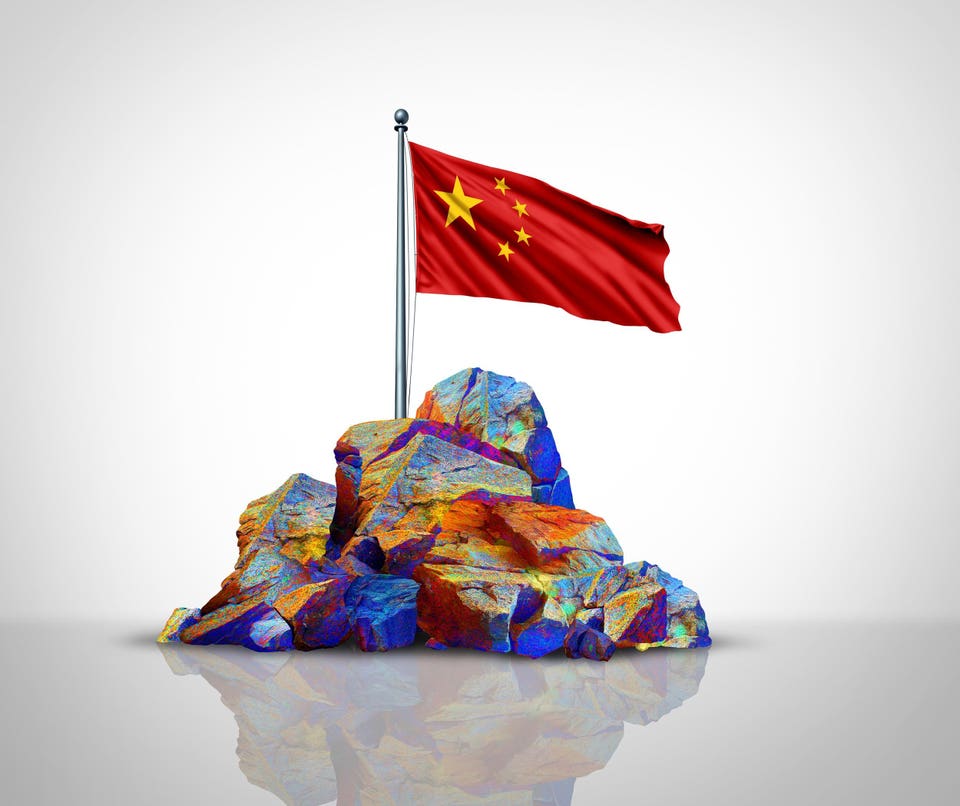
China dominates the global mining and refining of many of the key minerals critical to 21st century new technologies.
Getty
Washington has been talking loudly about critical minerals for years. Senior officials rightly view supply chains for tungsten, lithium, cobalt, rare earth elements and copper as central to economic security, technological development, defense readiness and green energy. Diplomatic activities are very active. Since 2023, the United States has signed multiple memorandums of understanding in Central Asia, Africa, and Latin America aimed at ensuring alternative supply chains for these minerals outside China’s orbit.
However, many of these protocols have struggled to move beyond signaling. The pace of announcements outpaced implementation beyond the expected drag on bargaining or logistics. Frameworks have proliferated, but financing, capacity optimization, logistics infrastructure and downstream industry development have lagged behind. For partner governments and markets, the gap between rhetoric and deployed capital is becoming increasingly clear.
Current U.S. Mining Strategy
So far, Washington has maintained continued momentum as U.S. policymakers generally adopted a “minerals first” strategy. The logic behind this approach is understandable. China’s monopoly in refining critical minerals was built over decades through coordinated industrial policies, infrastructure subsidies and a vertically integrated processing system. Even if the political will exists, the United States cannot truly reestablish this dominance overnight.
On the contrary, the current strategic focus of the United States is to expand the global supply of raw materials. The increase in raw ore production in friendly jurisdictions aims to weaken the pricing leverage of the downstream processing market and gradually reduce China’s advantage in the value chain. In theory, increased upstream diversification will eventually spur the emergence of local refineries and alternative industrial ecosystems, as ore miners look to move up the value chain and direct revenues toward national development.
The problem is that mining projects do not operate in isolation. The mine requires rail, ports, processing facilities, export financing, power generation, water supply and long-term offtake agreements. Without these adjacent investments, new mineral production tends to exacerbate the dependence Washington seeks to reduce.
President Trump’s deal-making diplomacy arguably breathed new life into the early stages of critical minerals negotiations by expanding cooperation and reframing negotiations from a security perspective. The focus on deals has accelerated discussions around mining concessions and investment frameworks. In some areas, governments that previously struggled to attract Western attention are now hosting visits from senior U.S. officials, financiers and mining executives.
This momentum is important, but not enough. It also creates an unexpected vulnerability. Too many projects are viewed as individual transactions rather than components of a larger industrial ecosystem. There is no coordination similar to China’s Belt and Road Initiative. The consequences are already evident around the world.
fleeting mining opportunities
The Lobito Corridor has become one of the West’s flagship infrastructure initiatives. The corridor aims to connect Central African copper and cobalt production to Atlantic export markets via Angola. Strategically, the project aims to reduce logistical dependence on Chinese infrastructure and create alternative routes for mineral exports. The vision is compelling. Implementation and progress do not.
Financing commitments remain uneven, infrastructure progress is slow and investors continue to question the corridor’s ability to support industrial capacity. Lagging U.S. cooperation was taken for granted, and the project openly planned for U.S. investment and aid to dwindle due to Washington’s erratic policies and poor planning. The Zambian government, one of the main beneficiaries of the Lobito Corridor, had hoped the move would offset Chinese influence but no longer operates under that assumption.
The case of the Democratic Republic of Congo is even more stark. Kinshasa has aggressively sought to strengthen ties with Washington and Western partners after the previous administration made overtures to Beijing. It is one of the first examples of critical minerals diplomacy, a framework that promises investment and support. Recognizing the local risks, it became a tool to compete with China in the mineral-rich but unstable interior of Congo. So far, utilization rates have been low, with China retaining an edge in key areas of Congo’s cobalt and copper.
It’s not just Africa’s frontier markets where the United States has failed. In Kazakhstan, possibly the next “key mineral Saudi Arabia,” the United States is on the verge of snatching defeat from the jaws of victory, but is at least moving in the right direction.
Kazakhstan offers something that many jurisdictions cannot. It has vast mineral reserves, a relatively sophisticated financial structure, political stability, and increasing integration into international capital markets. What’s more, it actively positions itself as a long-term industrial partner rather than just an exporter of raw materials. One hopes Washington will reward the engagement.
At the C5+1 dialogue in November 2025, the United States, Kazakhstan and other five Central Asian countries expressed their willingness to deepen economic cooperation. On June 11 and 12, Astana will host the Astana Mining and Metallurgy Congress, which will also host the first face-to-face C5+1 dialogue focusing on critical minerals.
The coordination of these forums, coupled with recent investment announcements such as US company Cove Capital’s entry into the world’s largest undeveloped tungsten deposits in Kazakhstan, at least reflects an understanding that implementation is the order of the day. This project illustrates this evolution. These deposits are estimated to contain one of the largest untapped tungsten resources in the world. The project structure combines U.S. operational leadership with national participation from Kazakhstan and strong support from EXIM and DFC financing facilities. The Nasdaq listing plans to further integrate into Western capital markets.
Realigning U.S. Strategy
This model is important because it goes beyond mere extraction. This is good news for Kazakhstan-US relations and competition with China in Central Asia. The bad news for U.S. policymakers is that this could inadvertently teach the wrong lesson: The mining ecosystem will largely work itself out. Kazakhstanis have taken the initiative to a large extent to create a suitable investment ecosystem. Where host governments are unable to do so in other less developed areas, Beijing will bring its own ecosystem. Washington remains unlikely to deliver on that promise.
Mining investments in frontier markets carry political and financial risks. Strategic competition for critical minerals requires acceptance of this risk. Without long-term commitment, no major industrial realignment will occur. Washington now faces a crucial strategic choice. If the United States wants to build resilient critical minerals supply chains, it must invest beyond the mines themselves. “Mining First” doesn’t mean just mining. In addition to refining facilities, transportation corridors, export terminals, power systems and industrial processing zones are all part of the same geopolitical competition.
Otherwise, this pattern will repeat itself. U.S. diplomacy will keep the door open, initial mining deals will move forward, and China will continue to fill adjacent sectors that ultimately determine long-term control of the value chain.
Critical minerals are never just about the rocks in the ground. They also involve who funds the ecosystems around them.