The Tamesis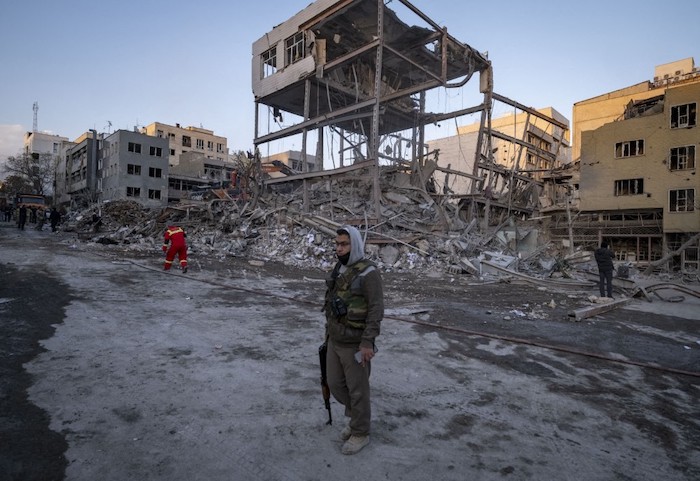
Asian markets tumbled on Tuesday, while oil prices climbed as investors worried about Iran and a wider war in the Middle East.
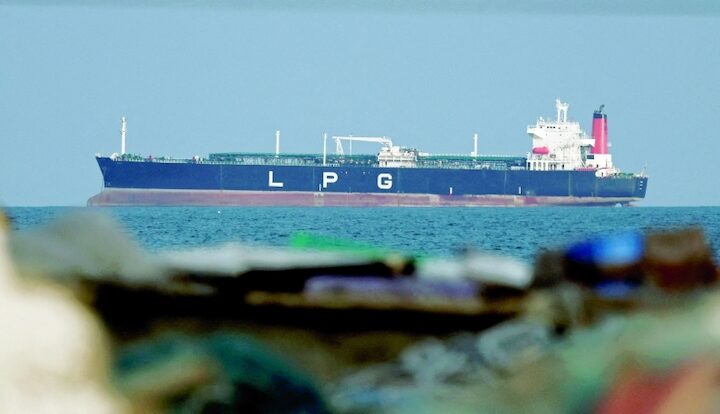
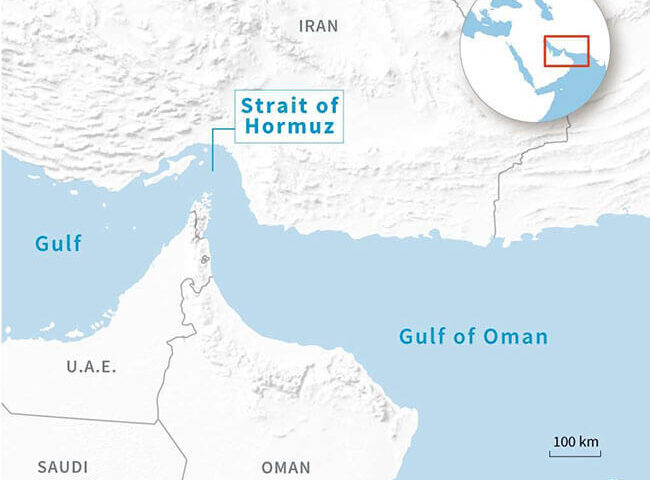
U.S. and Israeli attacks on the Islamic Republic have slashed energy shipments through the Strait of Hormuz – which accounts for about a fifth of global oil shipments – raising concerns that a new energy crisis will fuel inflation.
South Korea was the most affected by the market, with the KOSPI index falling by more than 7.2% and Tokyo’s Nikkei Index also falling by 3.1%. In China, Hong Kong’s Hang Seng Index fell 1.1% and the Shanghai Composite Index fell 1.4%.
Also read: India boosts nuclear ambitions with $190 million Canadian uranium deal
These moves are not surprising given the potential for a prolonged blockade of the Strait of Hormuz, a critical strait. Energy supply corridors for Japan, South Korea, India and China – Four of Asia’s largest economies.
Analysts said market moves so far have been relatively benign as hopes remain that the crisis may be limited to a few weeks and may not cause major problems for the global economy.
But analysts warn that the longer the situation persists, the more painful the hit to supply chains and price spikes will be.
US President Donald Trump said the war, which started on Saturday (February 28), was “dramatically” brought forward, but warned it could last more than four weeks.
He also set out goals for the first time – to destroy Iran’s missile, naval and nuclear programs and end its support for armed groups across the region. Notably, they do not include the overthrow of the Islamic Republic.
So far, there is no end in sight to the hostilities. According to Reuters, the Saudi Ministry of Defense posted on X that the U.S. Embassy in Riyadh was attacked by two drones, causing limited fire and some damage.
Meanwhile, the U.S. State Department is urging Americans to leave Egypt and head east across the Middle East.
Threat of rising oil prices
Iran has responded by launching missiles and drones across the Middle East, including in Saudi Arabia, Qatar and Dubai, while explicitly threatening to drive up global energy costs.
The fiery rhetoric sent oil prices soaring nearly 14% on Monday before retreating slightly, while European natural gas prices soared nearly 40% after Qatar’s state energy company said it would halt liquefied natural gas production.
Meanwhile, a general in Iran’s Revolutionary Guards threatened to “burn any ship trying to navigate the Strait of Hormuz.”
“We will also attack oil pipelines and not allow a drop of oil to leave the area. Oil prices will reach $200 in the coming days,” he warned.
Crude oil surged again on Tuesday, with Brent crude rising more than 4% and returning above $80 a barrel, and WTI rising more than 3%.
India, one of Asia’s four major powers dependent on Middle Eastern oil and gas, said it had Start rationing natural gas supplies to industry According to Reuters, production in Qatar was shut down.
The Dutch TTF natural gas contract, considered a European benchmark, rose more than 33%.
Rising energy costs are likely to cause headaches for most central bankers as they look to lower interest rates to support the economy while lowering inflation.
“Surges in energy prices pose a dilemma for central banks,” said Rodrigo Catrill of National Australia Bank. “Stagflation is very unsettling for central banks, and a long-term energy shock can lead to inflation while also weakening economic growth.”
Pepperstone’s Chris Weston added: “With the Strait of Hormuz temporarily restricted, the longer the disruption continues, the greater the risk that other facilities and infrastructure across the Gulf may be forced to close.”
South Korean chip and airline stocks fall
Stocks mostly retreated across much of Asia, extending Monday’s losses, while the dollar gained on a rush into safe-haven assets.
Seoul’s stock market, which has soared more than 40% this year on gains in technology stocks, led the losses with a more than 7% decline as investors returned from the long weekend.
Chipmakers Samsung and SK Hynix, which have seen their shares soar this year on the back of gains in artificial intelligence technology, are at the forefront of the sell-off. Samsung fell 9.9% and SK Hynix fell 11.5%.
Kim Dae-jong, a business professor at Sejong University, told AFP: “South Korea is an economy highly dependent on exports, and signs of the expansion of the war in the Middle East have increased market uncertainty.
“The country is also completely reliant on energy imports, and … some impact is almost inevitable.”
Tokyo fell more than 3%, while Hong Kong, Shanghai, Sydney, Wellington, Taipei and Jakarta also fell sharply.
European stock markets also plummeted at the opening, with London, Frankfurt and Paris all falling by more than 1%.
Airlines were again among the biggest losers, with Tokyo-listed Japan Airlines down more than 6%, Cathay Pacific down 2.8% in Hong Kong and Qantas down 1.8% in Sydney.
Air France-KLM shares fell 3% in Amsterdam.
“As long as oil continues to flow, this remains a volatility event rather than a systemic event, but it confirms that geopolitics is now structurally integrated into the investment cycle,” said Monica Defend of the Amundi Investment Institute.
“In the short term, it will exacerbate inflation risks, dollar strength and asset class dispersion. Energy volatility, inflation uncertainty and regional dispersion are re-emerging as defining features of the market.”
The U.S. dollar index, which measures the greenback against six other currencies, held near a six-week high of 99.07 as investors shunned currencies they considered most vulnerable to rising energy prices. Reuters said the U.S. 10-year Treasury bond yield rose nearly 5 basis points to 4.1%.
Gold prices fell 1.2% to $5,266 an ounce as the dollar strengthened. Bitcoin fell 3.6% to $66,925.7.
Key figures around 0815 GMT
West Texas Intermediate crude oil: up 3.7% to $73.83 a barrel
North Sea Brent crude: up 4.3% to $81.06 a barrel
TOKYO – Nikkei 225: down 3.1% to 56,279.05 (close)
Hong Kong – Hang Seng Index: down 1.1% to 25,768.08 (close)
Shanghai – Composite Index: down 1.4% to 4,122.68 (close)
LONDON – FTSE 100: down 1.3% to 10,641.69
USD/JPY: fell from 157.31 yen to 157.29 yen
NEW YORK – Dow: down 0.2% to 48,904.78 (close)
- AFP Additional input and editing by Jim Pollard
See also:
War with Iran could hit some of Asia’s biggest economies hard
India delays talks, China says ‘cancel tariffs’ after US ruling
China exploits Trump’s ‘uncertainty’ to dominate global trade
Canada Carney leads trade shift away from U.S. to China, India and Australia
China ‘weaponizes bottlenecks’ by restricting exports of key rare earths
China’s Xiaomi to set up safety team after fatal electric car crash
Panama hands over canal port terminal to Maersk, MSC – CNBC
Tariff ruling casts huge doubt on U.S. trade deal