The Tamesis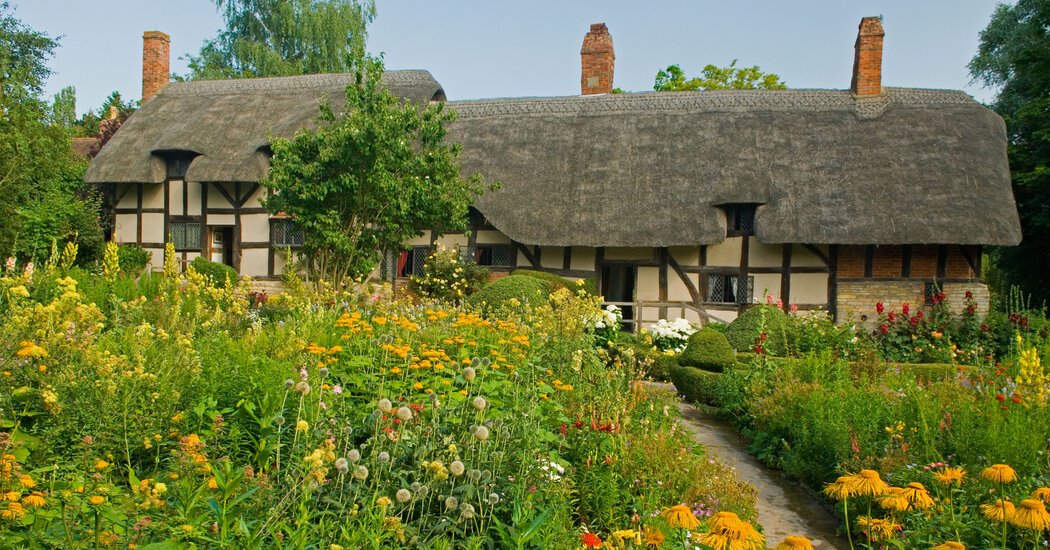
Architecture and Design
[–>
Persian
Distinguishing characteristics: Enclosed, shaded, lush. The word “paradise” indirectly stems from an ancient Persian word signifying a walled-off garden.
Common elements: A four-quadrant design with two perpendicular axes, a pool at the center, fruit trees for sustenance and cypress and plane trees for shade. The oldest documented Persian garden was found in Pasargadae, the first stone-built settlement of the Achaemenid Empire under Cyrus the Great, in the sixth century B.C. “Everyone who came later — the Greeks, the Romans — was desperate to imitate Persian gardens,” says Wade Graham, 58, a Los Angeles-based landscape designer and historian.
Key example: Fin Garden in Kashan, Iran, completed in 1590.
Japanese
Distinguishing characteristics: Simple, clear, restrained. “None of the values of the West — accumulation, symmetry — are in the Japanese garden,” Graham says.
Common elements: Carefully selected rocks, pools or ponds and Japanese maple, cherry and pine trees. This garden reflects the values of the Shinto religion, Graham says. “If you make a particularly good version of what’s out there in nature, you can lure those gods into the garden.”
Key example: Katsura Imperial Villa in Kyoto, Japan, built in the 17th century.
Italian Renaissance
Distinguishing characteristics: Symmetrical, geometric, lightly playful. There’s “tight geometry near buildings representing the rationality of the Renaissance,” Graham says. “It gets wilder as you get farther away.”
Common elements: Pergolas, courtyards, fountains, statues, herbs like rosemary and lavender, Italian cypress and lemon trees. In the Baroque era, the more irreverent garden designers created hidden jets in fountains to catch visitors off guard.
Key example: Boboli Gardens in Florence, Italy, begun in 1550 and opened to the public in 1766.
Andalusian
Distinguishing characteristics: Meditative, subtle, enclosed; a descendant of the Persian garden. “Plants aren’t very important,” says Graham. “It’s about creating interior spaces that have balance and serenity.”
Common elements: Courtyards, richly colored tilework, cypress trees and fountains. The sound of running water is as important to the Andalusian garden as anything you can see, according to the Brazilian landscape architect Isabel Duprat, 71.
Key example: The Alhambra in Granada, Spain, primarily built during the Nasrid dynasty (1232-1492), with major construction occurring in the 13th and 14th centuries.
French Royal
Distinguishing characteristics: Grand, geometric, orderly. “Strolling in this garden isn’t supercomfortable, but it has power,” Duprat says.
Common elements: The use of parterre, or symmetrical patterns made from manicured hedges separated by pathways and designed to be viewed from above. In this sort of garden, where clipped hedges and strong sightlines are king, “the most important tool is shears,” Graham says.
Key example: The Gardens of Versailles in France, which were designed in 1661 by André Le Nôtre and took about 40 years to build.
English Landscape
Distinguishing characteristics: Naturalistic, irregular, open. “It was a reaction against the French royal landscape gardens [exemplified by Versailles]”, said Graham. “The interior walls and geometry disappeared. “
Common elements: Lakes, sweeping lawns and curved pathways. In lieu of fences, English gardeners installed ha-has, or ditches, to indicate property lines and simulate rolling lawns. “The idea was to make it look like you own everything,” Graham says.
Key example: Blenheim Palace at the edge of Woodstock, England, laid out starting in 1705 by the garden designer Henry Wise.
English Cottage
Distinguishing characteristics: Romantic, abundant, informal. “It’s not a big space, and it’s tended by people who love gardens,” says the Tangier, Morocco-based writer and botanist Umberto Pasti, 68.
Common elements: Different types of plants — perennials, shrubs and bulbs — in one flower bed; roses climbing on walls. The cottage garden traces its origins to the Industrial Revolution, when a growing middle class began planting flowers next to their cottages.
Key example: Anne Hathaway’s 15th-century cottage in Stratford-upon-Avon, England, whose garden was redesigned in the 1920s.
American Colonial
Distinguishing characteristics: Simple, traditional, modest — a pared-down Renaissance garden.
Common elements: Mildly geometric layouts, brick paths, clipped ball-shaped plantings, white picket fences and ivy. “This is the most common garden in the American South, but also in New England and the Midwest,” says Graham. “Connecticut and Martha Stewart scream American Colonial.”
Key example: George Washington’s Mount Vernon Upper Garden in Mount Vernon, Va., initially constructed during the 1760s, with a formal redesign in 1786.
Midcentury Modern
Distinguishing characteristics: Asymmetrical, biomorphic, architectural. Isamu Noguchi, Roberto Burle Marx and other proponents of this style were “looking at Modern art and saying, ‘We can do that in the garden,’” Graham says.
Common elements: Curved ground planes; kidney-shaped pools; and sculptural plants such as succulents, cactuses and agave. This type of garden is now often associated with large corporate campuses like Google’s headquarters in Mountain View, Calif.
Key example: Donnell Garden in Sonoma, Calif., completed in 1948.
Contemporary
Distinguishing characteristics: Sustainable, low-maintenance, clean.
Common elements: Green roofs, naturalistic grasses and adaptive reuse. Contemporary gardens are “about ecological concerns — nature as crisis, not celebration,” Graham says.
Key example: The High Line in Manhattan, which opened to the public in 2009 and has continued to expand as late as 2023.
These interviews have been edited and condensed.
More in Architecture and Design
[-1–>[0–>See the rest of the issue