The Tamesis
Luxury goods companies’ hopes of a modest rebound in the first quarter have been dashed as conflicts in the Middle East hit results.
“The first quarter didn’t really change the outlook for the sector, if anything it slowed or delayed the recovery story we envisaged,” said Carole Madjo, head of European luxury goods research at Barclays. “Markets have already revised down their expectations for the second quarter given the impact of conflict in the Middle East and a disrupted travel environment. The downgrade cycle for the sector continues and margins are also likely to be affected.”
HSBC expects global luxury sales to grow by 5.5% in the first quarter of 2026. However, average organic sales growth for LVMH, Kering, Hermès, Moncler and Prada was 4.2%.
“Momentum in China is improving every quarter for most companies. The biggest issue remains the decline in Chinese tourism,” said TD Cowen analyst Oliver Chen. “The U.S. remains a resilient and attractive market with a K-shaped economy — growth at the high end, but more pressure at the low end, especially as consumers focus on gas prices. The strongest momentum comes from jewelry.”
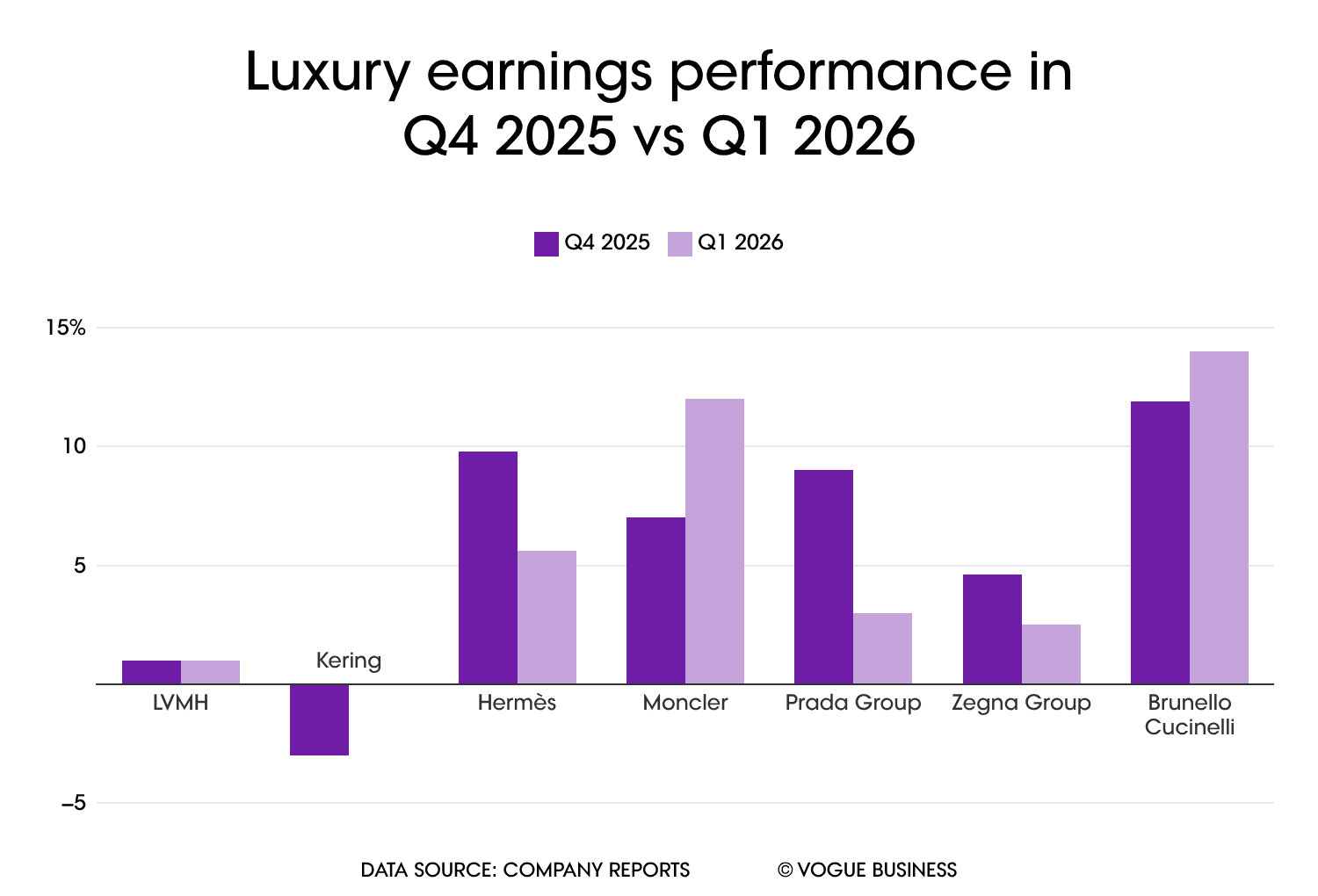
Despite the relative weakness of soft luxury brands, the jewelry “supercycle” continues. Sales of LVMH’s watches and jewelry division, Kering’s jewelry division and Hermès jewelry increased by 7%, 22% and nearly 10% respectively. This bodes well for Cartier parent company Richemont Group, which will release its annual financial results on May 22.
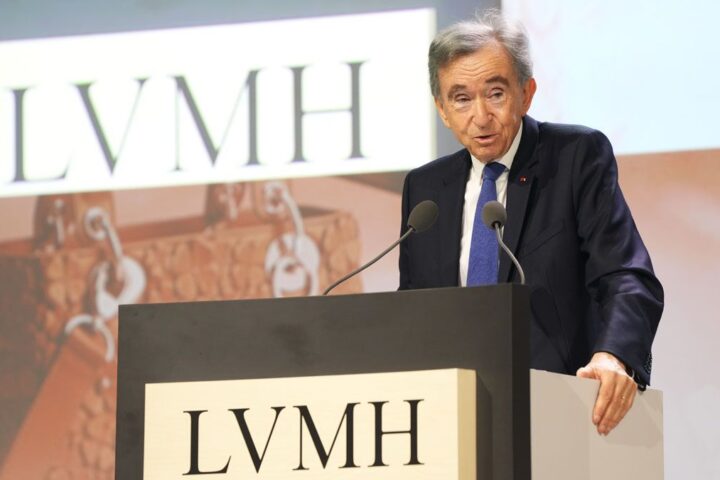
At LVMH’s annual shareholder meeting on April 23, Chairman and CEO Bernard Arnault warned investors that the crisis in the Middle East “could turn into a global catastrophe with extremely serious and very negative economic consequences.” He added: “In this case, who can say how 2026 will play out? Or maybe it will be resolved sooner in some way, which is what we all hope, even if it doesn’t look easy; in this case, business will gradually return to normal.”
Here are the key takeaways from the luxury brand’s first-quarter earnings.
The impact of the Middle East crisis
Although there are differences among companies, the conflict in the Middle East has had an impact on sales growth of about 1 to 2 percentage points. Some companies are less exposed, such as Moncler, which accounts for less than 2% of its business in the Middle East, while others such as LVMH, Kering and Hermès are more dependent on the region; LVMH gets about 6% of its sales from the Middle East, Kering gets about 5% of its retail sales from the region, and Hermès accounts for 4.3%. (According to Jefferies estimates, nearly 8% of Hermès’ total overseas consumption is from the Middle East.)