The Tamesis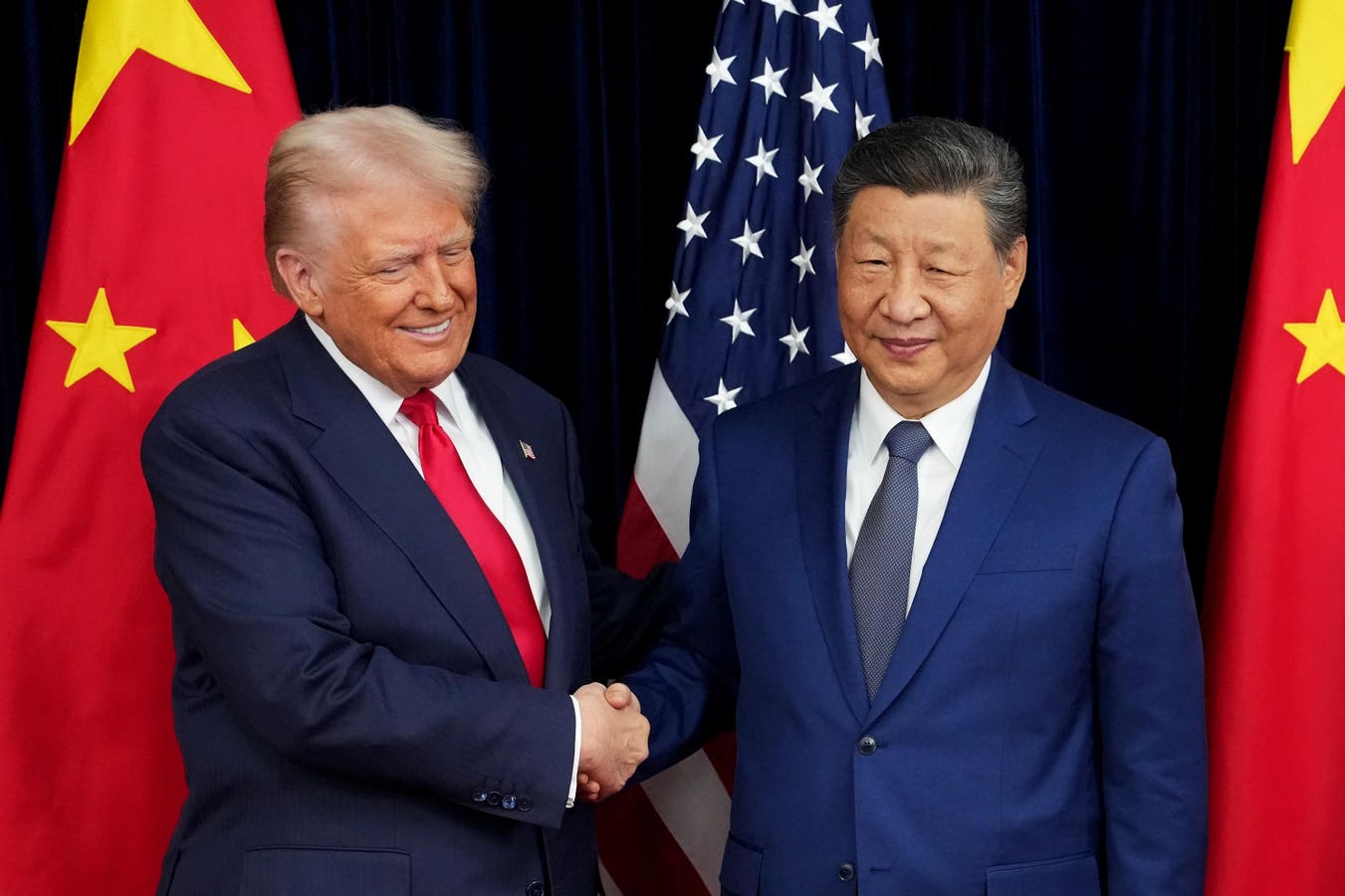
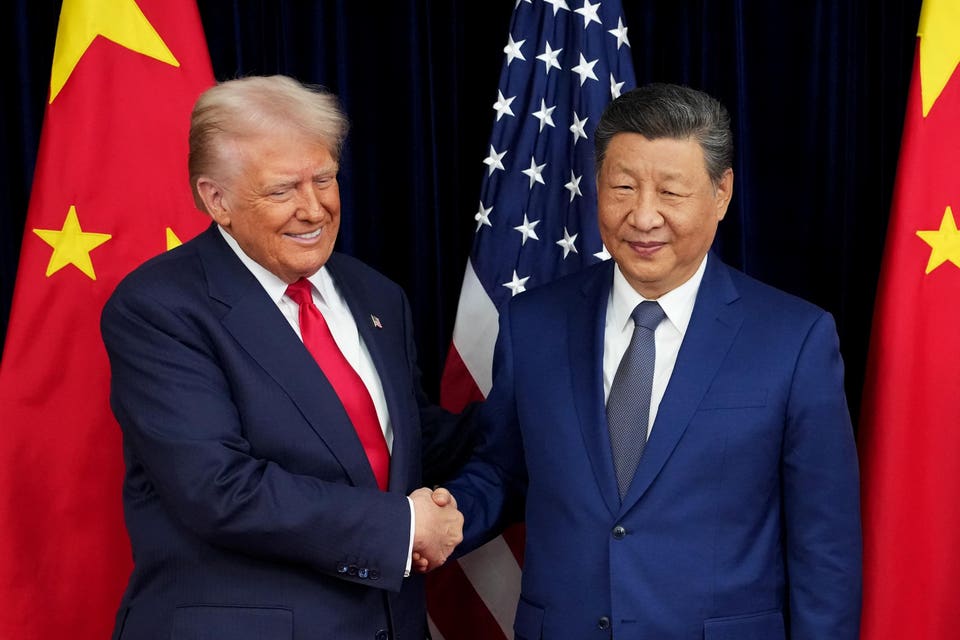
U.S. President Donald Trump greets Chinese President Xi Jinping before a bilateral meeting at Gimhae Air Force Base in Busan, South Korea, October 30, 2025. (Photo by Andrew Harnick/Getty Images)
Getty Images
The director of one of China’s top diplomatic think tanks said in an interview that a planned meeting between U.S. President Donald Trump and Chinese President Xi Jinping in Beijing on May 14-15 may be aimed at stabilizing the Iran crisis that has rocked energy markets and raised concerns about a wider war.
“I think first of all, they will stabilize the current crisis in Iran,” Henry Wang, founder and chairman of the Center for China and Globalization, said in Delphi, Greece, attending the annual Delphi Economic Forum from April 22 to 25.
“China’s Foreign Minister (Wang Yi) has had nearly 30 phone calls with foreign ministers across the region, all Security Council members and the European Union on the conflict,” Wang said. “China has a strong influence on Pakistan and hopefully we can reach some consensus and then promote peace and stability,” he said on Friday, as both the United States and China deepened their influence in the region.
“China can be a very quiet facilitator in this regard. China can do more to promote peace in Iran during the crisis,” said Wang, a former official at China’s Ministry of Commerce, in part because of its influence in the country and the fact that China is the largest trading partner of Iran and all the Gulf states of neighboring Saudi Arabia and Pakistan. Just this month, Xi Jinping spoke with Abu Dhabi Crown Prince Mohammed bin Zayed Al Nahyan during a visit to China, and in the past week with Saudi Crown Prince and Prime Minister Mohammed bin Salman. For its part, the United States yesterday canceled talks with Iran in Pakistan after Tehran reportedly said it would not hold direct meetings with American negotiators.
U.S. and Chinese leaders are also likely to discuss ways to resolve the conflict in Ukraine following Russia’s invasion of that country. “President Trump has also been committed to the Ukraine and Russia issues for a long time,” Wang said. “He needs China’s help to stabilize and promote Ukrainian-Russian peace,” Wang said.
He said that in addition to these two regional conflicts, Trump and Xi Jinping may also try to stabilize the broader bilateral relationship between the United States and China that is strained by disputes such as geopolitics and trade. Wang said other countries would be happy with the progress so that they “don’t have to choose sides and can see some positive things happening in the coming period”.
Wang Huiyao, chairman of the Center for China and Globalization, at the 2026 Delphi Economic Forum in Greece this week.
Russell Flannery
He said Trump and Xi Jinping may agree to form a trade committee and investment committee between China and the United States. “This will be a good mechanism for both sides to see which trade items can be purchased from each other, thereby increasing imports, exports and investment,” Wang said. Wang predicted that the committee would develop guidelines for sensitive and non-sensitive trade items and similar investment areas. “I think these things are going to be widely discussed.”
Other issues that may be raised include lowering U.S. tariffs on fentanyl, China offering free visas to Americans coming to the country, and longstanding disagreements over Taiwan’s status. Taiwan is a booming, autonomous global technology hub claimed by Beijing. Wang also said Beijing would ask Trump to condemn Taiwan’s independence and support peaceful reunification.
In his takeaways from this week’s Delphi Economic Forum, Wang noted interest in global governance issues. “There’s a lot of talk about global governance,” he said. “People want a new multipolar world but then support global governance and the multilateral system. So that’s still the main consensus we hear here. We can’t let the global system collapse.”
The second focus is Europe’s future. “Europeans have to really overcome domestic challenges, populism and economic nationalism. There’s a lot of discussion about that,” Wang said.
The third hot topic is the complex Sino-US relations. “There are more and more discussions about Sino-US cooperation. People very much hope that China, the US and the EU can work together to stabilize the world,” Wang found.
Finally, energy outages are a concern. “There are huge concerns in the Arab world and southern hemisphere countries, especially ASEAN countries and countries such as Japan and South Korea, because they rely heavily on energy flows from the Middle East. This has now become a bottleneck,” Wang said.
Mr. Wang holds a bachelor’s degree in English and American Literature from Guangdong University of Foreign Studies. He studied for his MBA and PhD at the University of Windsor, the University of Western Ontario and the University of Manchester, where he received his PhD in International Management. He was appointed as a senior fellow at the Harvard Kennedy School and the Brookings Institution, and served as an adjunct professor at Peking University, Tsinghua University, China Foreign Affairs University, and the Richard Ivey School of Business at the University of Western Ontario.