The Tamesis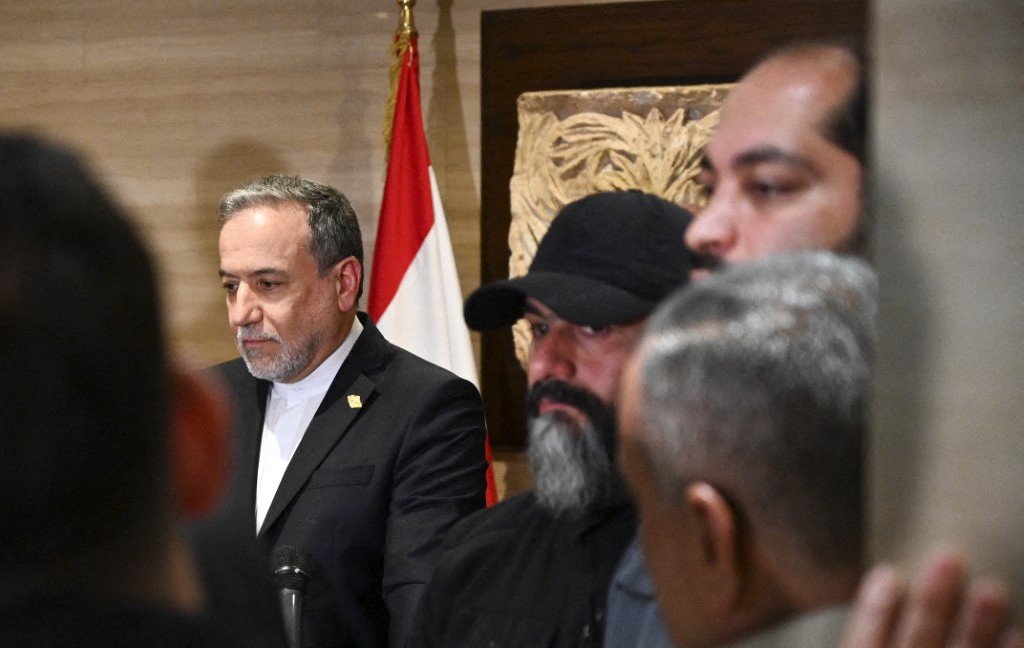
News that Iran’s foreign minister traveled to Pakistan on Friday raised hopes of resuming peace talks with the United States.
oil price Crude oil prices rose more than 2% earlier in the day, but after the news, international benchmark Brent North Sea crude fell 0.5% to $104.57 a barrel, while the main U.S. contract West Texas Intermediate crude fell 1.1% to $94.80 a barrel.
Tehran’s state media confirmed that Foreign Minister Abbas Araghchi will travel to Islamabad on Friday, where the first round of peace talks was held earlier this month to try to end the Middle East war.
See also: Oil prices rise amid tense standoff in Strait of Hormuz
After a Pakistani official revealed the news of the visit, the official news agency of the Islamic Republic of Iran said, “The Iranian Foreign Minister will begin a regional visit to Islamabad, Muscat and Moscow on the evening of Friday, April 24.”
“The purpose of the trip is to hold bilateral consultations to discuss ongoing developments in the region and to review the latest developments in the war waged by the United States and the Israeli regime against Iran.”
Asian stocks were mostly lower on Friday, with Mumbai’s Sensex down 1.3% and the Shanghai Composite Index down 0.3%. However, Tokyo’s Nikkei gained nearly 1%.
Investors worried about the lack of progress in ending the crisis in the Middle East, with Tehran keeping the Strait of Hormuz closed and the United States maintaining a blockade of Iranian ports.
US blockade ‘goes global’
U.S. Secretary of Defense Peter Heggs The blockade of the Strait of Hormuz has “went global” with the seizure of two Iranian “Dark Fleet” ships, it said at a press conference.
Heggs warned that any attempt by Iran to lay more mines in the Strait of Hormuz would be considered a violation of the ceasefire agreement.
He noted that ship transit through the strait is limited, but said it was Iran’s fault for threatening ships.
“This is a true, total lockdown,” he said. “We will use lethal force if necessary – and that has stopped. Other ships have taken notice.”
But he urged European leaders to make a “serious effort” and said “this should not be the United States alone” because Europe and Asia would benefit more from the reopening of the Strait of Hormuz than the United States.
“Being an ally is a two-way street.”
Israel and Lebanon extend ceasefire
The week began with hopes that the United States and Iran would hold new peace talks, but it appears they will end on a negative note, with President Donald Trump saying he “still has time” despite concerns about the inflationary impact of the war on the global economy.
With little progress to spur stock buying, traders are taking a cautious approach ahead of a slew of earnings releases over the weekend and next week from Wall Street giants Alphabet, Meta, Microsoft, Amazon and Apple.
Global stock markets have successfully recovered after suffering heavy losses at the start of the war, with first-quarter earnings beating expectations in many cases.
Chipmakers in particular continue to outperform amid continued optimism about growth in the artificial intelligence industry.
Israel and Lebanon extended their ceasefire for three weeks despite uncertainty over U.S. negotiations with Iran.
International Energy Agency warns
With Strait of Hormuz effectively closed, oil shipments hampered, IEA warns of liquefied natural gas (LNG) Supply will likely remain tight through the end of 2027.
Meanwhile, a closely watched survey of Europe’s largest economy showed on Friday that business morale in Germany has fallen to its lowest level since the coronavirus pandemic hit at the beginning of this century.
The Ifo institute’s confidence barometer fell to 84.4 in April from 86.3 in March, the lowest level since May 2020.
“The German economy is being hit hard by the Iran crisis,” Ifo chairman Clemens Fuest said. “Companies are much more pessimistic about the coming months.”
Sarah Breeden, deputy governor of the Bank of England, told the BBC that global stock markets were correcting.
“There are significant risks, but asset prices remain at historically high levels. We expect a correction at some point,” she added.
US extends shipping exemption
In related news, the Trump administration said Friday that the president has extended shipping waivers for 90 days to help move oil and fertilizer across the United States amid supply disruptions caused by the war with Iran.
An existing exemption that temporarily allows foreign-flagged vessels to transport cargo between U.S. ports is set to expire on May 17. The latest move pushes that deadline to mid-August.
“New data compiled since the initial waivers were issued show that more supply is reaching U.S. ports faster,” White House spokesman Tyler Rogers said.
“This extension will help ensure that critical energy products, industrial materials and agricultural essentials are maintained,” she added in a statement.
She said Trump had extended the deadline by 90 days.
Under the Jones Act of 1920, which was designed to promote the U.S. shipbuilding industry, goods transported by water between U.S. ports must be transported on U.S.-built, U.S.-owned and U.S.-flagged vessels.
But in March, as the economic fallout from the war intensified, the Trump administration temporarily lifted that requirement by granting a 60-day exemption.
Key figures at 1045 GMT
TOKYO – Nikkei 225: up 1.0% to 59,716.18 (close).
Hong Kong’s Hang Seng Index: rose 0.2% to 25,978.07 (close).
Shanghai – Composite Index: fell 0.3% to 4,079.90 (closed).
NEW YORK – Dow Jones: fell 0.4% to 49,310.32 (close).
USD/JPY: fell to 159.69 yen from 159.72 yen.
See also:
Chinese young people use artificial intelligence to subsidize the establishment of personal companies
China’s top streaming site criticized for AI actor ‘database’
Bytedance’s viral video model shows China’s growing control over AI
New DeepSeek model delayed online to test China’s AI chip strength
Nexperia’s Chinese subsidiary’s chips “nearly fully localized”
China beats U.S. again in global patent battle, Huawei maintains lead
China now requires chipmakers to use at least 50% domestic equipment
China’s big technological secret: Dutch chip-making machine replicated in laboratory
Chinese AI firms form alliance with chipmakers to ditch foreign technology
China’s “tech economy” trumps its bleak growth prospects