The Tamesis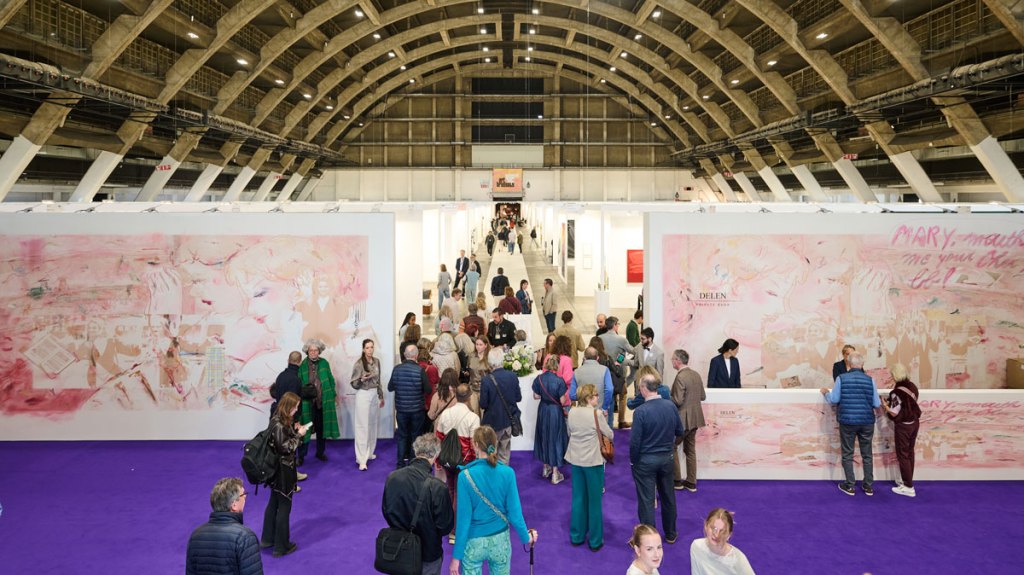
At a press conference for the 42nd Brussels Art Fair (April 23-26), director Nele Verhaeren was refreshingly forthright. “We’re not going to hide this,” she said, referring to the event’s smaller number: 138 participating galleries, 26 fewer than last year. Organizers say the downsizing means a shift to a “quality first” approach, and they see the current edition as an opportunity to create a different kind of art fair experience, one that sees a lot of art but also moves at a slower pace.
According to a pre-show press release, Art Brussels has “clearly shifted this year towards a more focused, clear-cut fair where quality of experience trumps quantity”. The 15% reduction in exhibitors also means that all exhibition exhibitor stands can now be accommodated in one hall at Expo Brussels, rather than requiring 1.5 halls as in previous years. With rising operating costs and ongoing geopolitical and economic tensions putting pressure on dealers, “galleries need to think twice about which shows they attend,” Verhaeren said. “Art is also becoming more and more of a lifestyle. It’s more about experience, and that’s what we do. We’re very focused on enhancing the visitor experience and making it fun.”
Related articles

The move in Brussels is a sign of an industry-wide rethinking of how to differentiate itself from a bloated contemporary art market that has seen sales slow. According to Art Basel and UBS’s 2026 Global Art Market Report, while gallery sales will grow by 2% in 2025, the contemporary art market has cooled during the same period as buyers turn to safer options such as Old Masters, Impressionist and Post-Impressionist works.
“The last two or three years have been challenging years. We can’t hide it, but a lot of people are still doing well and there seems to be a light at the end of the tunnel, and it’s not a disaster,” said dealer Xavier Hufkens, founder of a gallery of the same name in Brussels. “You can’t be up there all the time – that’s not healthy either.”
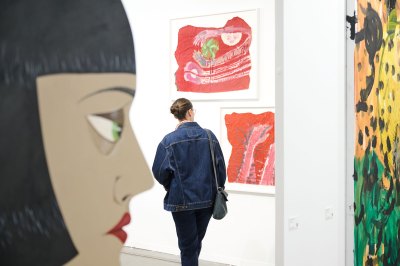
View of Brussels Art Fair 2026.
Photo David Plath
Since founding the gallery in 1987, Hufkens has remained focused on Brussels, opening three locations in the city as part of its international expansion. This strategy seems particularly visionary now, as more and more galleries are closing various outposts and refocusing on the local art market.
It’s a simple calculation, Hefkens said, because he can’t be everywhere at the same time. “I couldn’t deliver this level of quality if I decided [open multiple locations],” he said. “Regional [art scene] It might feel a little small, but it’s not. “
In a nutshell, this sums up the Brussels art ecosystem, which is renowned for its eclecticism and exceptional quality. Filled with affordable art spaces backed by professional collectors and an unusual concentration of mid-sized galleries, it’s also an ideal laboratory for experimenting with new models. Several dealers and collectors stated that the word “local” in Brussels actually meant multinational, given its geographical location and its own multilingual structure.
With a new major contemporary art museum Kanal-Pompidou set to open in November; a joint local government finally formed after 600 days of deadlock; and a competitive 6% VAT on art sales due to come into effect at the end of 2025, the time seems ripe for experimentation.
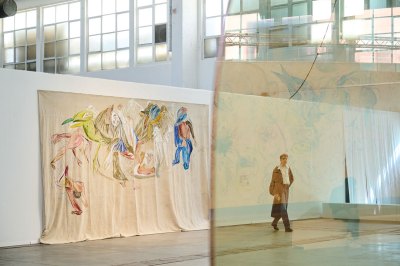
View of Brussels Art Fair 2026.
Photo David Plath
In a “synergy” with the opening of the Center Pompidou, Devrim Bayar, one of the centre’s senior curators, has selected seven large-scale works for the Brussels Arts Center’s new exhibition area called “Horizon”, which is located in the second hall where the exhibition booths once were. Similar to Art Basel’s Unlimited, but still in its early stages, there’s real potential to do more in the space that’s been freed up.
“I like the new Horizons section,” said Liège dealer Nadja Vilenne. She is exhibiting sculptures by Aglaia Konrad Fraunzimerconsists of a series of large colored glass panels that become a kaleidoscope of reflections.
While she was pleased with this year’s fair, Vilenne admitted she didn’t attend last year’s Brussels Art Fair “because I no longer wanted to do the classic fairs –not at all! …Brussels needs new spaces that are better suited to our current reality, and this to me is a great solution. “
Brussels-based collector Alain Servais feels the same way. He supports more affordable initiatives that promote artistic experimentation by reducing gallery costs. He said it was time to urgently “resize the art market: there have to be alternatives and cheaper things”. To this end, Servais believes that a correction in contemporary art prices will meet the needs of a market that is still shocked by ultra-contemporary art being auctioned for less than its primary market cost.
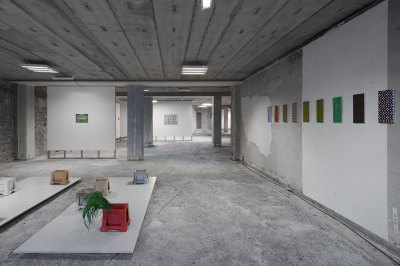
View of the first Parloir in Brussels.
Provided by Parloir Brussels
Servais gave the example of a new pop-up exhibition in Brussels called Parloir, which was held this year in a vacant office building currently under construction in the Belgian capital. The first exhibition caused quite a stir. The exhibition is organized by Gauli Zitter Gallery and is open to 11 galleries until April 26 for a fixed fee of €1,700. One of the highlights was a group exhibition at local gallery KIN, which included a large-scale collage by Marcel Odenbach and a sculpture by Dan Vogt titled GRBBBW (2025), a nuclear family wears a military uniform sewn together. Prices range from €3,000 to €100,000.
While some of Parloir’s participating galleries, such as three-year-old KIN, have participated in Brussels Art Fair in the past, the new fair is more of a dynamic addition than a competitive threat. “It retains [Art Brussels] Says collector Frédéric de Goldschmidt, who supports Brussels’ art scene through his art exhibitions and co-working space Cloud 7.

View of Ronchini booth at Brussels Art Fair 2026.
Photo David Plath
By day two of the Brussels Art Fair, it sounded like that careful effort had paid off. Dealers reported solid first-day sales, with some booths or solo shows nearly sold out, and interest from international collectors and institutions. Still, the sentiment was tempered by a handful of dealers who asked me to come back after the show because they wanted better sales reports.
“We were happy on the first day because we had never shown so many such artists at an art fair before, so it was a discovery for many people. We had new collectors and we showed work by all the artists,” said Margaux Ducerisier, director of Andréhn-Schiptjenko (Stockholm and Paris). She also said that the local collector atmosphere was a major reason why the gallery chose to participate, bringing in works worth between €5,000 and €25,000. These include a jewel-encrusted sculpture by Sabine Mirlesse inspired by a “divination rod” that inhabits a light and airy space between witchcraft and science.
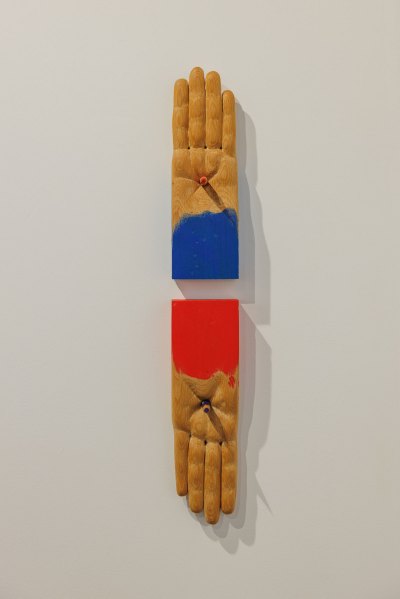
Caspar Devos Geisneden Geislepen Geispleten (2026) was acquired by the Ixelles Museum as part of the Brussels Art Discovery Acquisition Award.
Photography: Martin Pilette for Bureau Rouge
Elsewhere, the young Pizza Gallery from Antwerp is expanding to Ghent, with a nearly sold-out solo exhibition of sculptures by local artist Kasper De Vos. To create them, he turns found rusty oil tanks into giant, twisted dry leaves, or turns large rocks into cheese-like shapes. His works sell for between 1,200 and 8,000 euros, and a beautiful wood sculpture of the “Passion of the Artist” was acquired by the Ixelles Museum as part of the fair’s Discovery Acquisition Prize.
The Pisa Gallery booth was also crowded with young visitors. Many dealers say there is confusion for the next generation of Belgian collectors: Will they continue to follow in their fathers’ footsteps, despite new interests, or give up on art altogether? While the jury is still out on this, Hefkens confirmed that many young collectors visit his gallery.
“People are always interested in art,” he said. Advertisement