The Tamesis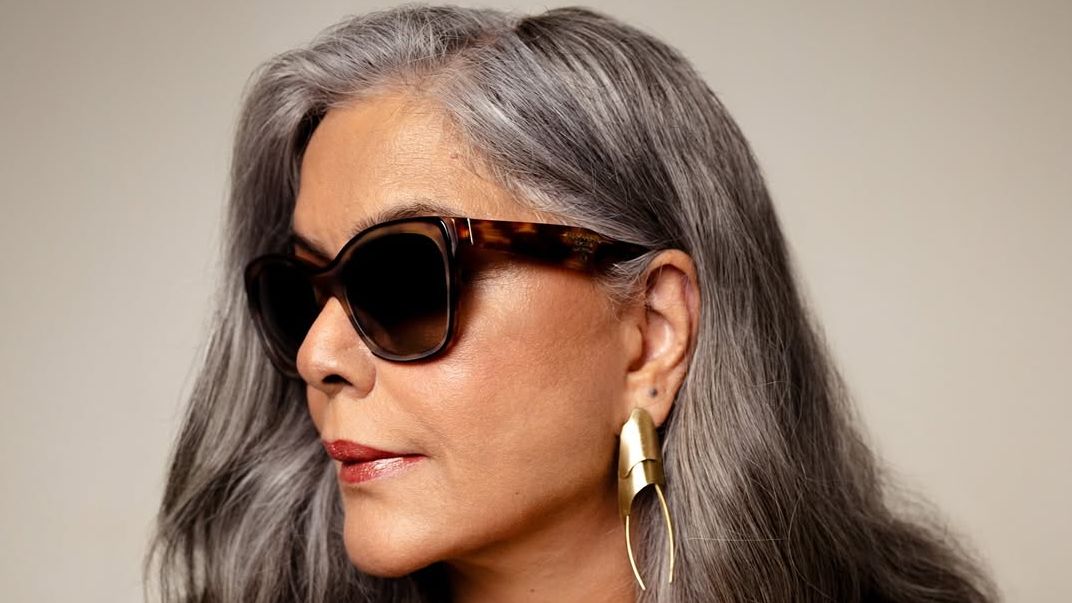
Lately, the beauty world has been notorious for promoting a cookie-cutter aesthetic: the same body type, shiny hair length, skin that looks too tight and too smooth, seemingly untouched by the ravages of time. However, it seems we are finally moving away from that moment (call it the anti-AI movement) – and for many, hair is leading the way.
More and more women are ditching harsh hair dyes and blending gray with their natural hair color. Hairstylist Vipul Chudasama says, “Grey mixing shifts the conversation from hiding to using what’s available. In my experience, today’s clients aren’t asking ‘How do I cover this?'” but rather ‘How can I make it look natural and beautiful? ‘”
“Grey hair has always been a ‘problem’ for women, often requiring a full-coverage hair dye to eliminate every silver strand,” says Sonia Presswala of Looks Salon. “The gray blending technique blends silver strands with highlights, lowlights, or tonal shine, allowing them to coexist with the dyed portions.”
Presswala adds that the majority of clients actively embracing their natural gray are still in their 40s and 50s, with the majority being women tired of the constant cycle of root touch-ups. But Florian Hurel, who owns a salon that bears her name, says even women in their 20s and 30s are embracing the shift. “For many of them, it comes from a confidence and a slightly rebellious mindset,” he said. “They don’t want to get stuck so early in a cycle of constantly dying, re-dying or using chemicals on their hair.”
How to do grayscale blending
For people transitioning from dyed hair to natural gray, the focus is on softening the line between previously dyed hair and new growth. When gray looks unnatural, it’s usually because there’s a sharp dividing line between the old color and the new color, or because the hue appears dull rather than reflective. “Grey mixing requires thoughtful color placement,” says Swati Gupta of Bodycraft Salon. “Stylists often add white highlights, soft lowlights, or translucent gray tones to give the color depth rather than making it look flat. The idea is to create a blend that allows the gray to blend naturally into the rest of the hair.”
What is often underestimated is the complexity of the process. “It’s rarely an overnight transformation; sometimes the hair needs to be several levels lighter to match the gray tones, which isn’t always easy or desirable. Therefore, the process often involves a gradual blending technique that allows the hair to grow naturally while reducing contrast,” adds Gupta.
Is there a beauty or wellness trend you’re curious about? We want to know! send Fashion’Senior Beauty & Wellness Editor Email [email protected].