The Tamesis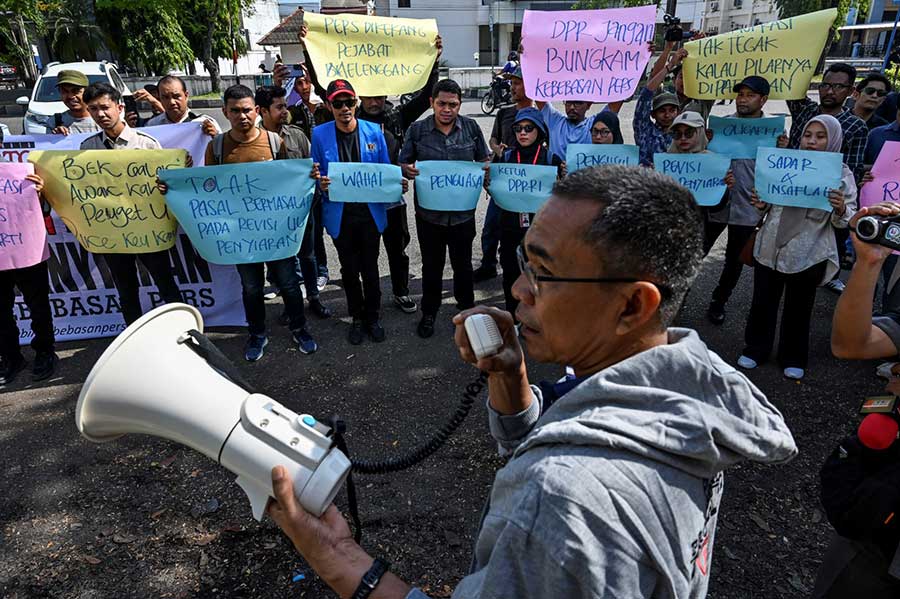
April 14, 2026
jakarta – In this age of surveillance, where almost everything can be witnessed and recorded in real time, there should already be little room for manipulation of the truth.
Ideally, this should increase enforcement and enhance public protection. But in practice, it also led to a crackdown on the opposition, including the government.
We deplore the recent incident in which the Ministry of Communications and Digital geo-restricted an Instagram post by the online outlet Magdalene that published CCTV footage of a horrific attack on lawyer and human rights activist Andrie Yunus.
Andrie, deputy coordinator of Kontras, is also a legal adviser and a witness in a major judicial review of the latest amendments to Indonesia’s Military Law (TNI), which have become the legal basis for the country’s ongoing military expansion.
Two men on a motorcycle threw acid at Andri as he passed him on a street in Saremba, central Jakarta. An independent investigation by the Advocacy Team for Democracy (TAUD) found the attack was coordinated and involved 16 people, suggesting it may have been part of a military intelligence operation.
The Military Police Headquarters (Puspom TNI) arrested four active-duty soldiers assigned to the force’s Bureau of Strategic Intelligence (BAIS) as suspects in the attack.
Although the Communications Ministry claimed that social media restrictions were the result of human error and access was later restored, this does not change the fact that the government has once again not hesitated to flex its muscles in a way that threatens press freedom.
This is not the first time the government under President Prabowo Subianto has threatened journalists and media organizations.
In September last year, CNN Indonesia reporter Diana Valencia was disqualified from entering the presidential palace for asking Prabowo about the progress of the free nutritious meal program. The president himself didn’t seem perturbed by the issue, but that didn’t stop palace aides from issuing restrictions. Her access was restored only after public condemnation and collective pressure from news organizations.
The same thing happened with Magdalene. The government restored access to social media posts only after objections from news organizations and the public at large.
It’s unclear how or why Communications Ministry officials restricted the position. The lack of clarity has fueled speculation about the extent of government involvement in the Andheri attack.
Apart from the resignation of BAIS chief Lieutenant General Yudi Abbrimantyo, an official investigation by the Puspom TNI has not confirmed that the attack was orchestrated. The four BAIS personnel are still considered to have acted independently.
The attempts at social media restrictions come amid growing doubts about the investigation into the attacks, including the possibility that the government was trying to cover up institutional links to the military.
With the Constitutional Court about to rule on a judicial review of the TNI law, the reporting restrictions on the Andry attack could also be seen as an attempt to influence the case. If the government isn’t involved, why go to the trouble of controlling access to video evidence?
Such incidents amount to media harassment. While they are not a direct attempt to censor or shut down media outlets, they can be seen as a threat to undermining journalists, news organizations and press freedom.
If the government (in this case, military intelligence) is not involved, it is time to support transparency to expose the real perpetrators.
Because once this cowardly and vicious behavior is tolerated, it will be repeated and it will mark a serious failure of the state to protect its citizens.