The Tamesis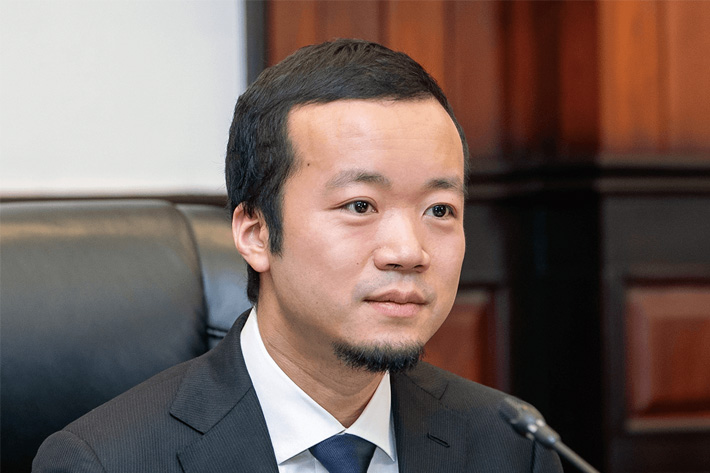
Chen Zhi, the billionaire at the center of the alleged scam who was sanctioned by the United States in October and had a huge $15 billion worth of Bitcoin seized, has been arrested in Cambodia and deported to China, a local news website reported.
The 38-year-old tycoon is accused of running a notorious large-scale fraud ring in Cambodia and is said to have amassed a staggering fortune over the past decade.
English language Kiri Post explain cambodia china times He posted about his alleged arrest at 7:20 p.m. local time. “A reporter from cambodia china times According to KiriPost, it was learned that Chen Zhi, founder and chairman of Prince Group, has been arrested in Cambodia and has been deported back to China to face investigation by relevant authorities.
See also: Bank of China approved to extend deadlines for disposal of large number of bad loans until 2026
It’s perhaps not surprising that the notorious tycoon was ousted quickly and secretly, given Chen’s extensive interactions with senior Cambodian government leaders and Beijing’s likely eagerness to ensure he had no contact with U.S. or Western officials.
Suspected to have ties to Chinese intelligence services
Chen Zhi is suspected of having links to Chinese intelligence officials in Cambodia and around the world, including London, where he reportedly purchased a number of items, including a A few are very close to the US Embassy.
The U.S. Treasury Department and the British government took action to shut down the Prince Group in mid-October.
this U.S. Department of Justice The U.S. Department of Justice (DoJ) said it has initiated the largest seizure in history, seizing approximately $15 billion worth of Bitcoin currently under U.S. custody. The UK also seized property worth $172 million.
The department said an indictment unsealed in federal court in New York alleges Chen ZhiCambodian Chinese businessman, founder and chairman Prince Groupengaged in wire fraud, money laundering, and directed the organization to “operate forced labor scams throughout Cambodia.”
It is alleged that “individuals, held in prison against their will, engaged in a cryptocurrency investment fraud scheme, the so-called ‘pig-killing’ scam, that stole billions of dollars from victims in the United States and around the world.”
A series of asset seizures
Moves by the U.S. Treasury Department and British officials to sanction the Prince Group and declare it a transnational criminal organization triggered a series of asset seizures across Asia and other parts of the world.
In the five weeks since he was “unmasked” and disappeared, authorities in Hong Kong, Singapore, South Korea, Taiwan and Thailand Assets frozen at least US$700 million Suspected to belong to Chen or the Prince Group.
But it also raises questions about why it took so long for financial authorities in the United States, Britain, Singapore, Taiwan and Thailand to unmask an organization now known as one of Asia’s largest criminal entities. radio free asia The organization was first discovered to be involved in criminal activities in February 2024.
Chen, a Chinese national who moved to Phnom Penh from Fujian province about 15 years ago, is accused of building a $60 billion conglomerate over the past 10 years through online scams, such as a romance scam conducted by slaves tricked into working at Cambodian abuse rackets.
An indictment filed in the U.S. said Chen once boasted that he could make $30 million a day from his “pig-killing” scam.
The Prince Group is said to be involved in businesses ranging from two companies listed on the Hong Kong stock exchange to a family office in Singapore, an office building in Singapore and a series of luxury properties. London and other citiesShopping malls, banks, casinos, hotels, restaurants, private jets and boats in Taipei and Tokyo, as well as as far away as Palau and Vanuatu in the Pacific – raising questions about whether Chen has the backing of Chinese institutions or officials.
information Taiwan report Taiwan’s National Security Bureau is said to have said that the Prince Group is related to China’s “United Front” activities in Cambodia, and that more than half of the $260 million in grants provided to Cambodia in 2018 was provided by the Prince Group. Taiwanese investigators reportedly uncovered links to major underworld gangs and found that key executives at the Prince Group controlled or had business dealings with 23 companies.
This is a breaking news story and will be updated.
Note: After learning that Chen Zhi’s birthday was in December, his age was changed to 38 on January 7, 2026.
See also:
Countries seize US$700 million in Prince Group assets in pursuit of “fraudulent billionaire”
US, UK praised for fraud hub sanctioning and seizing $15 billion in Bitcoin
US targets multi-billion dollar fraud network in Myanmar and Cambodia
Cambodia’s fraud hub has tense relations with countries near and far
U.S. sanctions Cambodian Karen warlord’s money laundering ring
Online fraud hub spreading like global cancer from Asia: UN
Thailand cracks down on fraud hub on two fronts, leaving thousands in trouble
UN says Southeast Asian criminal networks rely on Telegram, cryptocurrencies
Weak ASEAN countries “face the risk of evolving into fraud countries”
“US to sanction prominent Cambodian figures linked to fraud hub”
North Korean hackers use Cambodian company to launder stolen cryptocurrency
Cambodia-Chinese company implicated in cryptocurrency fraud and money laundering
Southeast Asian fraud gangs stole $64 billion in 2023, report says