The Tamesis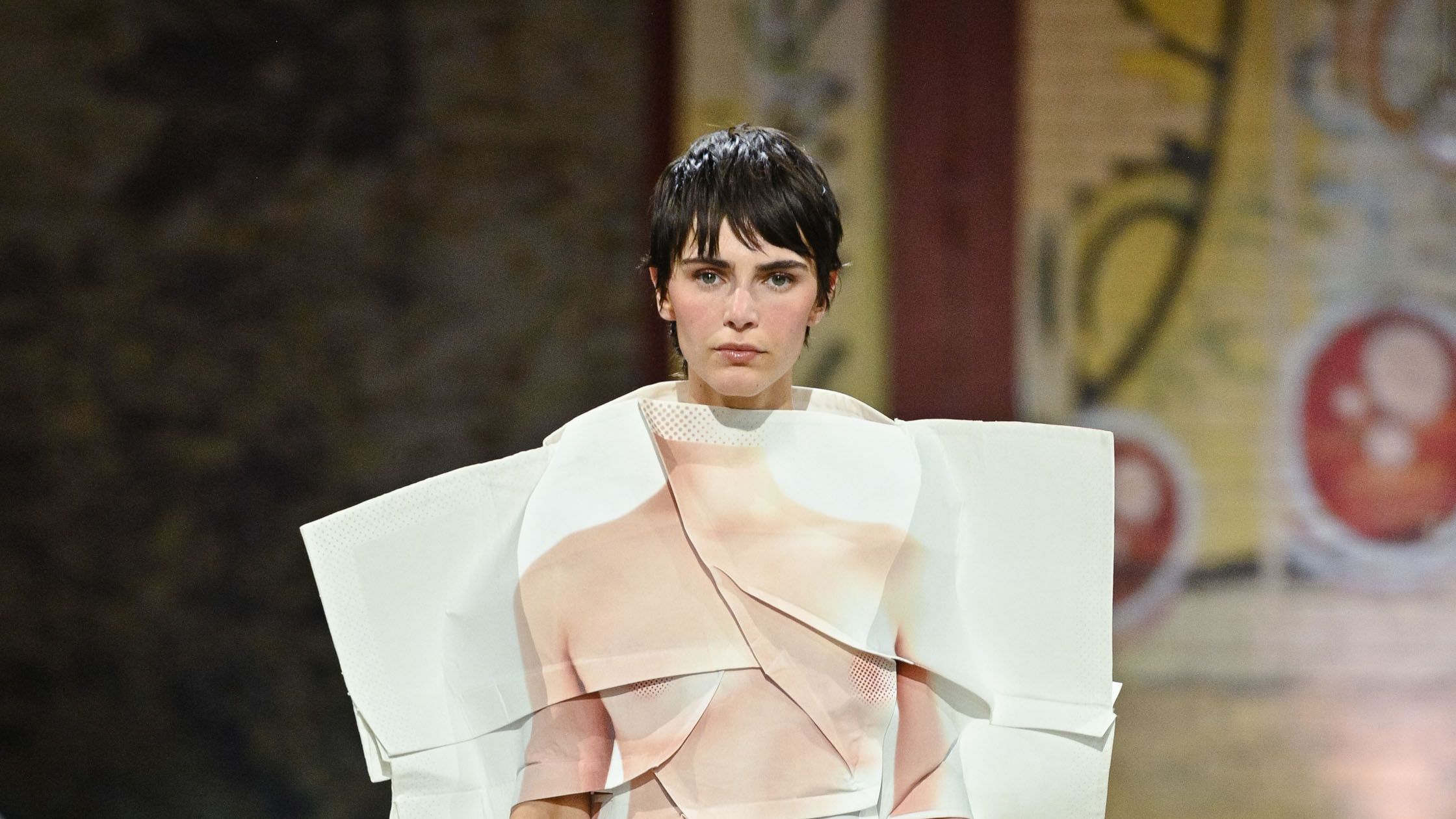
Frances Bronet, president of Pratt Institute, said the school’s collegiate fashion show is the oldest in the United States, dating back to 1899, a decade before Coco Chanel liberated women from the constraints of the corset. This meant that Pratt Institute students worked to showcase their designs through countless revolutions, fashions and otherwise: two world wars, the emancipated modern girl, Dior’s New Look, the hippies, the Japanese avant-garde, grunge, the rise of the Internet and social media, and more. However, the class of 2026 may face the most unprecedented times yet. What will their collection reveal about the minds of today’s young people?
These collections serve as students’ thesis projects, and as such, they are often vehicles for telling personal stories—their own histories intertwined with the garments. Additionally, sustainability and climate change, the rise of artificial intelligence, and the immigrant experience are also key themes. Aesthetically, dense, almost chaotic collages, twisted and pulled silhouettes, and layers of loose, flowing shapes are all well represented.
The 28 students in attendance each displayed between five and seven outfits, a quick snapshot of their evolving practice. Ava Wilson’s look was striking, with her lingerie dress padded at the hips and bust and trimmed with ribbons, topped with a fluffy fur cape and jacket. Backstage, she said she was inspired by retro black glamour—Eartha Kitt, Donna Summers and Diana Ross. Hair is often a big part of black beauty, so she wore hints of it braided in elaborate boudoir corsets and lace-trimmed slip dresses. It’s snappy, winking, satirical, and gently attacks the important subject of black beauty standards.
The exhibition opens with Liu Xingui’s blocky experimental works. Liu said her mobile life as a student from China provided inspiration for her work. A boxy blue babydoll made from upcycled shirts was heat-pressed to create creases that mimicked the garment in a vacuum-sealed bag. It has a Marc Jacobs-esque, off-kilter charm. Constantly packing and unpacking clothes eventually led her to the idea of packing her own body, and the result was a flat, folded square printed with the shape of a naked woman, as if exposing the model’s anatomy. Another shirt, pulled and dangling, filled with the chaos familiar to anyone hastily stuffed into a carry-on. Elsewhere, Amina Walker took pastoral chintz and prairie prints and assembled them into a charming patchwork long-sleeved dress that was gently cinched at the waist and finished with a pleated skirt. Naisa Agrawal’s romantic, slightly Edwardian looks, with understated embroidery (based on cracks in the soil) and rich tones of burgundy, moss and ocher, were inspired by her allergies.
So it went. Many students were keen to showcase their designs authentically, adding flip-flops, folds and other additional features. Many collections feel closer to art projects than commercial endeavors. All in all, it’s a good reminder that sometimes simpler is better, as designer Shannon Bollin demonstrated when he showed off a lightweight button-up cropped shirt paired with low-rise wide trousers in a marigold color. At that moment, the future looked bright and easy.