The Tamesis
Oil prices rose more than 4% on Monday after U.S. President Donald Trump denounced Iran’s conditions for ending the war as “completely unacceptable.”
Tehran has demanded the release of its frozen assets and an end to the U.S. blockade of its ports, but appears in no hurry to reach a peace deal.
Trump’s angry reaction to Iran’s response to the latest U.S. peace overtures sent most Asian markets lower on Monday, although Chinese stocks edged higher ahead of the U.S. leader’s visit to Beijing this week.
See also: New US-Iran conflict dampens peace hopes, but oil falls below $100
European markets were also mixed, with London and Frankfurt gaining, while Paris was dragged down by a report warning luxury goods stocks faced weak growth opportunities.
The energy crisis in the Strait of Hormuz has yet to be properly reflected in U.S. markets, with all three major Wall Street indexes rising in early trading as stock traders continued to shake off the fallout from the war.
“Oil prices remain highly responsive to news of the reopening of the Strait of Hormuz, whether positive or negative,” said Kathleen Brooks, research director at trade group XTB.
“Signs that tankers are passing through the strait, even a trickle, could weigh on oil prices in the coming days,” she told AFP.
Briefing.com analyst Patrick O’Hare said Monday’s rise was a “token response” compared with the 10% drop when the peace proposal was announced.
“So there’s a concern that the situation in Iran could get worse, but frankly there’s no real concern that it’s going to get worse,” he said.
O’Hare noted that traders believe Trump is unlikely to exacerbate the oil supply situation ahead of his summit with Chinese President Xi Jinping.
Beijing said it was ready to work with Washington to seek “more stability” as the two countries remain at odds over key issues such as trade tariffs, war in the Middle East and Taiwan.
In Asia, Tokyo stocks fell, Hong Kong stocks were little changed, Shanghai rose more than 1% and Seoul gained about 4%, supported by gains in technology stocks.
Strong quarterly earnings and optimism about artificial intelligence fueled a tech-stock-led surge that pushed multiple markets to record highs despite the Middle East crisis.
In Tokyo, Japanese gaming giant Nintendo on Friday warned of falling profits this year and said it would raise the price of its Switch 2 console, sending its shares tumbling nearly 10%.
UN worries about food crisis
But the gap between Washington and Tehran worries Gulf states and heavyweights at the United Nations, who fear the energy crisis could trigger devastating humanitarian upheaval.
“The energy supply shock that started in the first quarter is the worst the world has ever seen,” Amin Nasser, chief executive and president of Saudi oil giant Aramco, told investors.
“If the Strait of Hormuz opens today, it will still take several months for the market to rebalance, and if the opening is delayed a few more weeks, normalization will continue until 2027,” he said.
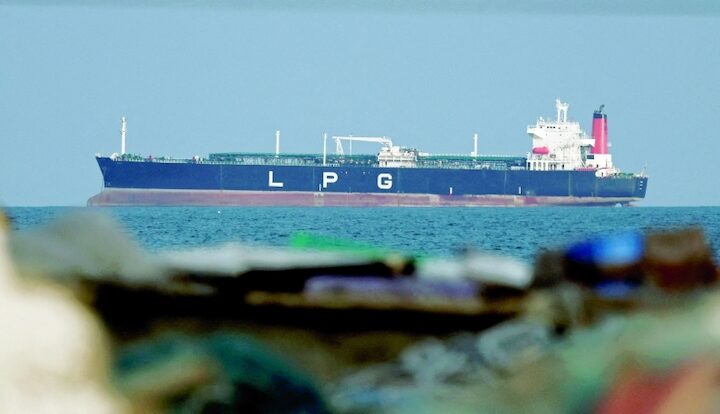
As well as energy – in peacetime a fifth of the world’s oil and liquefied natural gas exports pass through Hormuz – the world also faces shortages of fertilizers, much of which comes from Gulf ports, and therefore food shortages for tens of millions of people.
“We still have weeks to prevent what could be a large-scale humanitarian crisis,” Jorge Moreira da Silva, executive director of the United Nations Office for Project Services (UNOPS), told AFP.
“We could be witnessing a crisis that forces another 45 million people into hunger.”
Iran wants to end fighting in Lebanon
Trump did not say what offended him in Iran’s response, but Tehran’s foreign ministry said it had called for an end to the U.S. naval blockade and war “across the region” – meaning an end to Israeli attacks against Hezbollah in Lebanon.
Crucially, ministry spokesman Esmaeil Baqaei told reporters that Iran demanded “the release of assets belonging to the Iranian people that have been unjustly trapped in foreign banks for years.”
This is not only a return to the status quo before the United States and Israel launched war on February 28, but also a victory for the Islamic government’s long-standing campaign against economic isolation.
“We are not asking for any concessions. The only thing we are asking for is Iran’s legal rights,” Bakaj said.
Ending international sanctions would also reduce Washington’s leverage over Tehran as it seeks to secure a lasting end to Iran’s nuclear enrichment activities.
The United States, Israel and their allies have long accused Iran of seeking an atomic bomb, a charge Tehran has repeatedly denied.
Israeli Prime Minister Benjamin Netanyahu insists the conflict will not end until Iran’s nuclear facilities are destroyed.
“It’s not over yet because there’s still nuclear material – enriched uranium – that has to be shipped out of Iran,” he told US broadcaster CBS’s “60 Minutes.”
“There are still some enrichment sites that need to be dismantled,” he said.
The Wall Street Journal, citing people familiar with the matter, said Iran’s counter-proposal included the possibility of diluting some of its highly enriched uranium and transferring the rest to a third country.
Sources told the Wall Street Journal that Iran has sought assurances that it will return the transferred uranium if negotiations fail or Washington abandons the deal.
A senior U.S. official said Trump is expected to pressure President Xi Jinping, a major buyer of Iranian oil, on Iran when he visits Beijing on Thursday.
Key figures around GMT 1530
North Sea Brent crude oil: rose 2.4% to $103.68 a barrel.
West Texas Intermediate crude oil: rose 2.1% to $97.44 a barrel.
TOKYO – Nikkei 225: down 0.5% to 62,417.88 (close).
Hong Kong’s Hang Seng Index: rose 0.1% to 26,406.84 (close).
Shanghai – Composite Index: up 1.1% to 4,225.02 (close).
USD/JPY: Up from 156.76 JPY to 157.02
NEW YORK – Dow: up 0.1% to 49,658.03.
NEW YORK – S&P 500: up 0.3% to 7,422.19.
NEW YORK – Nasdaq Composite: up 0.3% to 26,332.64.
London – FTSE 100: up 0.4% to 10,269.43 (close).
Paris – CAC 40: down 0.7% to 8,056.38 (close).
FRANKFURT – DAX 30: Up less than 0.1% at 24,350.28 (close).
- Jim Pollard, AFP.
See also:
China DeepSeek says new V4 AI model can run on Huawei chips
Chinese AI circuit board company raises US$2 billion, becomes Hong Kong listed company of the year
China’s top streaming site criticized for AI actor ‘database’
Bytedance’s viral video model shows China’s growing control over AI
New DeepSeek model delayed online to test China’s AI chip strength
Nexperia’s Chinese subsidiary’s chips “nearly fully localized”
China beats U.S. again in global patent battle, Huawei maintains lead
China now requires chipmakers to use at least 50% domestic equipment
China’s big technological secret: Dutch chip-making machine replicated in laboratory
Chinese AI firms form alliance with chipmakers to ditch foreign technology