The Tamesis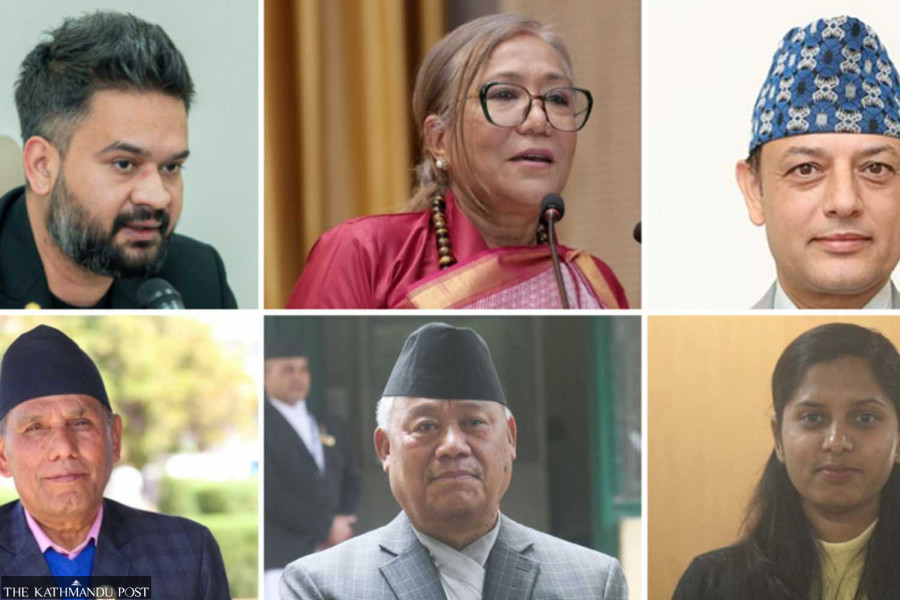
April 29, 2026
kathmandu – The long-vacant Constitutional Committee is now full as the main opposition Nepali Congress party on Monday elected Bishma Raj Angdembe as its parliamentary leader.
The commission has still not completed its work eight months in, delaying recommendations on key constitutional appointments, including the chief justice, Supreme Court justices and heads of various constitutional agencies.
According to the constitution, the Constitutional Council is chaired by the Prime Minister. It consists of six members: the Chief Justice, the Speaker of the House of Representatives, the Speaker of the National Assembly, the leader of the main opposition party and the Deputy Speaker.
In the event of a vacancy in the post of Chief Justice, the law provides that the Minister of Justice may attend meetings related to the appointment of the Chief Justice, in accordance with Article 284 of the Constitution.
The commission has previously been criticized for its lack of inclusivity. If Acting Chief Justice Sapana Pradhan Malla is confirmed as Chief Justice, women will occupy two seats in the council. This will increase female representation to over 33%.
The Constitutional Council is responsible for recommending appointments to the main constitutional bodies. Currently, the posts of Chief Justice, Chief Election Commissioner, a member of the Commission to Investigate Abuse of Authority (CIAA), a member of the National Human Rights Commission, as well as the National Commission for Women and the National Commission on Natural Resources and Finance remain vacant. Some ambassadorships are also vacant.
The road to the appointment of the chief justice has begun
The process to appoint the Supreme Court’s chief justice has moved forward with the commission now complete, ending a long period of acting leadership.
The Supreme Court has been functioning under a proxy arrangement after Chief Justice Prakash Man Singh Raut retired as he reached the legal age limit. Senior Justice Sapana Pradhan Malla has been leading the court in an acting capacity.
Although the constitution requires proposals to be made one month before a vacancy arises, the political transition following the Gen Z movement and the subsequent dissolution of parliament left key positions such as Speaker, Deputy Speaker and Leader of the Opposition vacant, resulting in a loss of vitality in the Parliament.
After the election on March 5, a new House of Representatives was established and the Council regained full membership.
The Judiciary Council has recommended six candidates for the position of chief justice, all of whom have served as Supreme Court justices for at least three years. The list includes Sapana Pradhan Malla, Kumar Regmi, Hari Prasad Phuyal, Manoj Kumar Sharma, Nahakul Subedi and Til Prasad Shrestha.
Traditionally, the most senior judge is appointed as the chief justice, and observers expect a similar practice to continue.
Legal vacuum remains
Although the commission has been completed, legal uncertainty surrounding its operations remains.
In the past, several decrees regulating the powers of the Constitutional Council were enacted but were allowed to lapse without parliamentary approval, leaving gaps in the legal framework. Therefore, the Council is currently unable to take decisions by majority vote without consensus.
This legal ambiguity emerged after former Prime Minister KP Sharma Oli amended the clause to allow decisions to be taken with the presence of a majority of members even if a smaller number of members are present at the meeting. Subsequent decrees and bills failed to gain parliamentary approval, exacerbating the legal vacuum.
This problem has persisted through multiple administrations. The interim government led by Sushila Karki enacted an ordinance to streamline appointments to constitutional bodies such as the Election Commission and the Supreme Court, but it was halted by the president.
Previously, a bill passed by the House and Senate during Oli’s tenure was returned by the president with five proposed changes, including changes to quorum and decision-making rules.
Oli issued an ordinance allowing appointment of members of constitutional bodies on the basis of simple majority of members present, under which 52 officials were appointed, including CIAA president Prem Kumar Rai. However, the decree failed to be passed by Parliament within the stipulated time, and Parliament was subsequently dissolved.
Since then, constitutional and legal issues surrounding the commission have remained unresolved.
Prime Minister Balendra Shah’s government is currently working on new ordinances to address these issues, citing difficulties in day-to-day governance. A cabinet minister said the terms were being finalized and could be sent to the president soon, which could be followed by a parliamentary session.