The Tamesis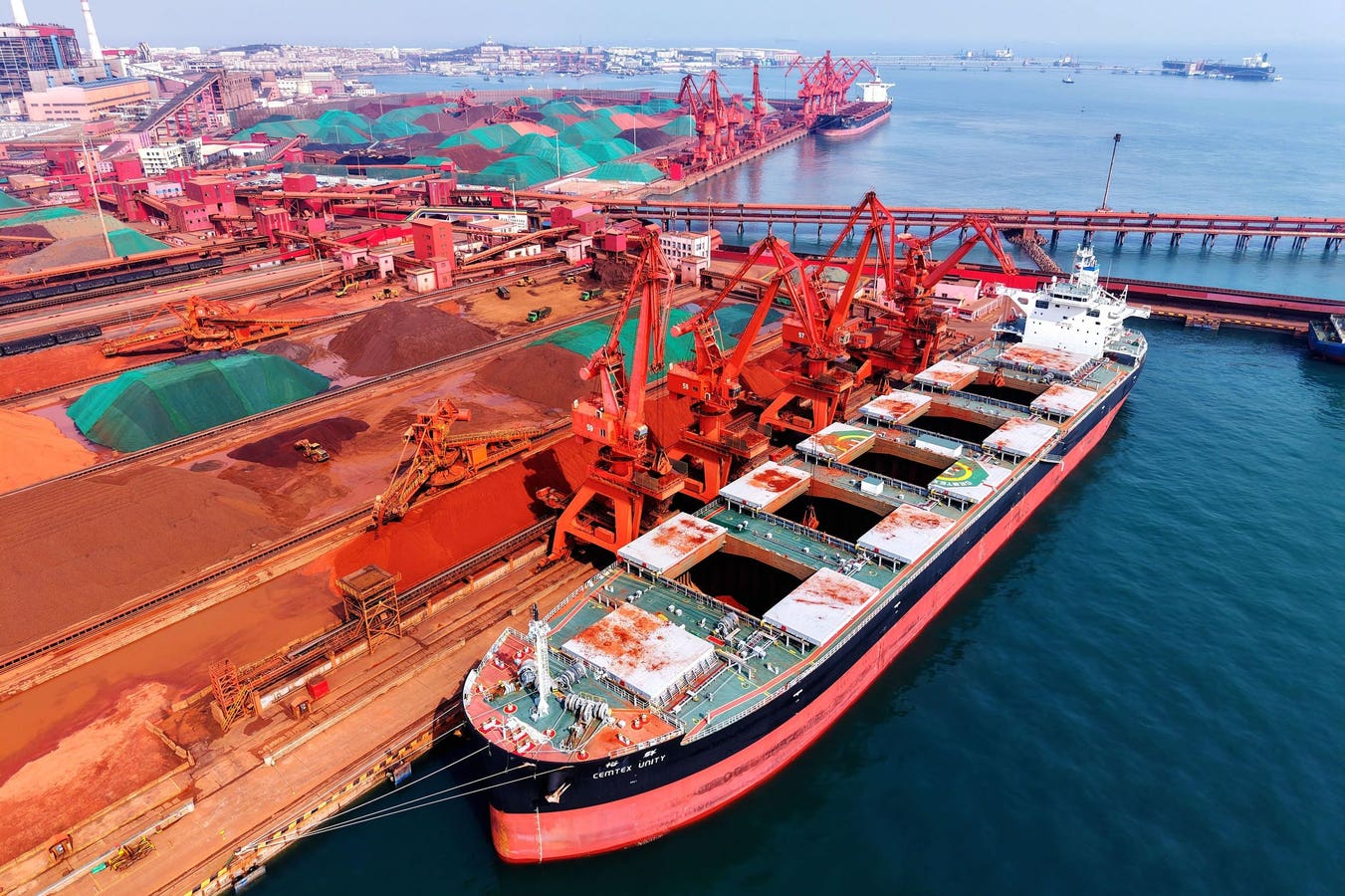
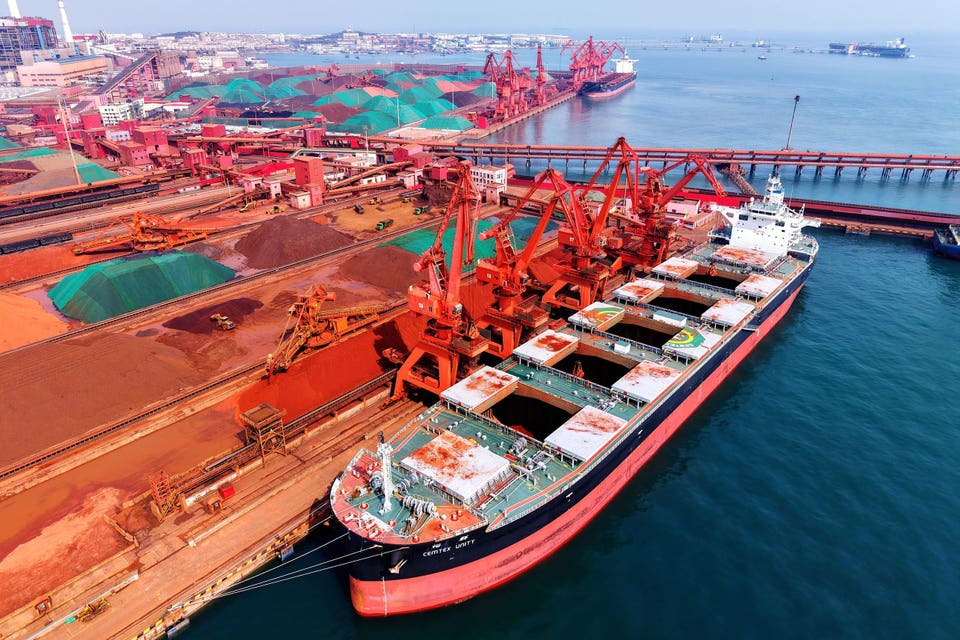
Unloading iron ore at the port of Qingdao, China. (Photo by Costfoto/NurPhoto via Getty Images)
NurPhoto from Getty Images
China is de-dollarizing trade with the rest of the world by replacing the dollar with the yuan, a move that has spread beyond iron ore, a commodity long dominated by the dollar.
China’s victory comes after a bitter seven-month dispute with Australia’s BHP Billiton, the world’s largest mining company.
Convert USD to RMB
Until last month, all of BHP’s iron ore sales to China were priced in dollars, but smaller quantities will be sold in yuan in the future.
The breakthrough is largely just a wedge in what China has been trying to do for decades to coax itself into commodity-buying arrangements with other countries.
Replacing the dollar with the yuan can also be seen in oil trading and a surge in yuan lending by international banks, which it was reported last week had reached record levels.
U.S. banks led by Goldman Sachs are attracted to China’s offshore debt market because of low interest rates, London’s Financial Times reported.
The shift is also seen as another example of investors and companies limiting the uncertain risks of doing business with the U.S.
What’s happening with iron ore is just one small example of how commodities markets are shifting. Although China has become the world’s leading consumer of commodities, most products have traditionally been traded in dollars.
What’s happening with iron ore can be traced to the Chinese government’s creation of a new commodities buying agency, China Mineral Resources Group (CMRG), which plays a central role in most commodity acquisitions by Chinese companies.
Molten steel at a factory in Huai’an, east China’s Jiangsu Province. (Photo: CN-STR/AFP, Getty Images)/China OUT
AFP via Getty Images
However, BHP is determined to abide by direct sales agreements between its iron ore mining unit and its Chinese steel mill customers.
In the ensuing standoff, CMRG ramped up pressure, including banning certain BHP products, such as a grade of ore called Jimblebar.
The breakthrough came when BHP’s retiring chief executive Mike Henry and his successor Brandon Craig met with Chinese officials in Beijing earlier this month and struck a new sales deal that included recognition of China’s ore pricing system and modest price cuts.
Other Australian iron ore producers including Fortescue and Rio Tinto have long accepted China’s partial sales pricing system, but BHP’s capitulation sends a strong signal to commodity markets about Chinese dominance.
The complex process of selling iron ore has never been uniform in quality and is based on an indicator system that takes into account the iron content in the ore and applies discounts for impurities that affect the quality of the steel.
China is particularly concerned about S&P Global’s Platts’ long-term dominant index, demanding that it be replaced with a Chinese indicator, the Beijing Iron Ore Port Spot Price Index.
china discount
BHP accepts the China Index as part of its iron ore sales process, which gives Chinese steel mills the added benefit of a 1.8% discount on material supplied by BHP.
According to Chinese news outlet Caixin, the controversial gold Bulba ore is currently sold in a mixed formula with a 51% weighting in yuan, using the Beijing Spot Price Index, with final settlement converted to U.S. dollars.
As contracts expire, more Chinese imports are expected to be priced in yuan.