The Tamesis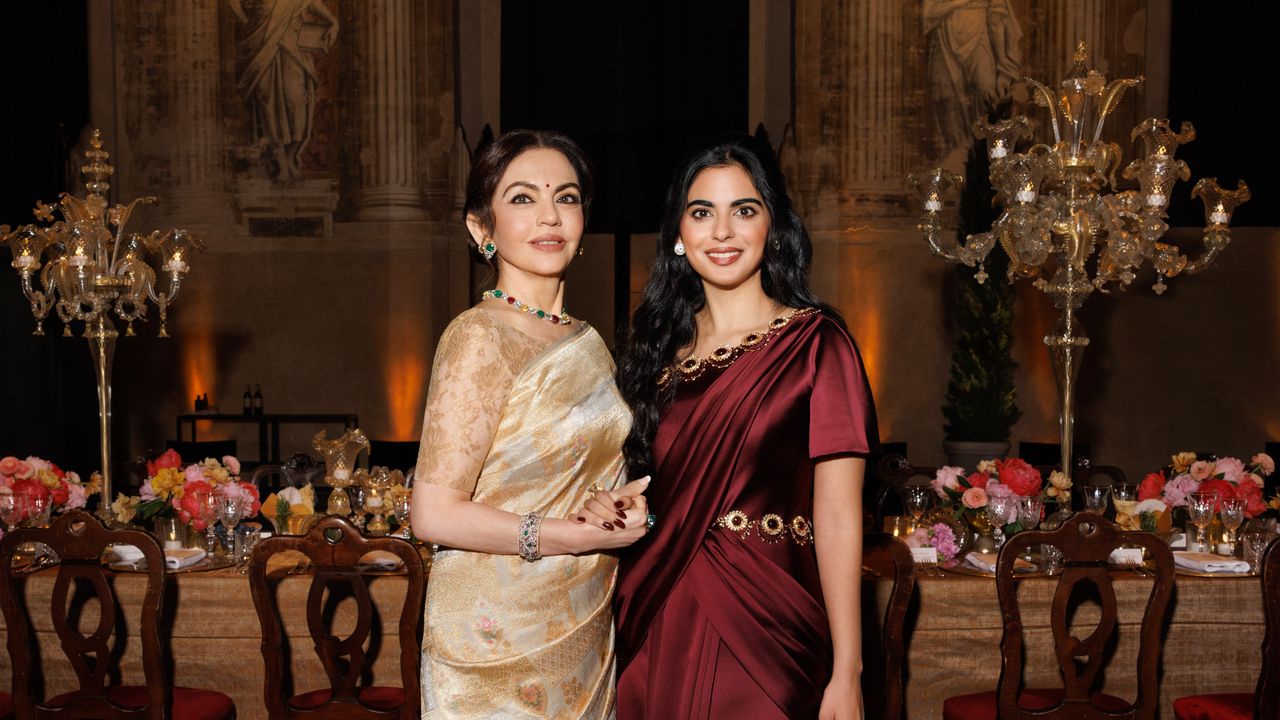
Jaffer believes that the concept of home is particularly urgent in today’s world of fragmented identities, frequent mobility, and ubiquitous digital presence. He noted that the pandemic has changed the way people live and work, while technology has made it possible to maintain relationships across continents in ways that were unimaginable a decade ago. Against this backdrop, the pavilion explores what it means to belong to an evolving world. The featured artists hail from different regions of India, reflecting the country’s extraordinary cultural and geographical diversity. “India is more like a civilization than a monoculture,” he said.
The selection process “intuitively” began with artist Sumakshi Singh, whose home in New Delhi was demolished to make way for a larger building. In response, she reconstructed the house on a large scale using thread and hand embroidery. The decision was inspired by her grandmother’s passion for needlework. From there, the pavilion expands outward: Alwar Balasubramaniam explores the broken and traumatized soil of Tamil Nadu; Ranjani Shettar hangs delicate floral forms that evoke weightless gardens; Asim Waqif uses bamboo scaffolding as a metaphor for rebuilding and imagining future homes; young Ladakhi artist Skarma Sonam Tashi Reflects on how new building methods are transforming indigenous Himalayan architecture and community life. Despite their different visual languages, these works share a strong sense of harmony, charm and whimsy.
To celebrate the opening of the pavilion, a lavish Indian evening party was held in the magnificent palace. Mercy University– One of the landmarks of Venice, a grandeur accumulated over the centuries. Under soaring ceilings and frescoes, guests enjoy evenings of cocktails and live music by candlelight: this is Indian hospitality at its most magical. The encounter between Venetian opulence and India’s flair for rich decoration created a dialogue between two cultures that understood decoration as structure rather than decoration. Few speak the language as fluently as Isha Ambani, who hosted the reception, which was also attended by her mother Nita Ambani.
Having just returned from New York, she made her debut on the Met Gala red carpet, wearing a gold woven sari designed by Gaurav Gupta, with a bodice set with more than 200 old mine-cut diamonds from the Ambani family collection. This time, she greeted guests in a draped, bejeweled crimson Chanel couture gown from Spring/Summer 1989, before changing into a stunning Schiaparelli Couture gown for the after-party.
A dialogue between fashion history past and present, the carefully curated costume choreography hinted at Ambani’s role in shaping the vision behind the India pavilion. She works closely with Jaffer to help connect a commitment to cultural preservation with a contemporary perspective on Indian craftsmanship. “These artists express the importance of maintaining awareness of the past, not through nostalgia, but as a testament to our shared heritage,” Ambani noted.
For her, the concept of home is inseparable from culture itself. “Home has always been important to me,” she explains. “Craft is alive and dynamic, and in today’s increasingly digital and technological world, craftsmanship is perhaps more important than ever.” This dedication is also reflected in the work of the Nita Mukesh Ambani Cultural Center, which she founded with her mother Nita Ambani. “Our mission is simple: bring the best of India to the world and the best of the world to India,” she said. “Arts, crafts and culture are essential to unite people through shared media that transcend language.” In her words, the pavilion, on display at one of the world’s largest contemporary art platforms, is both a statement and a responsibility. “I’m very proud that we are able to showcase the work of these outstanding Indian artists here,” she said. “It is important to emphasize that the rapid growth of our world, and particularly the extraordinary growth of our country, does not mean erasing the past, or the traditions that bring us together, or our sense of community and belonging.”