The Tamesis
Indonesian President Prabowo Subianto warned again this week that his government would step up efforts to crack down on corruption and environmental crime across the country.
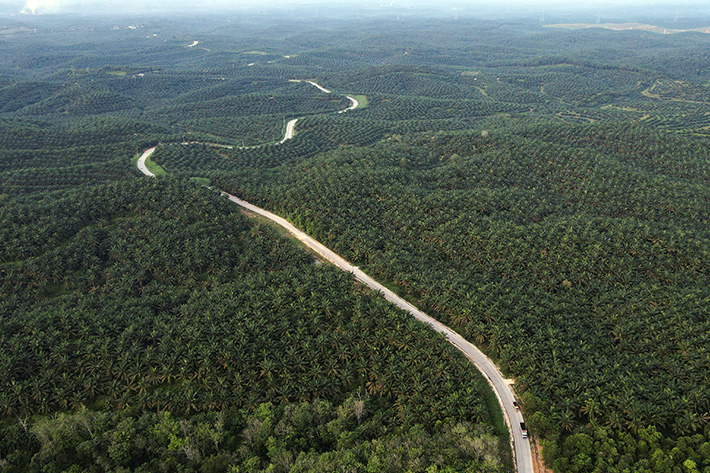
He also expressed his intention to crack down on operators of illegal palm oil plantations, saying authorities may confiscate an additional 4-5 million hectares (12 million acres) of plantations this year. That’s a land area larger than Switzerland.
Speaking at the Attorney General’s Office in Jakarta two weeks ago, Prabowo said he believed many forest areas had been illegally controlled by unscrupulous business operators for years and that if not addressed, the country could suffer huge losses.
See also: ‘Scam billionaire’ Chen Zhi arrested in Cambodia, flown to China
“This is just the beginning. If thoroughly examined, the potential national damage could run into the trillions… They dare to insult the country and believe that officials at all levels can be bought and bribed,” he was quoted as saying National news agency Antara.
On Wednesday (January 7), Jakarta’s “strongman” leader spoke out again, saying that as the president it is his responsibility to protect the country’s finances and ensure that no public funds are lost due to corruption.
Last year, the Forest Control Task Force, made up of military officers, police and state prosecutors, took over 4.1 million hectares of land allegedly being operated illegally in forest areas, targeting major palm oil companies and small farmers.
“We have controlled and taken over more than 4 million hectares of illegal palm oil plantations. Isn’t that true, state prosecutor?” Prabowo said at a rice harvest ceremony with farmers.
“Perhaps we will seize another 4 to 5 million by 2026,” he said, repeating a threat he made during the first inquiry. state of the union speech last August before he officially took power in October.
At the time, he explained that about 5 million hectares of palm plantations were under scrutiny for operating within forest reserves and failing to report their actual area or respond to auditors’ summons.
Aggressive strategy unnerves multiple industries
Prabowo, a former special forces commander known for his aggressive combat tactics, took a tough stance last August, saying the state could seize the assets of companies that “manipulate and violate” Indonesian laws.
The government also plans to crack down on the mining industry, he said, adding that authorities had received reports of as many as 1,063 illegal mining operations across the vast mineral-rich archipelago.
He did not specify what type of mine or commodity they were extracting. Indonesia is also the world’s largest producer of nickel and a major producer of thermal coal, tin and copper.
Wednesday, tThe President said the government had also taken action against hundreds of illegal mining operations, saving the country hundreds of billions of rupees through enforcement and asset recovery.
“We have cracked down on hundreds of illegal mines and saved hundreds of billions of dollars,” Antara quoted him as saying, adding that authorities would continue to pursue losses to ensure public funds fully benefit the Indonesian people.
Unsurprisingly, the military-backed campaign launched in early 2025 has unnerved the palm oil industry. The Southeast Asian country is the world’s largest palm oil producer, with a total of 16.8 million hectares of palm oil plantations.
Analysts also predict that, combined with Indonesia’s ambitious biodiesel programme, the biodiesel seizures could disrupt production, putting more upward pressure on global prices.
In August, Eddy Martono, chairman of the Indonesian Palm Oil Association (GAPKI), questioned the source of Prabowo’s data, saying his organization had not been consulted about the 5 million hectare figure.
He said companies and cooperatives operating 3.7 million hectares of plantations, some of which had permits such as land-use concessions and ownership certificates, had been asked to clarify their status when they were found to be operating illegally.
But by the end of 2025, some 1.7 million hectares of seized plantations were transferred to state-owned company Agrinas Palma Nusantara, transforming the company from an infrastructure services company into the world’s largest palm oil company by area.
Attorney General Sanitiar Burhanuddin said last month the government could fine palm oil companies $6.5 billion for seizures last year.
Note: The forest image in the text was reattached on January 8, 2026.
See also:
Microplastics hinder oceans’ ability to absorb carbon dioxide, study says
Indonesians win right to sue Swiss cement giant over emissions
Swarms of Cambodian drones could undermine ceasefire with Thailand
Prabowo cuts benefits for MPs after Indonesia riots
Solar boom booming in Indonesia, Australia and Africa
Water war: India plans dams to counter China’s mega dams in Tibet
Indonesia pays high price for US trade access, faces 19% tariff
Indonesia moves to block China’s Temu to protect small merchants