The Tamesis
Amoako Boafo does not take his first solo exhibition in Italy lightly. It “means something because of its weight” [Italy’s] Art historical heritage, especially in a place like Venice,” said the Ghanaian artist known for his finger-painted portraits of stylish black people. Fashion. “But for me, it was never about entering that history as an outsider. It was about creating a dialogue with it.”
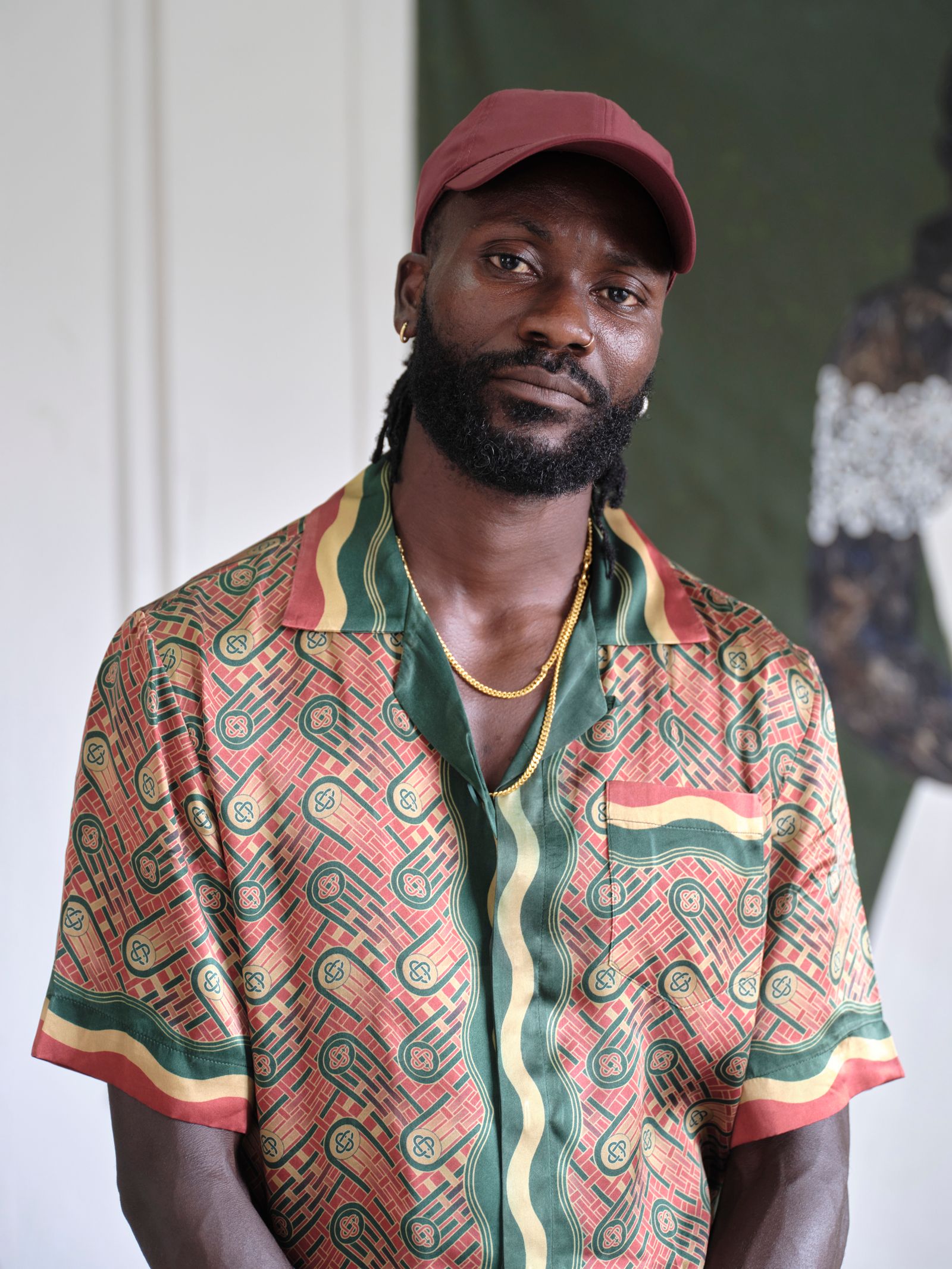
“Amoako Boafo: It Doesn’t Always Make Sense”, produced by Gagosian, opened in May this year at the Palazzo Grimani Museum during the 61st Venice Biennale and runs until November 22. A national museum just minutes from San Marco, Palazzo Grimani is a much-loved gem of Renaissance art, with its impressive Tribuna (known as the “Chamber of Antiquities”) filled with ancient sculptures. Elsewhere in the space, however, visitors will find a series of monumental abstract works by Georg Baselitz, commissioned for the Sala del Portego’s 18th-century stucco-framed panels, from which portraits of the Grimani family hung until the end of the 19th century.
Boafo is a perfect match for the museum’s sacred galleries. “I tried to work with this space in a respectful way, respecting the heritage of the building but also bringing my own history into it,” he said, adding that returning to Venice as an exhibiting artist was a “full circle” moment after having visited it as a student.
In recent years, Boafo’s exhibitions have become increasingly immersive and personal. Last year, for an exhibition at Gagosian’s London branch, he collaborated with architect and designer Glenn DeRoche of DeRoche Projects to recreate in the gallery the courtyard of the artist’s childhood home in Ghana (where he remembers learning to paint). “We share a common understanding of how space shapes experience and community,” Boafo said. Boafo has previously collaborated with DeRoche on Dot Ateliers Ogbojo, a writer and curator residency program in Ogbojo, Ghana, which Boafo established in 2024.
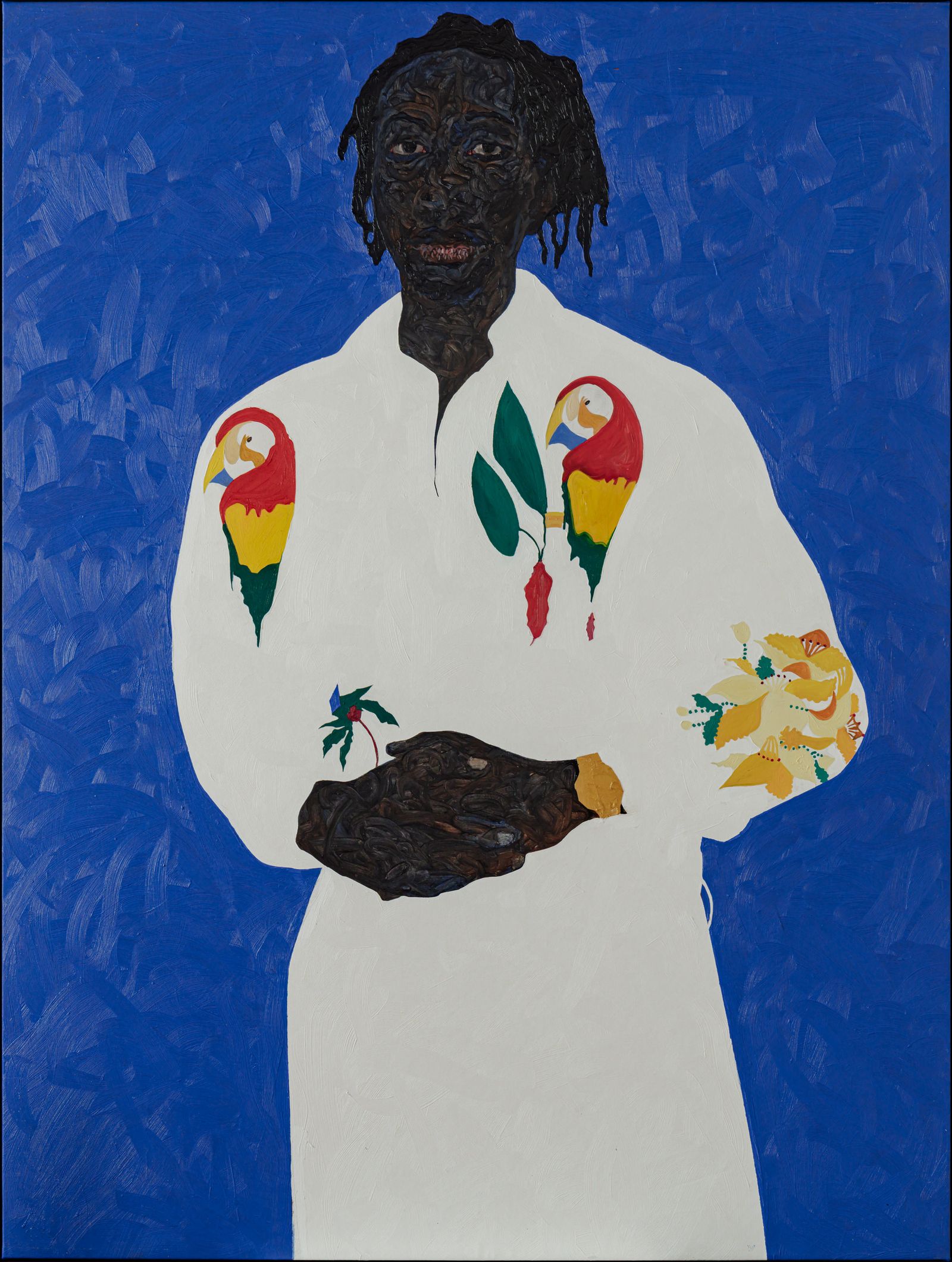
The central role that community plays in Boafo’s practice is brought vividly to life in the exhibition, which begins with a video documenting the artist at home, in his studio, on the tennis court (where he plays semi-professionally), and elsewhere. There are also works by Boafo’s friends and collaborators. Boafo and his friend Stephen Allotey produced a realistic resin plaster sculpture of a woman wearing an ivy leaf-printed bra, juxtaposed with Boafo’s 2023 portrait of a woman sticking out her tongue. (Both the painting and sculpture use a paper transfer technique that adds floral patterns to the figures’ clothing.) Hanging on several walls are poems written for the exhibition by the Ghanaian poet Raphael Worlasi Langani; in the final room of the exhibition, a poem titled dark Pair with Boafo all black Painting (2026), his first black-ground portrait. “For me, there is a strong connection between visual language and poetry…my studio is not an isolated space, it is full of dialogue, exchange and community,” Boafo said.