The Tamesis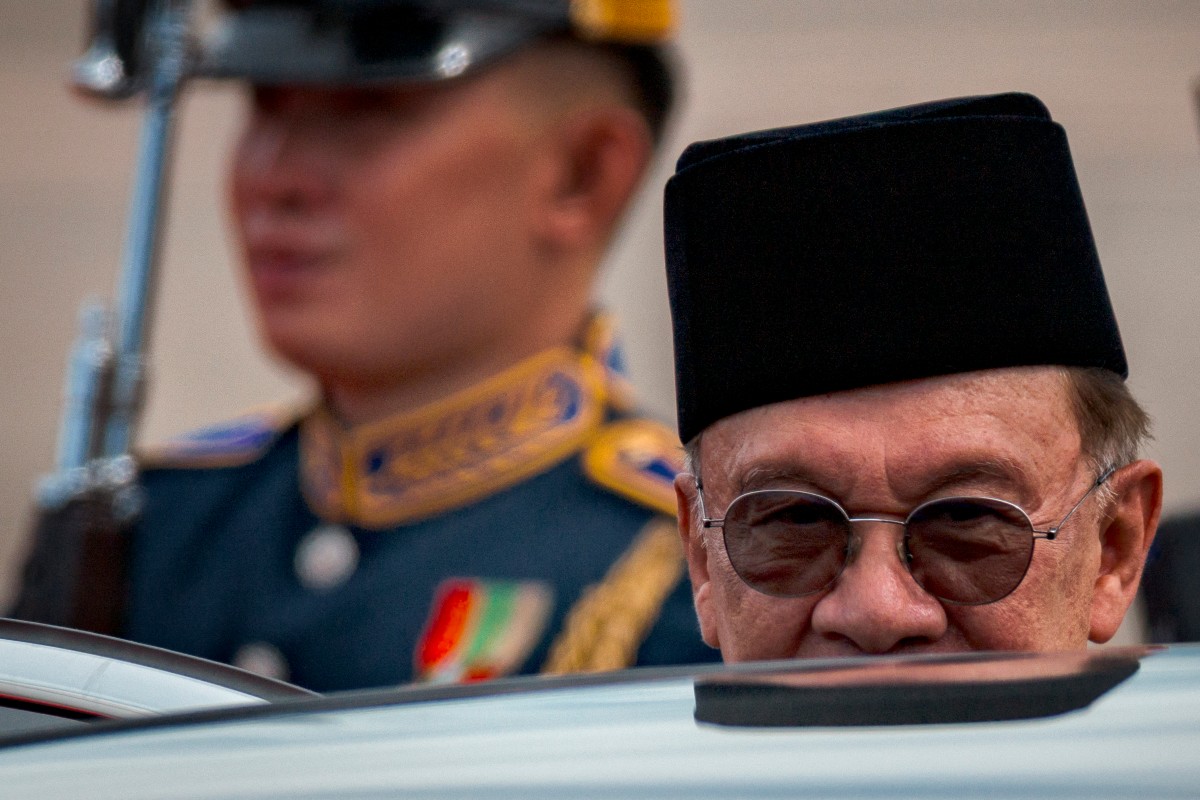
June 1, 2026
Kuala Lumpur – No one is immune to the bitter taste of worry or insecurity – not even Anwar Ibrahim, who sits comfortably at the pinnacle of power as Malaysia’s prime minister.
Late last night on Friday, Anwar unexpectedly posted a video on social media, admitting in an unusually candid and emotional manner that he was far from perfect and that there was still a lot of room for reflection and improvement.
He promised to continue to fulfill the mission entrusted to him by the people with the highest sense of responsibility.
On the one hand, the prime minister must deal with the potential economic aftershocks of a joint U.S.-Israeli military operation on Iran.
On the other hand, there are growing calls from within and outside the government for early elections. Add to this the decision of Johor Umno to go it alone in the upcoming state election, the departures of Rafizi Ramli and Nik Nazmi and their subsequent takeover of Parti Pribumi Bersatu Malaysia, as well as the political uncertainty surrounding DAP’s special congress on July 12.
Together, these developments create political conundrums at the industrial level!
BERSAMA is widely seen as a tool that can attract PH’s traditional Chinese and Indian support in urban and semi-urban constituencies. If that happens, PKR and DAP may find their chances of winning significantly reduced.
Amid these uncertainties, the relative weakness of PKR will inevitably cast a shadow on the overall image of the Pakatan Harapan coalition, causing people to once again cast doubts on Anwar’s ability to effectively lead the coalition into the next electoral battle.
PKR is not seen as fully consolidated or fully united under Anwar’s leadership.
Whatever the prime minister’s reasons, the stark reality that PH has failed to fully deliver on its election promises and manifesto promises has cost the alliance a large number of followers.
Over the years, Pakatan Harapan, and particularly PKR, has spent huge efforts to broaden its appeal to Malay voters, but without results.
Unfortunately, the rewards are limited at best. The alliance’s relationship with Malay voters remains awkwardly distant.
At the same time, many Chinese and Indian supporters have grown increasingly disillusioned with the pace and substance of reforms, and the enthusiasm that once fueled Pakatan Harapan’s political momentum has waned markedly.
As a result, Pakatan Harapan found itself in a political no-man’s land, unable to take any decisive action.
As a Malay proverb goes, Yang Dickja Tucker Dapat, Yang Dickendong Besicilan: Giving up what we have in hand and pursuing in vain what we don’t have.
Frankly speaking, Pakatan Harapan’s strategy of winning over Chinese and Indian support through emotional appeals such as “vote against us and the Green Wave will come to power” will ultimately prove ineffective.
More and more voters are openly declaring that they would rather stay home on polling day!
That said, staying away from the polls is itself a costly and potentially harmful political choice.
Anwar recently responded to one of DAP’s long-standing calls for recognition of UEC diplomas.
While the outcome may not be favorable for everyone, it still gives ACT something to put forward to delegates at the upcoming extraordinary congress.
The same cannot be said for two other key issues: the government’s refusal to release details surrounding the dispute over former Anti-Corruption Commission chief Azam Baki’s alleged shareholdings, and the controversial “corporate mafia” probe. Meaningful progress remains elusive on both fronts.
Anwar may have his own agenda – or multiple layers of it – but for the DAP, an inability to make progress on these issues could leave the party facing growing pressure from within its own ranks.
Faced with uneasy grassroots sentiment and relentless attacks from opponents, the DAP is counting on its national convention on July 12 as an opportunity to consolidate consensus within the party, clarify reform priorities and manage the expectations of supporters.
However, the political landscape could shift dramatically if former prime minister Najib Razak is released from prison ahead of the PAP congress.
For many in the ACT Party, such a development would cross a political red line, prompting the party to reconsider its position in a coalition government or even run independently at the next election.
While it remains uncertain whether this will happen, the risk of unexpected political conflict must not be underestimated.
As for PN, even though the alliance now occupies an important position in Malaysia’s three-way political competition along with Pakatan Harapan and Barisan Nasional, it is far from a model of internal harmony.
PAS president Hadi Awang’s increasingly assertive moves against PPBM have puzzled many observers.
After all, since it already controls the opposition coalition, why would PAS continue to sideline Muhyiddin at the risk of completely driving Bersatu out of the coalition?
Perhaps, as the saying goes, two tigers cannot coexist peacefully!
The increasingly powerful PAS clearly sees the next election as its best option to seize Putrajaya and lay claim to the precious prime ministerial ship.
Sources close to Muhyiddin said PAS believes Perikatan Nasional has a realistic chance of forming the next government.
If this assessment is correct, it would be prudent politics to root out potential resistance before the game begins!
PAS is convinced that if Muhyiddin retains influence in the coalition, seat negotiations will never be fully tilted in his favor.
Hizbul Islam’s alleged support for Hamza Zaanudin reflects a straightforward goal: to gain more seats, become the dominant force in the alliance, and become the most important political entity in the country.
Having said that, Muhyiddin is not one to surrender without fighting a good fight.
The former prime minister founded Bersatu and played a central role in the formation of Perikatan Nasional, so he is unlikely to leave the alliance voluntarily.
We are yet to see whether the upcoming PN Supreme Council meeting will lead to Bersatu’s ouster.
Those aligned with Muhyiddin are also watching the calculations of Gerakan and the Malaysian People’s Party (MIPP).
Meanwhile, Hamza has reportedly given up on plans to take over Belhasa, while PAS is said to be encouraging him to speed up the formation or takeover of a new party scheduled for mid-June, which is said to have the support of more than a dozen MPs, 20 state legislators and about 120,000 grassroots supporters.
If these plans falter, PAS may eventually consider quitting PN in favor of a new alliance with Hamza!
For now, Hadi Awang’s ambitions face significant obstacles as long as Muhyiddin remains firmly in the PN.
Muhyiddin had previously rejected offers for new parties to become full members of the PN, insisting that only electoral partners and not member parties should be admitted.
The move effectively closes what critics call Hamza’s preferred “side door” into the alliance.
Muhyiddin was also reportedly frustrated with Hadi Awang’s habit of overturning decisions reached through formal alliance mechanisms.
Despite Hadi’s absence from earlier discussions, resolutions passed at the PN meeting and subsequently submitted to PAS were repeatedly modified or rejected by Hadi.
This always raises the question of whether the cabinet decision – whether Ahmed Sansuri should become the country’s next prime minister – still needs to be ratified by party elders before it can take effect.
The ongoing friction between Bersatu and PAS ultimately revolves around two names: Hamza Zainuddin and Hadi Awang.
Muhyiddin believed he had helped Hamza rise to prominence within Bersatu, only to find himself dealing with a protégé increasingly aligned with PAS.
His frustration deepened after the latter took part in Operation Bangkok, a clandestine political reorganization without authorization, alongside Ahmad Zahid and Takiyuddin Hassan in December.
Muhyiddin’s camp therefore dismissed the allegation of a private meeting with Anwar Ibrahim as blatant slander and argued that any contact with Umno came from Hamza and not Muhyiddin himself!
Let’s be honest, in politics, today’s betrayal often becomes tomorrow’s coalition deal. Survival and power remain the ultimate currencies. The saying “Once bitten by a snake, ten years afraid of a well rope” should be considered a guideline, not a law of nature.
After Parliament is dissolved, it would not be surprising if Bersatu chooses to ally with Pakatan Harapan, while PAS embraces Barisan Nasional under some new “national unity” framework.
Umno, like PAS, has recognized Pakatan Harapan’s weaknesses and increasingly views the next election as its best chance to regain power.
The Johor Barisan Nasional fired the first shot and announced its intention to run for all 56 state seats independently from the Pakatan Harapan. This move immediately caused uneasiness within the Pakatan Harapan.
Barisan Nasional chairman Onn Hafez Ghazi said the decision had the support of the central leadership of the Barisan Nasional.
Many in UMNO believe the so-called “Najib effect” has huge electoral value.
Their belief is simple: Malay voters remember economic stability, Chinese businessmen remember business confidence – all of whom can be tricked into looking back nostalgically to Najib’s tenure, thereby significantly boosting Barisan Nasional’s electoral mandate!
Whether nostalgia will translate into votes is another matter entirely.
Against this backdrop, Najib’s legal future has become one of the most closely watched developments in Malaysia.
Will “Bossku” be allowed to live under house arrest? Will he receive a full pardon?
Either way, the DAP will find this possibility unacceptable because the red line has been crossed. Whether this will be the last straw that breaks the DAP’s independent cause remains a key unresolved issue at the party’s congress on July 12.
Beyond partisan politics, concerns about judicial independence deserve equal attention.
Judges and the legal profession are concerned not only about short-term political instability but also about long-term political manipulation leading to attrition and separation of powers in the constitutional monarchy, which may ultimately lead to structural imbalances.
Once confidence in the independence of the judiciary begins to wane, the damage could extend far beyond the courts, ultimately shattering public trust in the national system.
As for MCA, its post-election recovery has been hampered by its failure to articulate compelling new ideas or a reform agenda that could reconnect with ethnic Chinese voters.
In today’s fractured political environment, simply relying on public disillusionment with the DAP to survive will not get MCA far.
Notably, the monarchy will play an increasingly important role in Malaysia’s political landscape.
The current Yang di-Pertuan Agong and state rulers have moved far beyond the relatively restrained stance of Tun Dr Mahathir Mohamad’s first government.
While continuing to exercise their constitutional powers, they have also become more vocal on issues affecting public welfare, continuously strengthening their image as a guardianship and stabilizing force.
Amid political turmoil and an increasingly apparent power vacuum, the renewed prominence of the monarchy’s role is no accident but the predictable result of an imbalanced shift that has been years in the making.
Malaysia’s power struggle is now at a critical crossroads.
If the competition between Barisan Nasional, Perikatan Nasional and Pakatan Harapan continues to deteriorate into deeper divisions and permanent infighting, the country’s political environment will fall into even greater imbalance, prompting PAS to emerge as the sole beneficiary of the chaos.
Once this happens, the country will inevitably enter a new stage of uncertainty and restructuring, and the stabilizing role of the monarchy will become even more important and obvious.