The Tamesis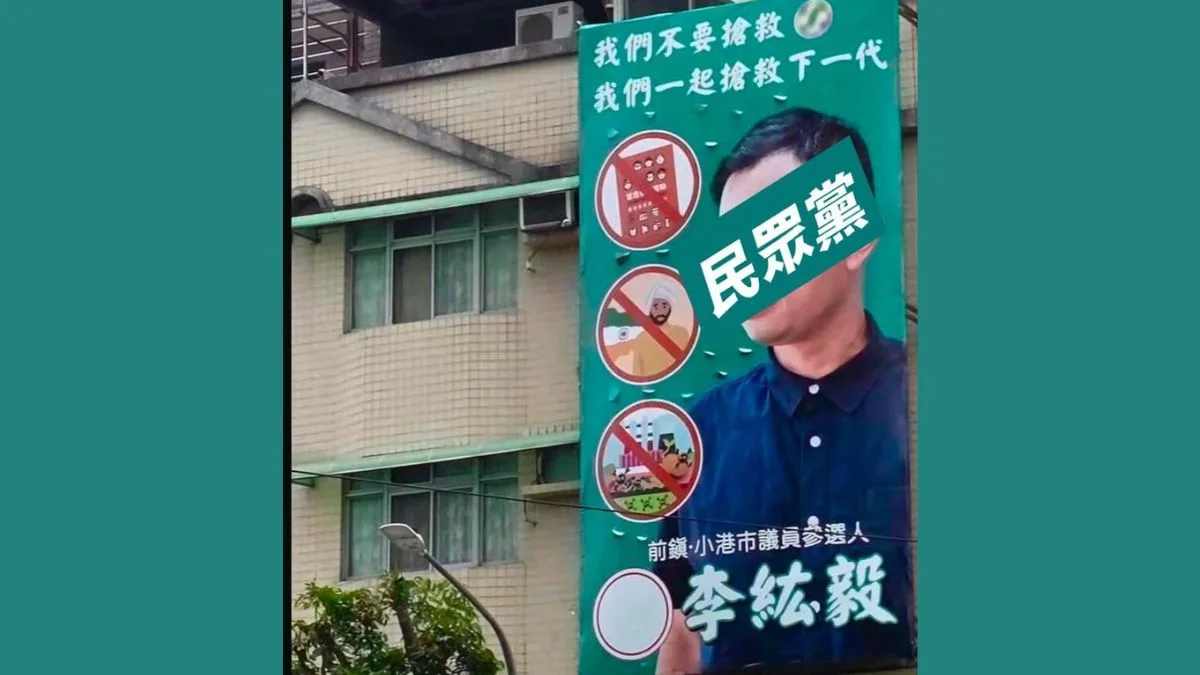
May 20, 2026
New Delhi – Taiwan’s political row over Indian migrant workers has snowballed into a broader debate over racism, electoral politics and Taiwan’s relationship with India after a local candidate campaigned on a campaign promise to “ban Indians.”
Controversy erupted after pictures of billboards posted by Kaohsiung District Mayor Li Hongyi began circulating online. The poster, which featured the Indian flag and the ban symbol of a turbaned man, sparked outrage from Indians living in Taiwan and criticism from political leaders and researchers.
The issue has now attracted attention outside Taiwan, and experts believe the anti-India rhetoric has more to do with domestic political messages ahead of local elections later this year than with Indians themselves. Analysts also said the campaign comes at a sensitive moment in Taiwan’s political landscape, with Taiwan’s political parties still deeply divided over relations with China and regional partnerships.
Taiwanese candidates face backlash over anti-India billboards
Kaohsiung City’s Xiaogang District Mayor Li Hongyi, who is running as an independent candidate in November’s city council election, defended the billboard and said he opposed Taiwan’s plan to admit Indian immigrants, Taiwan’s Central News Agency reported.
In an interview with CNA, Lee said he was not opposed to immigrant labor in general, but was particularly opposed to Taiwan’s move to allow workers from India.
The billboard drew criticism after a Taiwanese resident of Indian descent said in a social media post that the ad constituted “blatant and direct racism.”
“I can respect that everyone has different views on migrant worker policies. You don’t want Taiwan to be open to migrant workers – that’s your political position. But it doesn’t seem right to express it this way,” the post said.
Criticism intensified because the poster used cultural and religious imagery associated with Indians and Sikhs, including turbans.
Wang Yiheng, chairman of the Kaohsiung branch of the New Power Party, condemned the movement and called it “completely ignorant,” Central News Agency reported.
Taiwan experts say the problem is related to electoral politics
The controversy also attracted attention when commentator Ian Miles Cheong posted on
However, Taiwan expert Sana Hashmi disputed the broader characterization, saying the matter was politicized in the run-up to local elections.
In a post on X, Hashmi said the issue was relatively old and involved “an independent candidate” with “no formal ties to the ruling party.”
She also noted that some politicians and members of the public condemned the billboard and supported Indians after the controversy resurfaced online.
“Finally, Taiwan really needs to move beyond outdated narratives about India and educate people about the country,” she wrote.
Hashemi later told Firstpost that opposition to the India-Taiwan labor agreement had increasingly become a political tool in local election campaigns.
“The labor agreement has now become a political tool for the National Party, which is trying to gain influence in local elections later this year,” she said.
She also believes that opposing closer ties between India and Taiwan may help some politicians “gain brownie points” with the Chinese Communist Party, which opposes closer ties between India and Taiwan.
What is the India-Taiwan Labor Agreement?
Taiwan has been working to bring Indian workers into industries facing labor shortages, including manufacturing, agriculture and nursing.
Last month, Taiwan’s Labor Minister Hong Shan-han told lawmakers that the first batch of about 1,000 Indian workers could arrive as early as this year. Administrative procedures, health checks and document verification processes between Taipei and New Delhi are still being finalized.
Although the framework earlier gained support during parliamentary consultations, the labor mobility deal faces resistance from Taiwan’s opposition political wing, particularly the Kuomintang.
“Firstpost” quoted experts as saying that the opposition appeared to be more election-driven rather than reflecting a broader breakdown in India-Taiwan relations.
Anushka Saxena, a research analyst at the Takshashila Institute’s Geostrategy Program, said the bigger challenge for India-Taiwan relations remains “the slow pace of cooperation” rather than isolated political protests.
She noted that agreements and frameworks already exist in areas such as maritime cooperation, cyber dialogue and investment, but bureaucratic obstacles continue to hinder progress.