The Tamesis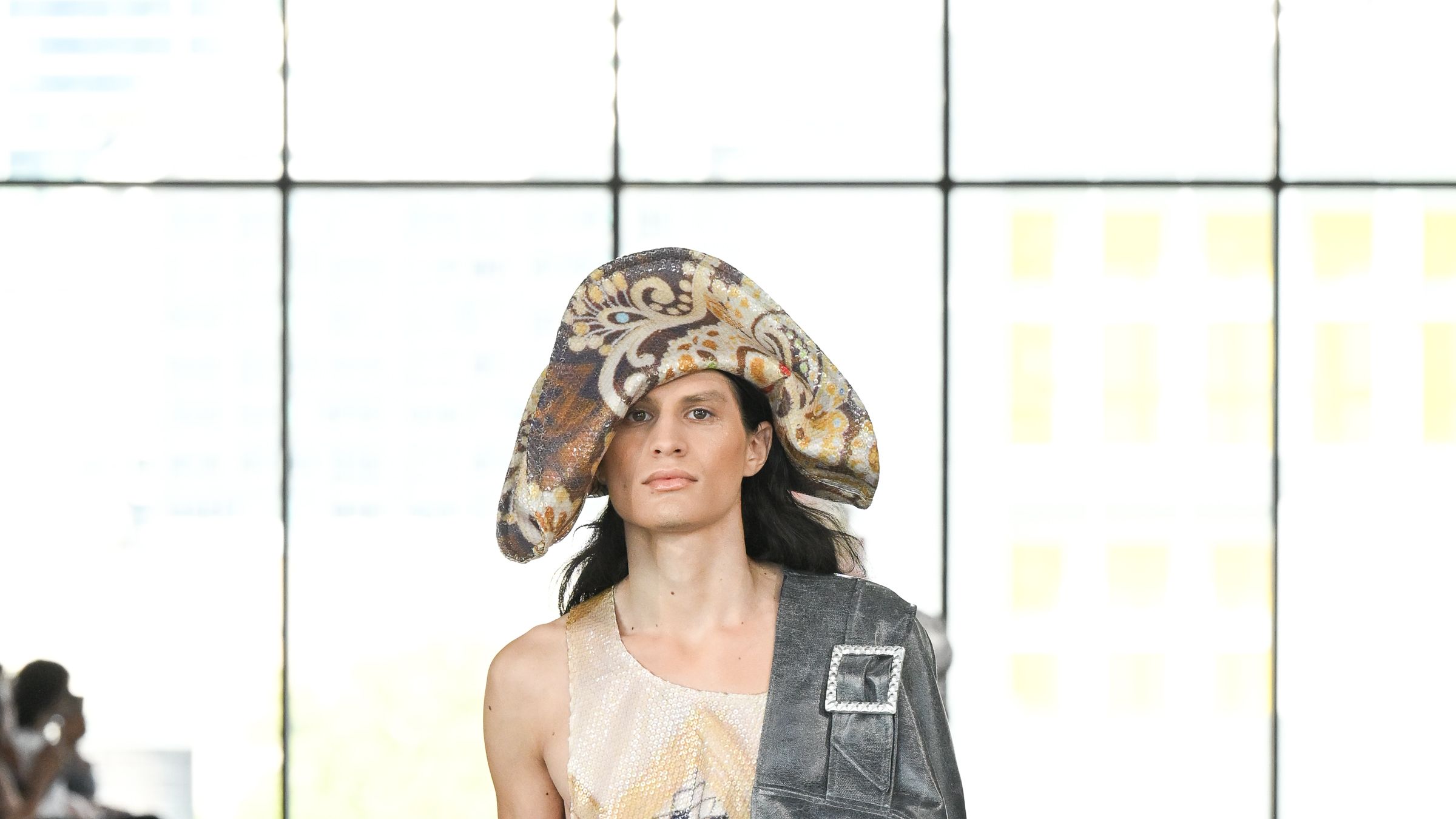
It’s a well-known adage for writers: Write what you know. For Parsons’ Class of 2026, the same is true for design. Unlike a designer portfolio, a senior thesis should not only contain a demonstration of skills, but should also include elements of self-reflection and biography—in addition to showing what you can do createclothes should also serve as a summary of who you are and what you stand for.
Take Meiting Zhang (Christina), for example, who presented a confident collection designed around the school uniforms of her native China. There, they were intended as a means of order and unity, but she reimagined them as tools of self-expression, using pressed shapes of felted handwoven wool to create shapely jackets and separates that sit away from the body and feature high-contrast primary colors. Olivia Colley, meanwhile, drew inspiration from her childhood memories of the American South, namely the Spanish moss hanging in Savannah and the chinoiserie patterns popular in summer decor. She turned them into glamorous skirts and dresses, embellished with tangled dried flowers, or embellished a stunningly simple cotton sundress with a hand-painted porcelain print and flowing petal embroidery.
Originally from Vietnam, Vy Le is immersed in Vietnam’s passionate Đạo Mẫu religion, which centers on female deities and queer culture. She chose a draped Mother Goddess coat worn during traditional ceremonies and crafted it from dense layers of silk, Chantilly lace and hand-painted sequins, all wrapped beneath layers of translucent cotton tulle that she hand-sewn with friends. While the coat was jarring in texture and color and cut as if it fell off the body, she explored the same craftsmanship in a neat sleeveless dress, which had a restrained, elegant clarity by comparison. “I wanted it to be dramatic and romantic,” she explains. “And represent queer culture, drag queens and burlesque dancers.”
Other highlights include heavily repurposed American and military clothing from Devlin Ebisu; clean sportswear contrasted with romantic dresses by Cameron Jean Hall; fluid shapes that can be tightened with drawstrings or pinched into dramatic new forms;
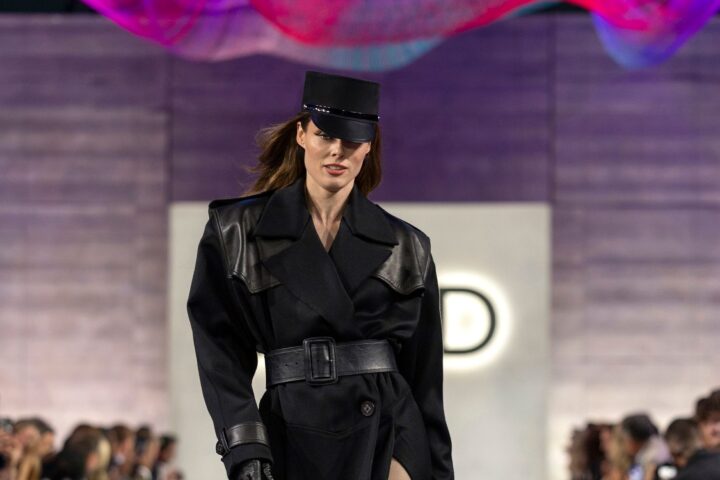
The show, held at the airy Glasshouse in downtown’s Far West End, proved that Parsons – which produced such American talents as Marc Jacobs, Anna Sui, Jack McCollough and Proenza Schouler (and now Loewe) Lazaro Hernandez – remains a powerful engine for the next generation of designers. Other points worth noting: While social media is likely influenced by ’90s fashion minimalism, this class often prefers puffy silhouettes and tailoring techniques that lend an unnatural, crazy quality. Galliano’s decadent, subversive spirit of glamor comes through in a good way. Plus: If today’s fashion can feel rather serious, there’s a welcome sense of fun in the students’ work.
“One of the most important things we ask designers to consider is what type of industry they want to create,” said Deshon Varnado, assistant professor of fashion design at the school. While college fashion shows sometimes feel like auditions for students trying to fit into the established fashion establishment, Varnado sees things differently—especially given the current industry upheaval. “They know that the political situation we’re going through right now is an extreme state of fashion,” he said. “But I think they’re in a unique time where they have an opportunity to come into the workforce and say, ‘This is what we want the future of fashion to look like.'”