The Tamesis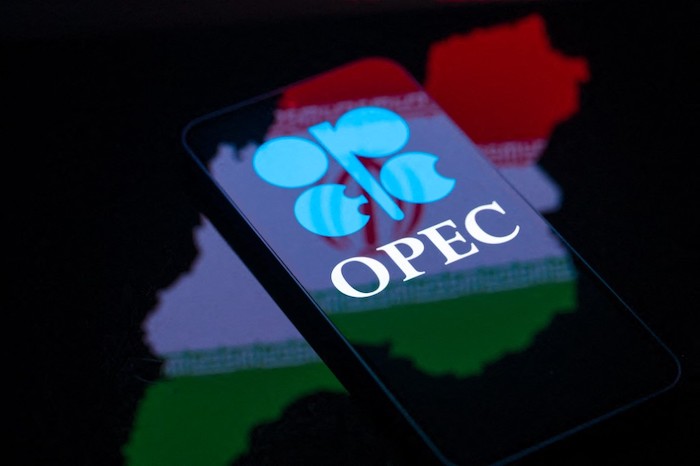
Oil prices surged on Tuesday, back above $110 a barrel, on concerns that a prolonged standoff would hinder the reopening of the Strait of Hormuz.
Iran has reportedly asked that talks over its nuclear program be postponed until key waterways reopen. But initial reports from Washington suggest that US President Donald Trump is not in favor of such an idea.
Meanwhile, technology stocks were hammered as investors turned their attention to the outlook for corporate earnings and interest rates.
See also: China DeepSeek says new V4 AI model can run on Huawei chips
Qatar on Tuesday warned of the possibility of a “frozen conflict” in the Gulf region as talks between the United States and Iran on a peace deal to end the two-month conflict appeared to be stalled.
Oil prices rose, with Brent crude for June delivery rising 2.8% to $111.26 a barrel.
U.S. benchmark WTI contract for June delivery rose 3.4% to $99.62 a barrel.
Hopes for a deal had been rising over the weekend, but those hopes were dashed on Saturday when Trump canceled a planned trip to Islamabad for special envoys Steve Witkopf and Jared Kushner.
“Currently, the market is not optimistic about the chances of reaching an agreement to reopen the strait due to Iran’s request to postpone nuclear disarmament discussions to the future,” said Kathleen Brooks, director of research at XTB Trading Platform.
UAE to withdraw from OPEC on Friday
In related news, the UAE announced on Tuesday that it would withdraw from the OPEC and OPEC+ oil cartel on May 1, saying it wanted to focus on “national interests.”
The UAE is one of the world’s largest oil producers and has previously been unhappy with OPEC’s production quotas. It has been an OPEC member through the emirate of Abu Dhabi since 1967, four years before the former British protectorate became a country.
The last OPEC member to withdraw from the cartel is Angola in 2024.
“This decision reflects the UAE’s long-term strategic and economic vision as well as the changing energy landscape,” the UAE statement said.
“During our time in office, we have made significant contributions and even greater sacrifices for the benefit of all,” it added. “However, it is time for us to focus our efforts on what is determined by the national interest.”
Analysts said the decision could weaken the OPEC group, which is dominated by the UAE’s neighbor and rival Saudi Arabia, amid the worst oil crisis since the 1970s, signaling further market turmoil.
Oil shipments in the Gulf are currently hampered by Iran’s blockade of the Strait of Hormuz, which flows through the UAE and normally carries a fifth of the world’s oil.
The United Arab Emirates, which has been hit hard by Iranian attacks, is also facing troubled relations with Saudi Arabia, the world’s top oil exporter, after a standoff between rival forces backed by both countries in Yemen.
Before the war, the UAE was the fourth-largest producer among the 22 members of OPEC+, behind Saudi Arabia, Russia and Iraq.
Rystad Energy analyst Jorge Leon said the withdrawal of the Hormuz shipment may not have an immediate impact on the oil market while it remains on hold.
But the UAE is now free to boost production, “raising broader questions about the sustainability of Saudi Arabia’s role as a central stabilizer in the market and pointing to the potential for more volatility in oil markets as OPEC’s ability to ease supply imbalances weakens”.
Jamie Ingram, editor-in-chief of the Middle East Economic Survey, cited the International Energy Agency as saying that with the UAE’s withdrawal, OPEC will lose 13% of its production capacity.
OpenAI concerns
Asian stock markets mostly fell, adding further pressure after the Bank of Japan sharply raised its inflation forecast for this year and cut its growth forecast by half while keeping key interest rates unchanged as oil prices soared.
The tech-heavy Nasdaq Composite index fell 1.2% at the open in New York, with shares of OpenAI-related companies taking a hit after the Wall Street Journal reported that the maker of ChatGPT failed to meet user and revenue targets.
Shares of Oracle, which is building large-scale data center capacity for Open AI, fell more than 5%.
XTB’s Brooks said that if Open AI struggles to meet sales targets, it may be forced to spend money on the data centers needed to expand the use of artificial intelligence.
“The news could threaten the artificial intelligence investment theme that has driven U.S. stocks to record highs,” she warned.
The news also means tech giants Amazon, Google, Meta and Microsoft will come under greater scrutiny on their AI spending when they report results later this week.
In Europe, shares fell in afternoon trading.
CMC Markets analyst Andreas Lipkow said: “This triggered profit-taking. A similar situation may occur at the meetings of the Federal Reserve and the European Central Bank.”
The Federal Reserve begins a two-day meeting on Tuesday amid growing concerns about inflation caused by soaring energy costs.
The European Central Bank will meet on Thursday.
Key figures at 1330 GMT
West Texas Intermediate crude oil: rose 3.4% to $99.62 a barrel.
North Sea Brent crude oil: rose 2.8% to $111.26 a barrel.
TOKYO – Nikkei 225: down 1.0% to 59,917.46 (close).
Hong Kong – Hang Seng Index: down 1.0% to 25,679.78 (close).
Shanghai – Composite Index: fell 0.2% to 4,078.64 (closed).
USD/JPY: rose from 159.39 yen to 159.48 yen.
NEW YORK – Dow Jones: up 0.4% to 49,340.31.
NEW YORK – S&P 500: down 0.5% to 7,135.14.
NEW YORK – Nasdaq Composite: down 1.2% to 24,600.46.
LONDON – FTSE 100: up 0.5% to 10,369.85.
- Additional comments and editing by Jim Pollard, AFP.
See also:
Chinese AI circuit board company raises US$2 billion, becomes Hong Kong listed company of the year
China’s top streaming site criticized for AI actor ‘database’
Bytedance’s viral video model shows China’s growing control over AI
New DeepSeek model delayed online to test China’s AI chip strength
Nexperia’s Chinese subsidiary’s chips “nearly fully localized”
China beats U.S. again in global patent battle, Huawei maintains lead
China now requires chipmakers to use at least 50% domestic equipment
Nvidia CEO says U.S. export restrictions on AI chips are ‘flawed’ policy
China’s big technological secret: Dutch chip-making machine replicated in laboratory
Chinese AI firms form alliance with chipmakers to ditch foreign technology