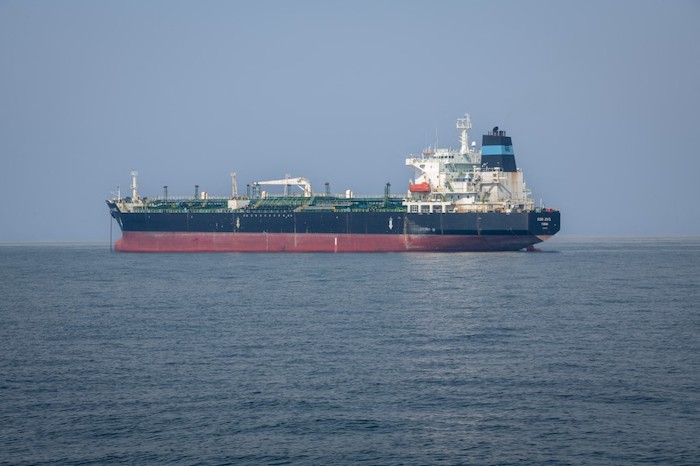
The Tamesis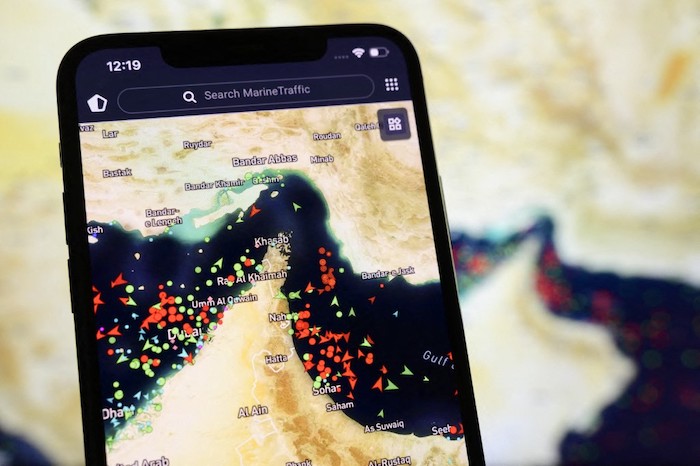
Asian markets were mixed on Monday, but more importantly, oil prices rose again as peace talks between the United States and Iran continue to hang in the balance.
Iranian Foreign Minister Abbas Araghchi visits Islamabad Hopes were raised over the weekend for new talks with Washington, but it soon emerged that Tehran wanted a better deal than what U.S. President Donald Trump is currently demanding. This led Trump to cancel the envoy’s planned visit on Saturday.
Araghchi said the United States had made “excessive demands.” But Trump told Fox News after canceling the envoy’s trip that if Iran wanted to negotiate, “they can come to us, or they can call us.”
See also: China DeepSeek says new V4 AI model can run on Huawei chips
At the same time, Iran Offer to end control of the Strait of Hormuz In exchange, the United States lifts its blockade of the country’s ports and ends the war, while offering to discuss the larger issue of its nuclear program at a later stage, The Associated Press reported on Monday, citing two regional officials.
This has sparked fears of an oil crisis, which the International Energy Agency (IEA) describes as “The worst energy crisis in history“The time will become longer.
Energy crisis turns into food crisis: UN
There are already fears that an energy blockade could create a food crisis in Asia’s most needy countries.
The U.N. Office for the Coordination of Humanitarian Affairs (OCHA) said that while the prospect may not worry the U.S. president, whose country faces relatively limited energy impacts, it worries citizens of troubled countries in Asia — such as Afghanistan, Pakistan, Myanmar and Bangladesh — which face potentially serious impacts.
“What initially manifested itself primarily as an economic shock is now more clearly translating into humanitarian consequences for people, as purchasing power decreases, there is greater pressure to access food, fuel and basic services, and humanitarian delivery costs rise,” OCHA said in a press release late last week.
“In a fragile and import-dependent environment, these pressures intersect with cropping decisions, seasonal livelihood cycles and already stretched household economies, raising the risk that longer-term energy and trade shocks will further undermine coping capabilities and exacerbate food insecurity,” the report said.
“Overall, wider cross-border movements from Iran remain limited, but the humanitarian consequences in the region are now clearer by tightening household economies and reducing space for response operations.”
And it’s not just these four people. Vietnam, Thailand, the Philippines, India, Cambodia and Laos have also introduced emergency fuel or energy conservation measures.
“In Cambodia and the Lao People’s Democratic Republic, rising fuel costs are already impacting livelihoods and may have implications for farming, mobility and household capacity to cope,” the UN agency said.
Even in Australia, some analysts speculate that the country may be in On the verge of recession.
“Wait and see area”
Both major international oil contracts were up more than 1% at 15:00 GMT, with Brent crude holding above $107 as the vital Strait of Hormuz shipping lane remained largely closed.
Asian stocks were mixed on Monday, with Tokyo and Seoul boosted by gains in technology stocks, while Hong Kong fell.
Wall Street’s major indexes opened lower, but the Dow Jones quickly edged higher and the S&P 500 both stabilized. The Nasdaq closed slightly at a new record.
In Europe, London fell but Frankfurt and Paris were higher in afternoon trade.
Derren Nathan, head of equity research at Hargreaves Lansdown, told AFP: “Hopes for a diplomatic breakthrough were fairly slim at first and the market is currently on the sidelines ahead of what promises to be a heavy week of earnings and economic touchpoints this week.”
With energy prices remaining high, the Federal Reserve is expected to keep interest rates unchanged on Wednesday, followed by similar decisions from the European Central Bank and Bank of England.
“These central banks are not expected to cut interest rates,” said Trade Nation analyst David Morrison.
“But analysts will be paying very close attention to the comments that are made, particularly those related to inflation,” he added.
Tech giants’ profits
Investors are also looking forward to earnings reports this week from U.S. technology giants Alphabet, Meta, Microsoft, Amazon and Apple.
Russ Mould, investment director at AJ Bell, said: “Investors have been encouraged by corporate news over the past few weeks, causing share prices to rise.”
But he said that “continued rise in oil prices will cause trouble for inflation, which may become a headwind for the economy.”
Trade Nation’s Morrison noted that profits for companies that have reported first-quarter results have increased by an average of 15%, and the market is heading towards a sixth consecutive quarter of double-digit profit growth.
“This is going to be a blowout season and that’s how investors are reacting,” he said.
“The U.S.-Iran war is seen as a distraction that will end sooner or later.”
Tehran’s top diplomat on Monday blamed Washington for the failure of this month’s talks in Pakistan – the first and only round of talks aimed at reaching a deal to end the conflict.
Araghchi, who is currently in Russia meeting with Putin, accused the United States of making “excessive demands,” adding that “safe passage in the Strait of Hormuz is an important global issue.”
U.S. media outlet Axios reported on Sunday, citing a U.S. official and two other people familiar with the matter, that Iran had put forward a new proposal to end the war that focused on reopening the Strait of Hormuz and ending the U.S. naval blockade of the strait and delaying nuclear negotiations until later.
Key figures at 1330 GMT
West Texas Intermediate crude oil: rose 1.4% to $95.76 a barrel.
North Sea Brent crude oil: rose 1.7% to $107.06 a barrel.
TOKYO – Nikkei 225: up 1.4% to 60,537.36 (close).
Hong Kong – Hang Seng Index: down 0.2% at 25,925.65 (close).
Shanghai – Composite Index: up 0.2% to 4,086.34 (close).
NEW YORK – Dow: fell 0.2% to 49,154.67.
NEW YORK – S&P 500: down 0.1% to 7,155.42.
NEW YORK – Nasdaq Composite: down 0.2% to 24,793.57.
LONDON – FTSE 100: down 0.3% to 10,345.80.
USD/JPY: fell from 159.42 yen to 159.18 yen
See also:
Chinese young people use artificial intelligence to subsidize the establishment of personal companies
Chinese AI circuit board company raises US$2 billion, becomes Hong Kong listed company of the year
China’s top streaming site criticized for AI actor ‘database’
Bytedance’s viral video model shows China’s growing control over AI
New DeepSeek model delayed online to test China’s AI chip strength
Nexperia’s Chinese subsidiary’s chips “nearly fully localized”
China beats U.S. again in global patent battle, Huawei maintains lead
China now requires chipmakers to use at least 50% domestic equipment
Nvidia CEO says U.S. export restrictions on AI chips are ‘flawed’ policy
China’s big technological secret: Dutch chip-making machine replicated in laboratory