The Tamesis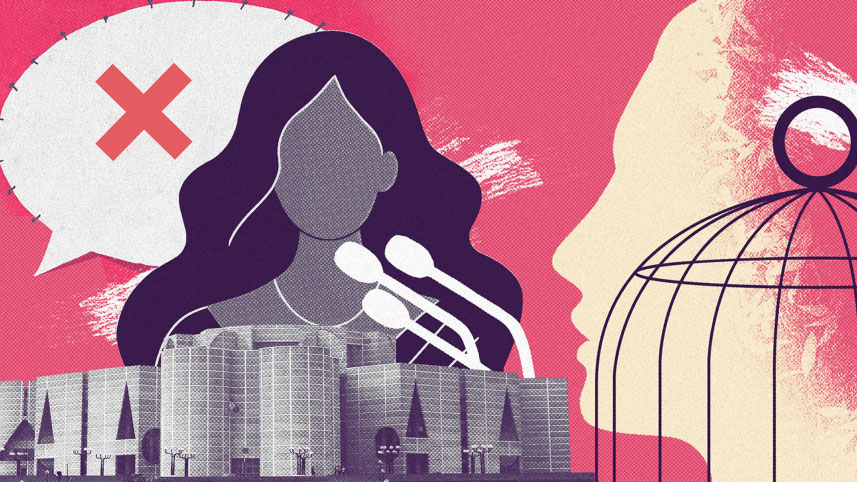
April 22, 2026
Dhaka – By mid-May, Parliament will complete the process of filling the 50 seats reserved for women. On Monday, the ruling BNP announced its candidate list for the 36 seats allocated to it based on its representation in parliament, while Jamaat-e-Islami and other groups are expected to announce their candidates soon. But in the wake of mass uprisings and amid heightened calls for parliamentary reform – including increasing reserved seats for women and holding direct elections for them – an otherwise routine process has become a test of the country’s willingness to move from token inclusion to meaningful power-sharing.
Unless the current system is fundamentally reimagined, it risks exacerbating the very inequalities it purports to eliminate.
Ensuring equal participation and representation of women in parliament is not only a matter of democratic justice; It is the basis of democracy itself. But representation must go beyond symbolic gestures. It must reflect the full diversity of women’s lived realities, across class, race, religion, disability and identity. Without this, inclusivity becomes an illusion and democracy becomes exclusive.
Globally, women remain underrepresented in political life, especially in decision-making roles. For women from historically marginalized communities, the barriers are even greater. While many countries have adopted gender quotas to close representation gaps, few have actually addressed the stratified disadvantages faced by minority women. Intersectionality remains the missing link in most political systems, including Bangladesh, where structural inequalities continue to shape who gets to speak, who gets to lead, and who gets left behind.
Commitments to gender equality in political leadership were made decades ago, but progress to date has been uneven and, in many cases, superficial. Women continue to face structural barriers to participation: entrenched social norms, limited access to resources, and systemic discrimination within political parties. These restrictions impact their confidence, mobility and access to political networks, ultimately limiting women’s ability to lead and act in the best interests of their communities and the country as a whole.
There is no denying that the system of reserved seats for women in parliament has increased women’s representation. But quantity alone does not equal power. Too often, women elected to these seats are viewed as second-tier legislators—without direct constituencies, independent mandates, or effective control of resources. Their political survival depends not on voters but on party leadership, thereby reinforcing hierarchies that marginalize their institutions.
In this case, responsibility flows upward, not outward. When members of Congress attribute their positions to party support rather than public trust, their ability and willingness to challenge the party line or advocate for change is undermined. In this context, reserved seats risk becoming a ceiling rather than a foundation – a mechanism that encompasses women’s political empowerment rather than expanding it or enhancing democratic accountability.
Across the country, violence against women in politics, whether physical, psychological or digital, remains pervasive. In the past, we have seen female MPs sometimes face harassment, intimidation and gendered attacks designed to silence their voices or reduce their credibility. Without appropriate institutional safeguards and enforcement mechanisms, as well as cross-party commitment to address such abuses, the political arena will remain a hostile terrain for many, hampering the development of future generations of female leaders.
Media coverage often complicates the issue. Women politicians are still judged not for what they think but for their appearance, marital status or personal life. Not only does this slight undermine the interests of individual leaders, it also reinforces broader social prejudices that prevent women from entering public life.
Given these realities, we must rethink women’s representation in politics, particularly in parliament. Political parties must open their nomination processes. At the very least, they should be required to publish transparent, merit-based criteria for selecting reserved seats for women, prioritizing prior demonstration of leadership, community involvement and public service over loyalty to or connections to party elites. At the same time, MPs in reserved seats must have meaningful connections with citizens through mandatory constituency links or structured public consultation mechanisms, so that their accountability extends beyond the party hierarchy to the people. Most importantly, we must have direct elections for these seats.
It is also important to hold a cross-party women’s caucus. These platforms enable female parliamentarians to collaborate across political divides to advance a common agenda on issues such as gender-based violence, fair budgets and social inclusion. But the caucuses can’t work on symbolism alone. They require institutional support and endorsement to influence legislation, oversight and national priorities.
There are models to learn from. In some advanced democracies, women’s parliamentary forums have shown that when women organize collectively, they can change national priorities and hold institutions to account. There is no shortage of capable and dedicated women leaders in Bangladesh. What it lacks is a political structure that sufficiently enables them to exercise power independently and effectively.
As the time approaches to finalize reserved seats, the public has a right to demand that concerns surrounding these seats be addressed. The question is no longer whether there are enough women in Parliament. The question is whether they will be allowed to play a significant role and given enough power to do so.
Farah Kabir is Country Director of ActionAid Bangladesh.
The views expressed in this article are solely those of the author.