The Tamesis
This article is part of The Future of Artificial Intelligence, a collection of articles that explores how artificial intelligence will impact the fashion and beauty industries in the coming years.
In many ways, sustainable fashion is an oxymoron—a utopian ideal that contradicts the current system and the values behind it. It requires massive systemic change that may take decades or more to achieve.
But AI advocates are rapidly building infrastructure they believe can enhance the process. At the very least, it could simplify the complex process of collecting and verifying data, leaving everyone from brands to suppliers stuck in compliance quicksand.
fashion business AI innovators are invited to share their visions for the future of sustainable fashion (the main caveat is that poorly managed AI infrastructure can have catastrophic consequences for the environment, and AI companies need more robust ways to measure and mitigate this impact in order to claim a net positive impact). So, what are the seeds sown today that can shape the sustainability of tomorrow?
data driven design
One of the promises of artificial intelligence for fashion: Its algorithms can aid the design process, making it more efficient and reducing upfront waste.
Founded in 2025 by three Princeton University students, Curbon aims to take the guesswork out of ecological design. “A product’s environmental impact is largely determined during the design phase through factors such as material selection, supplier location, supply chain and logistics,” said co-founder Joe Wahba. “But it’s at this point that visibility of environmental data is at its lowest. Another issue is that sustainability teams often have competing goals for a given product compared to design, procurement, finance and compliance teams. To incorporate sustainability, an environmental model can’t just exist in a spreadsheet or carbon accounting platform; it needs to be integrated into product and supply chain decisions and aligned with these competing goals.”
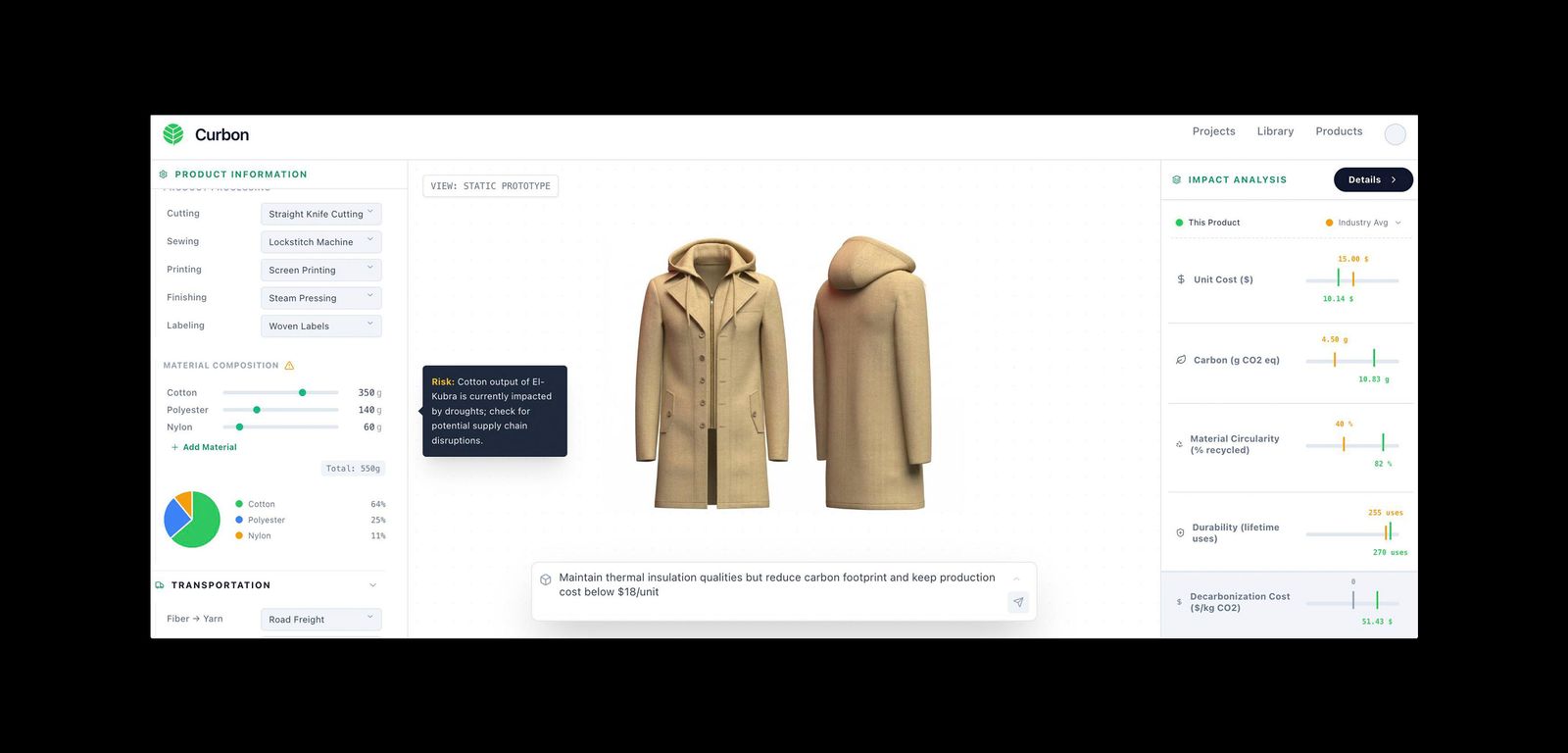
Like Curbon and Swedish rival Material Exchange, UK-based Circkit uses AI to aggregate large amounts of supply chain and life cycle assessment (LCA) data to make recommendations to reduce the environmental footprint of specific products during the design phase. “All brands typically only know about post-production, we put it up front so they can almost reverse-engineer their output,” said Circkit founder Joe Darwen.
Currently, the performance of these AI-driven systems depends on the limited data available to them, but each startup has its own approach to filling these gaps in the near future. Circkit is working with traceability platforms to leverage the data brands already collect to comply with Digital Product Passport (DPP) and supply chain due diligence regulations, and to fill gaps by conducting in-house assessments of garment weight by category. Material Exchange is working with Worldly, the company behind the Higg Index, to again leverage data that brands already report elsewhere, but faces the same limitation that most data today is aggregated and not brand or factory specific, meaning individual investments in decarbonization or energy efficiency are not taken into account, giving an inaccurate or incomplete LCA.