The Tamesis
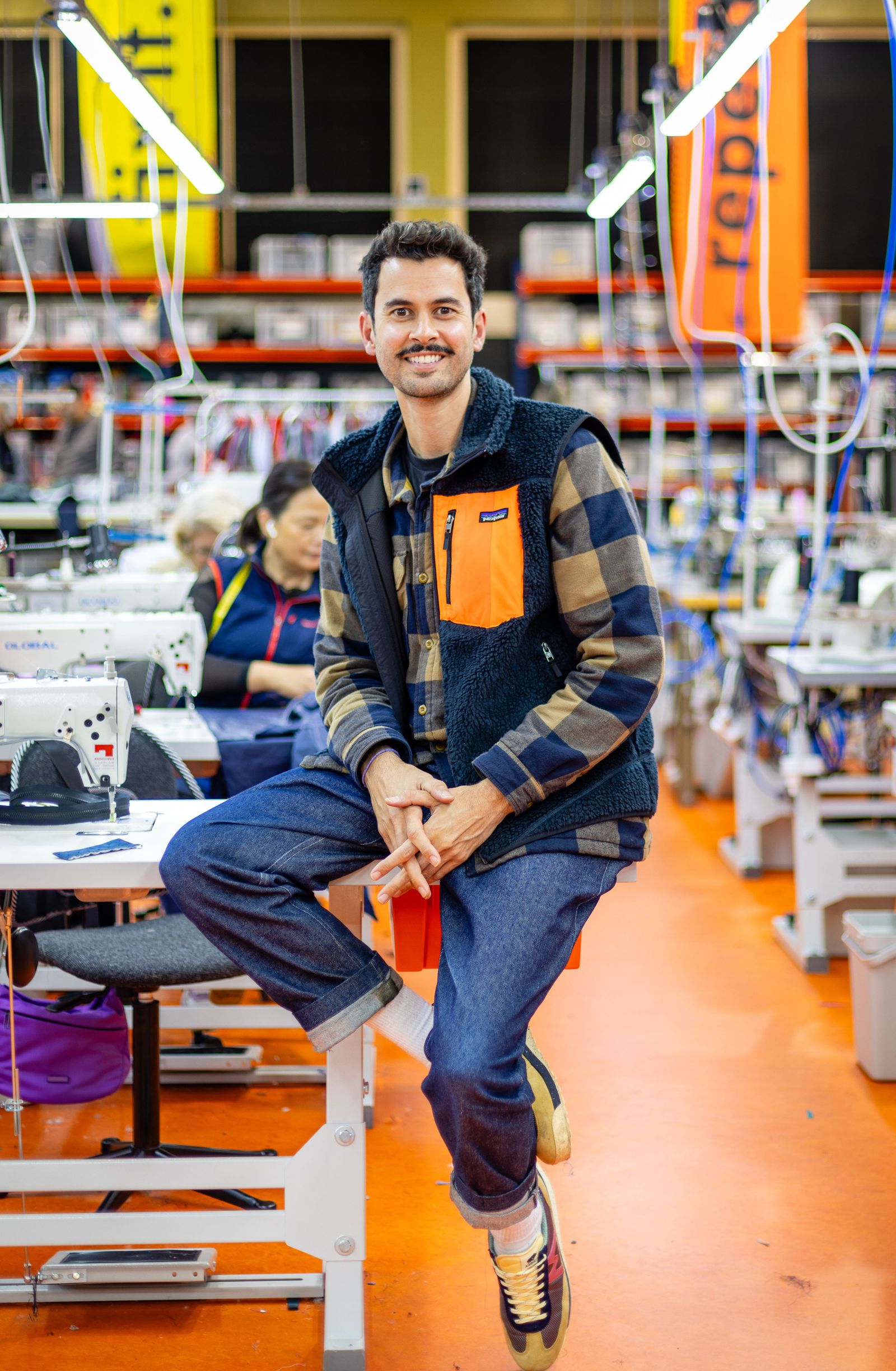
Last month, Dutch social enterprise United Repair Center (URC), which repairs clothing from sportswear brands including Patagonia, Decathlon, Arc’teryx and The North Face, opened its second international branch in Paris. The 3,000 sq ft centre, which joins existing URCs in London and Amsterdam, repairs approximately 13,000 items per year for more than 35 clothing brands and currently employs 51 tailors.
“Paris is a unique opportunity,” explains URC founder and CEO Thami Schweichler. “There’s a strong culture of longevity there: France is paving the way for repair legislation, Europe is following suit, and the world is watching Europe.”
Garment repair, along with rental, resale and alterations, is a key component of the circular economy, with more and more brands offering it as a service. Sarah Robins, textiles and circular economy expert at NGO Waste and Resources Action Program (WRAP), said: “There has been a huge push over the past few years, with M&S working with Sojo, Primark working with The Seam, and success stories like URC.”
But repair operations are complex, quantities are inconsistent, vary widely from job to job, and labor is relatively expensive. “Repairs don’t scale with volume,” noted Kirsty Emery-Laws, program manager at the Ellen MacArthur Foundation. “It still takes the same amount of time to replace a broken zipper.” Emery-Laws estimates growth in fashion repair will be at a single-digit percentage. “It’s not the biggest growth area,” she said, “but there is momentum. As the cost of living increases, it will become more core because fewer people can afford to buy new products.”
Global Restoration Map
So what does a garment repair business need to scale more easily? Could legislative progress in France serve as a blueprint? France has the most comprehensive Extended Producer Responsibility (EPR) policy for textiles. This means brands selling clothing in France must contribute to a fund to extend product lifecycles and manage them as they reach end-of-life. These include the Repair Fund, which funds a consumer coupon program that provides service discounts to approved garment repair partners. France has also approved a lower VAT rate of 5.5% for repair services.
URC is not the only fashion repair service expanding into France. London-based Sojo opened a repair shop in the Westfield shopping center in Paris last summer, which is now the company’s “highest-performing” Westfield store (it has two stores in London, plus a Selfridges franchise), founder Josephine Philips said. Sojo employs 50 people and also has a business-to-business (B2B) division that provides fashion repair services to 16 brands, including M&S, Arket, Ganni and Reiss; a consumer repair app that offers door-to-door collection and delivery services; and is one of more than 600 certified textile repairers in France. Likewise, London-based Save Your Wardrobe opened an office in Paris in 2023. The company provides technical support and sometimes tailoring services to 18 fashion partners including Maje, Sandro and Loro Piana to provide fully integrated repair services. In terms of brands, Barbour and Veja will open independent repair shops in the French capital in 2023 and 2024 respectively.