The Tamesis
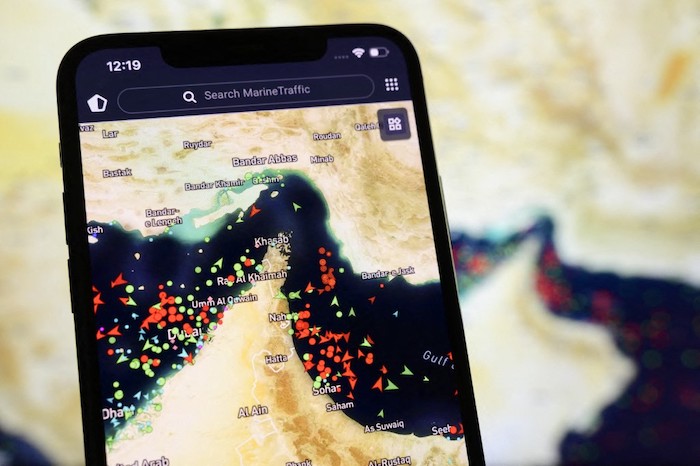
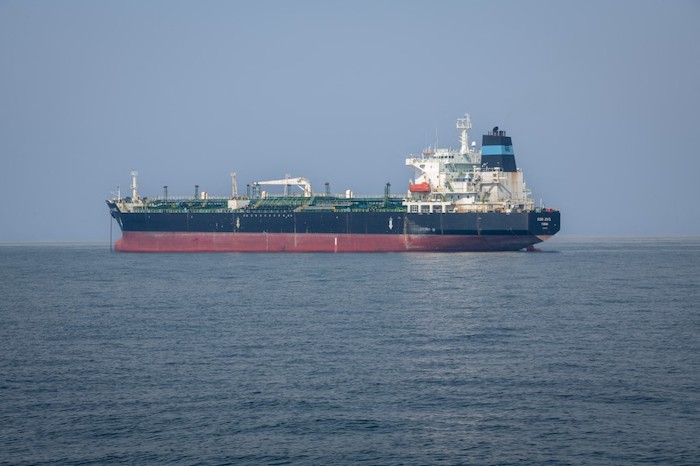
U.S. Treasury Secretary Scott Bessant revealed on Monday that the United States will allow Iranian oil tankers to pass through the Strait of Hormuz.
Bessant, who is holding talks with Chinese officials in France ahead of President Donald Trump’s visit to Beijing, said the U.S. Navy is allowing tankers to pass through the vital sea lanes to ease a blockade that has choked global oil and gas supplies.
“The Iranian ships have left and we have allowed that to happen, supplying the rest of the world,” Bessant told CNBC.
See also: China opposes U.S. trade probe, says it will fight back
Bessant said the White House believes more tankers will pass through the strait before U.S. Navy ships – and possibly some allied warships – begin escorting commercial vessels.
He said oil tankers supplying India and some Chinese ships have been able to pass through the Persian Gulf and Strait of Hormuz.
“We think the Iranians will naturally unleash that opportunity, and for now we’re comfortable with that. We hope the world will be well supplied,” Bessant said.
Trump: China trip may be delayed
His comments came after President Trump moved on Sunday to pressure NATO, other allies and even China to help ease an oil blockade and protect tankers from attacks by Iran.
Trump said his planned trip to China at the end of this month may be postponed as they seek to ease the oil crisis caused by the blockade of the strait.
during an interview financial timesTrump said he wanted China to help clear the strait before traveling to Beijing for a summit with Chinese leader Xi Jinping, currently scheduled for March 31 to April 2.
Trump said the trip was still two weeks away, “a long way off” and that Washington wanted clarity on the situation before then. “We may delay,” Trump told the Financial Times, without elaborating on when.
Bessant said on Monday that any delays would not be due to Trump asking China to help maintain the strait and deter Iranian attacks.
“The president wants to stay in Washington to coordinate the war effort, and traveling abroad at a time like this may not be the best option,” The Washington Post quoted him as saying. Reuters.
The finance minister said his meeting with Chinese Vice Premier He Lifeng was “very good” and benefited from the two superpowers’ “stable relationship”.
Oil prices have surged about 40% since the United States and Israel attacked Tehran on February 28, killing its supreme leader Ayatollah Ali Khamenei.
Iran has attacked nearly a dozen oil tankers with missiles and drones from the air or sea, triggering the worst disruption to global oil supplies in the war. Hundreds more ships have refused to attempt passage through the strait, leading to a rush for oil and gas across Asia and other parts of the world.

Attack on Kharg Island
Crude prices surged in the opening minutes after Trump said over the weekend that troops had attacked military targets on Kharg Island. Khag Island is a scrubby patch of land in the Gulf responsible for nearly all of Iran’s oil exports.
He also warned that attacks could extend to energy infrastructure if the Islamic Republic interferes with shipping in the Strait of Hormuz. The Strait of Hormuz has been effectively closed since the U.S.-Israeli operation began two weeks ago.
Iran’s Fars news agency reported shortly after that no oil infrastructure was damaged in the attack.
Trump urged other countries to send warships to keep the waterway open but offered no specific details or commitments from the U.S., saying he hoped China, France, Japan, South Korea and the United Kingdom would be involved.
He later wrote in a Truth Society post on Saturday: “Countries around the world that receive oil through the Strait of Hormuz must take care of this passage and we will help – a lot!
“This was supposed to be a team effort and it will be now.”
However, Japan said on Monday it was “not currently considering launching a maritime security operation”, while Australia vowed to Help the United Arab Emirates defend itself As a result of the missile attack, the United States announced that it would not send any naval ships to the area.
Europeans lukewarm about participation
Britain and Germany have both said NATO does not want to get involved in a war with Iran, while Italy and Greece have ruled out military intervention in the Strait of Hormuz.
Trump said Tehran wanted a deal to end the fighting but he was not prepared to do so on current terms, without giving further details.
But Iranian Foreign Minister Abbas Araghchi said Iran was not interested in negotiating with Washington. “We don’t see any reason why we should be talking to the Americans because we were talking to them when they decided to attack us,” he said in an interview on CBS’s “Face the Nation” that aired Sunday.
“We never asked for a ceasefire, we never even asked for negotiations,” he added.
But he did say he was ready to talk to “countries that want to talk to us about the safe passage of their ships.”
“I can’t mention any country specifically, but many countries have contacted us” seeking such safe passage, Araghchi said.
Fighting continued on Monday, with Saudi Arabia saying it had intercepted more than 60 drones since midnight, while flights at Dubai Airport were temporarily grounded after a “drone-related incident” sparked a nearby fire.
Trump’s top economic adviser Kevin Hassett said the Pentagon estimated the conflict could take up to six weeks, disappointing traders who had hoped for an early end to the conflict despite the advance.
Oil prices edge higher, Asian markets fall
Both major crude oil contracts were higher, with Brent rising about 3% to as high as $106.50 before retracing gains to around $104, while West Texas Intermediate rose more than 2% to trade above $100.
Stocks remain under pressure as worries mount about a possible energy crisis that could hit the global economy.
Tokyo, Shanghai, Sydney, Wellington, Taipei, Manila, Mumbai, Bangkok and Jakarta all fell, but Hong Kong, Seoul and Singapore rose.
London, Frankfurt and Paris opened higher.
“The impact of geopolitical events on markets and the macro outlook will depend more on when transit through the Strait of Hormuz begins to normalize than when hostilities end,” Pepperstone’s Michael Brown writes.
“The longer the strait remains impassable, the tighter commodity supplies will be, the higher prices are likely to be and the greater the inflationary impulse that will ensue.”
Adding to economic concerns, data on Friday showed U.S. fourth-quarter gross domestic product grew 0.7%, well below the initial estimate of 1.4%.
Delayed data showed the Fed’s preferred inflation gauge had fallen to 2.8% in January before energy prices soared.
“The weekend’s developments, while no more troubling than last weekend’s, do not provide any obvious excuse for a less pessimistic start to the new trading week,” NAB’s Ray Atrill warned.
See also:
Top Chinese cobalt mine causing illness, death in Democratic Republic of Congo, report says
Iran threatens to ‘destroy world economy’ as more ships attacked
Iran says three ships attacked, ready for $200 a barrel price
China ‘weaponizes bottlenecks’ by restricting exports of key rare earths
India delays talks, China says ‘cancel tariffs’ after US ruling
China exploits Trump’s ‘uncertainty’ to dominate global trade, report says
Japan agrees to make first $36 billion investment in U.S.
Trump cuts U.S. tariffs to 47%, Xi Jinping vows to ease rare earth restrictions