The Tamesis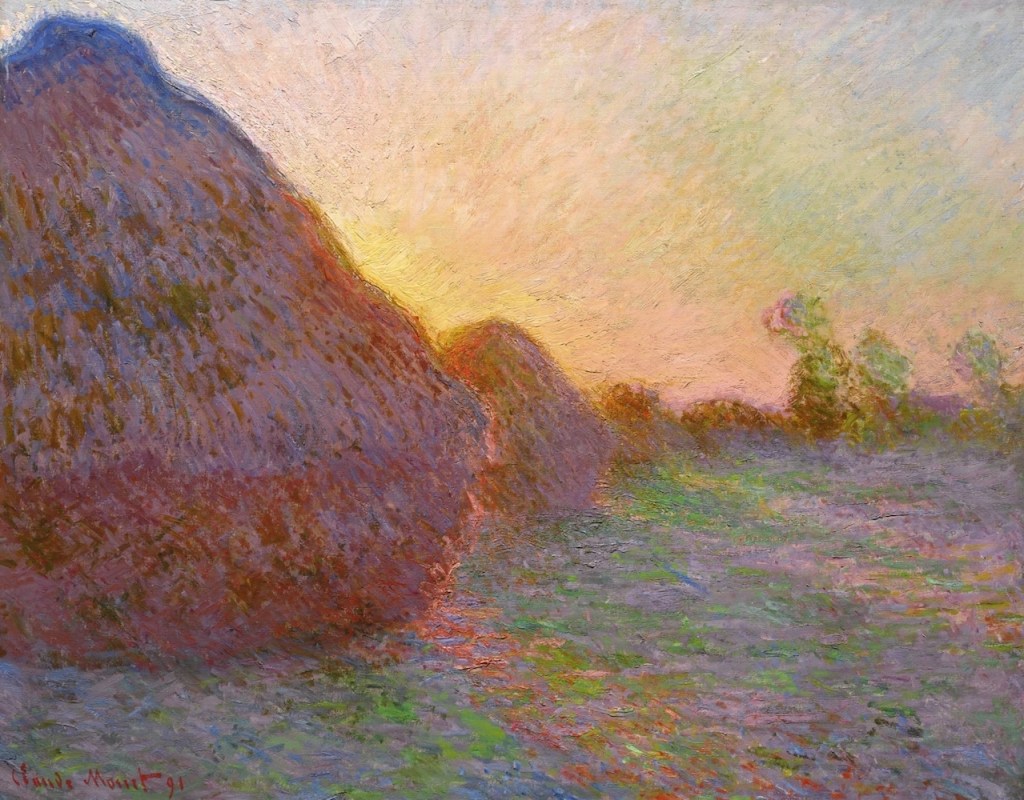
In 2019 Claude Monet’s Meules (Haystacks) (1890) stunned the art world when it soared to $110.7 million at Sotheby’s New York, setting a new auction record for an Impressionist painting. It was the latest in a series of headline-making results that have seen the painter’s serene yet radical visions dominate the market. From glowing haystacks painted at different hours of the day to his monumental Nymphéas (Water Lilies) canvases and ethereal Venetian cityscapes, Monet’s work has attracted a global following of collectors eager to own a piece of his luminous legacy.
Below are some of the remarkable works that have shaped Monet’s exceptional auction history over the past 10 years.
Le Pont du chemin de fer à Argenteuil (The Railway Bridge at Argenteuil), 1873–74

Image Credit: Christie’s. Monet’s early exploration of industrial modernity shines in Le Pont du chemin de fer à Argenteuil (The Railway Bridge at Argenteuil) (1873–74). The painting captures a striking view of the iron railway bridge spanning the Seine, with billowing smoke from a passing train merging into soft clouds above. Below, small sailboats glide gently across the river, their bright sails catching the sunlight. Monet balances the robust structure of the bridge with delicate reflections in the water, uniting industry and nature in a harmonious scene. This work, which sold for $41.4 million at Christie’s New York on May 6, 2008, set a record for Monet’s Argenteuil paintings and demonstrates his remarkable ability to portray modern life while retaining his luminous Impressionist style.
Le Bassin aux Nymphéas (The Water Lily Pond), 1919

Image Credit: Christie’s. Monet’s ambitious vision for his water lilies reached monumental scale with Le Bassin aux Nymphéas (The Water Lily Pond) (1919), which sold for $80.45 million at Christie’s London on June 24, 2008. Painted just after World War I, this large canvas (more than 3 x 6 feet) invites viewers into Monet’s tranquil garden pond at Giverny. Soft blues and greens mingle with touches of pink and white, capturing the delicate blossoms floating on the water’s surface. The shimmering reflections of trees and sky ripple gently across the scene, creating a peaceful, almost dreamlike atmosphere. The painting’s layered brushstrokes and subtle color shifts evoke a sense of quiet contemplation. Its dramatic auction price reflected the growing appeal of Monet’s late works, encouraging collectors to seek out more pieces from this celebrated series.
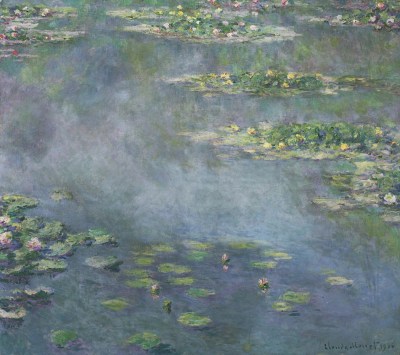
Nymphéas (Water Lilies), 1906

Image Credit: Sotheby’s. In June 23, 2014, Sotheby’s London presented Monet’s luminous Nymphéas (Water Lilies) from 1906, which achieved $54 million at auction. Once part of Paul Durand-Ruel’s collection, the painting offers a serene vision of Monet’s Giverny pond, where lily pads float gently across rippling water. Soft greens and purples merge in delicate layers, evoking shifting light and the quiet passage of time. The surface shimmers with reflections of sky and foliage, inviting viewers into a tranquil, almost meditative space. This canvas, one of the most refined in the nymphéas series, reflects Monet’s deep connection to nature and his ability to capture fleeting moments in paint.
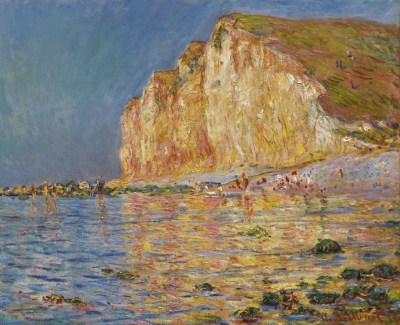
Marée basse aux Petites-Dalles (Low Tide at Petites-Dalles), 1884

Image Credit: Sotheby’s. Claude Monet’s Marée basse aux Petites-Dalles (Low Tide at Petites-Dalles) (1884) provided one of the most spirited moments of Sotheby’s Impressionist & Modern Art Evening Sale in New York on May 9, 2016. Marked as Lot 84, the luminous seascape doubled its $5 million high estimate, achieving $9.9 million after a lively two-minute bidding battle. Painted during Monet’s 1884 expedition along the Normandy coast, the work captures the imposing cliffs at Petites-Dalles rendered in brilliant light and atmospheric detail. Executed en plein air, the composition is part of a rare trio depicting this dramatic view, with its towering geological forms and expansive beach. Its first private owner, Charles T. Yerkes, acquired the piece through Monet’s dealer Paul Durand-Ruel shortly after its completion. The result reflected renewed enthusiasm for Monet’s coastal subjects, particularly those with strong provenance and expressive visual impact.
Meule (Haystack), 1891

Image Credit: Christie’s. On November 16, 2016, Christie’s New York witnessed a landmark event when Monet’s 1891 Meule sold for $81.45 million, setting a record at the time for the artist. Painted during winter, the haystack glows warmly despite the snowy surroundings, reflecting Monet’s fascination with capturing seasonal and atmospheric shifts. Its long tenure in a private collection meant this masterpiece had not been seen publicly for decades, intensifying the competitive bidding. This sale can be considered a true turning point, marking the moment when Monet’s more modest rural subjects gained serious collector recognition alongside his grander works.
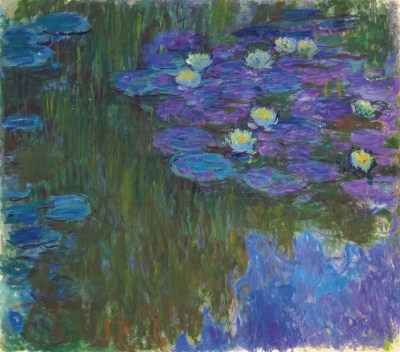
Nymphéas en fleur (Water Lilies in Bloom), c. 1914–17

Image Credit: Christie’s. A palette of vibrant pinks, greens, and blues characterize Nymphéas en fleur (Water Lilies in Bloom) (c. 1914–17), a lush painting that once belonged to the David and Peggy Rockefeller collection. Christie’s New York witnessed a fierce bidding battle on May 8, 2018, when it sold for $84.7 million, briefly setting a new record for Monet’s work before being surpassed the following year. The painting’s looser brushwork and almost abstract composition reveal Monet’s late experimentation with form and color, predating modern abstraction. The work’s provenance and exhibition history, including appearances at major museums, added weight to its market appeal, reaffirming the growing collector admiration for Monet’s innovative late period.
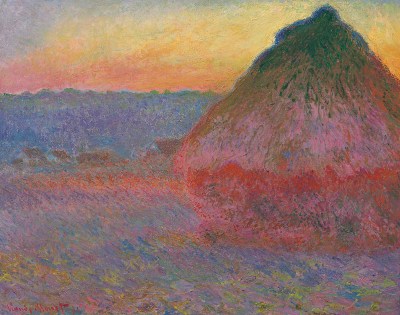
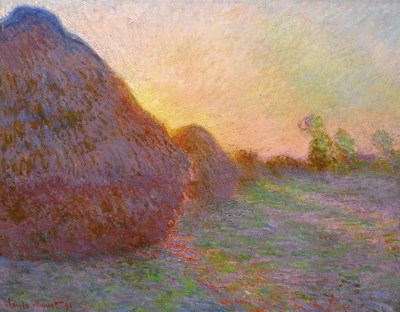
Meules (Haystacks) (1890)

Image Credit: Sotheby’s. Monet’s Meules (Haystacks) (1890), which soared to $110.7 million at Sotheby’s New York on May 15, 2019, is one of the most celebrated works from his iconic haystack series. Originally acquired in 1892 by Bertha Honoré Palmer, a prominent Chicago collector and philanthropist, the painting captures mounds of hay glowing in the fading light of a late-summer sunset. Layers of purples, fiery oranges, and soft pinks suffuse the scene. Monet’s fluid yet precise brushwork evokes shimmering air and shifting light, transforming a humble rural subject into a luminous study of atmosphere and color. Part of a group of 25 canvases exploring the same motif at different times of day and in varying weather, Meules appeared at auction in 1986 and sold for $2.5 million at that time, foreshadowing the record-breaking result achieved 33 years later.
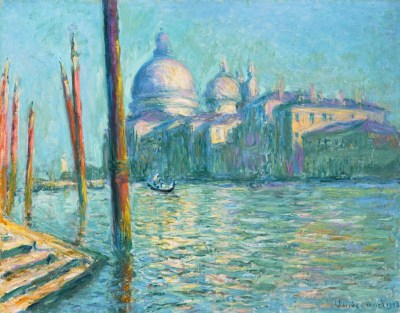
Le Grand Canal et Santa Maria della Salute (The Grand Canal and Santa Maria della Salute), 1908

Image Credit: Sotheby’s. Venice’s luminous waterways find sublime expression in Monet’s Le Grand Canal et Santa Maria della Salute (The Grand Canal and Santa Maria della Salute) (1908), which achieved $56.63 million at Sotheby’s New York on May 17, 2022. Painted during Monet’s only visit to Venice, the canvas captures the grand basilica rising beyond the shimmering surface of the canal, its domes softened by golden light and pale mist. Gentle ripples distort the reflections of buildings and sky, while Monet’s fluid brushwork lends a dreamlike quality to the scene. This particular view, one of just a handful of Venetian works in Monet’s oeuvre, epitomizes his mastery in portraying transient light and atmosphere.
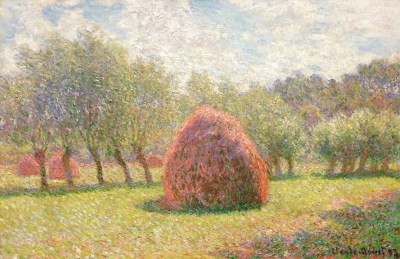
Meules à Giverny (Haystacks at Giverny), 1893

Image Credit: Sotheby’s. A luminous 1893 canvas featuring a haystack in a tree-filled field drew a lot of attention at Sotheby’s New York on May 15, 2024. Meules à Giverny (Haystacks at Giverny) achieved $34.8 million in a fierce eight-minute bidding war. The work, rich with golden sunlight and layered brushwork, was previously tucked away in the private collection of American landscape painter Dwight Blaney before resurfacing. Celebrated as a late addition to the famed meules group, it reinforced collectors’ reverence for Monet’s serial experimentation with light and form. As an exemplar of how depth, rarity, and series coherence elevate value, this sale signaled unwavering demand for Monet’s haystack motif.
Nymphéas (Water Lilies), c. 1914–17

Image Credit: Sotheby’s. Monet’s mature flowering pond scene took center stage at Sotheby’s New York, which secured $65.5 million for a late-period Nymphéas (Water Lilies) (c. 1914–17) on November 18, 2024, after a 17-minute showdown among global bidders. This expansive canvas, drawn from the estate of American beauty-industry mogul Sydell Miller, exemplifies Monet’s abstraction-forward style, painted in sweeping gestures that dissolve the boundary between figure and ground. As collectors steering modern and contemporary tastes compete for Impressionist legacies, this sale affirmed the appetite for Monet’s later works that bridge Impressionism and abstraction.
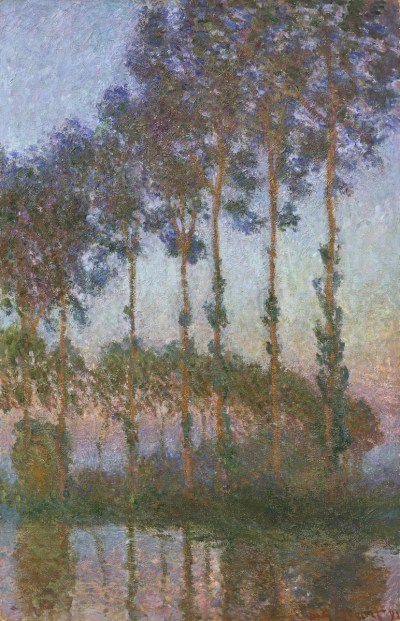
Peupliers au bord de l’Epte, crépuscule (Poplars on the Banks of the Epte, at Sunset), 1891

Image Credit: Christie’s. A dusk-lit composition from Monet’s celebrated poplars series, Peupliers au bord de l’Epte, crépuscule (Poplars on the Banks of the Epte, at Sunset) (1891) is a study in vertical stateliness and moody reflection. Unveiled at Christie’s New York on May 12, 2025, it fetched $42.96 million, topping its $30–50 million estimate. Once held by the French art dealer Paul Durand‑Ruel, who acquired it in 1892, and his descendants until 1955, it was exhibited for more than three decades at Boston’s Museum of Fine Arts. The painting’s refined lineage fueled a fierce auction battle. Critics highlighted its poised abstraction and atmospheric depth. “With its striking register of warm and cool jewel tones, suspended on the edge of a moment where the glory of sunset turns to dusk, it is Monet at his best,” said Vanessa Fusco, head of Impressionist and modern art at Christie’s New York. The sale price confirmed the financial potency of Monet’s poplars, proving that focused, seriated works—when backed by stellar provenance and artistic rarity—can deliver headline-grabbing performance.
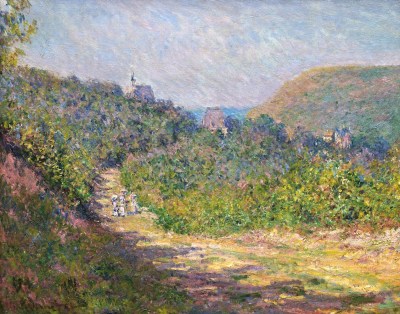
Aux Petites‑Dalles (At Petites-Dalles), 1884
Image Credit: Sotheby’s. Painted during Monet’s Normandy sojourn, Aux Petites‑Dalles (At Petites-Dalles) (1884) captures a sun-lit hillside path between Fécamp and Veulettes-sur-Mer. In London on June 24, 2025, Sotheby’s saw the canvas exceed expectations, selling for $7.68 million, after a strong $2.25 million benchmark set in 2000 at Sotheby’s New York. Reflecting a region that was dear to the painter who grew up nearby, this piece reestablished the market ceiling for his early coastal work. Though the painting is modest compared with his serial masterpieces, its sale emphasizes growing appreciation for his full oeuvre—encouraging attention beyond the blockbuster Giverny and water lily canvases.