The Tamesis
One of the world’s largest cobalt mining and processing plants – owned by a Chinese company in the Democratic Republic of Congo – is causing severe pollution and creating a “public health crisis” for locals, an environmental campaign group said in a report this week.
Cobalt is considered a key mineral needed to make electric vehicle (EV) batteries. About 43% of the world’s cobalt ends up in electric vehicles.
But the metal’s use has raised widespread concerns, ironically as the shift to “clean” energy is underpinned by filthy supply chains that wreak havoc on communities and the environment.
AF also reports: Iran threatens to ‘destroy world economy’, more ships attacked
A boom in electric vehicle sales over the past five years has fueled a surge in demand for cobalt, much of which is supplied by the Chinese-owned Tenke Fungurume Mine (TFM) in the Democratic Republic of Congo.
The mine will begin operations in 2023 at a new cobalt processing plant “roughly the size of 500 football fields,” according to the U.S. Environmental Investigation Agency (EIA). The plant can process 30,000 tons of copper and cobalt ore per day.
The agency said the plant’s output has grown exponentially in the years since, “resulting in large-scale sulfur dioxide (SO2) emissions.” In a report this week.
Sulfur dioxide is a toxic gas produced during the processing of copper-cobalt ore, a process that ultimately produces cobalt hydroxide, a precursor used in batteries.
“Since the opening of the treatment facility in 2023, community members have experienced frequent nosebleeds, recurrent coughing, and vomiting of blood,” the EIA said in its report, “Toxic Transition.”
There has also been an increase in miscarriages and birth defects, the report said, citing testimonies from residents of the nearby town of Manomapia.
One resident told EIA her 6-month-old baby died after doctors said “the baby’s lungs were attacked by acidic particles.”
“This death was caused by air pollution,” she told EIA.
“Uncontrolled growth”
The Democratic Republic of Congo produces more than 70% of the world’s cobalt, while Tenke Fungurume, owned by China’s China Molybdenum Group, produces about half of the world’s cobalt mines, according to EIA data.
“We now have strong evidence of what the community has known for years: they are victims of uncontrolled growth at the Tenke Fungurume mine,” Christian Bwenda, coordinator of PremiCongo, an environmental NGO in the Democratic Republic of the Congo, said in a statement. PremiCongo was involved in the EIA’s investigation that lasted more than three years and formed the basis of its report.
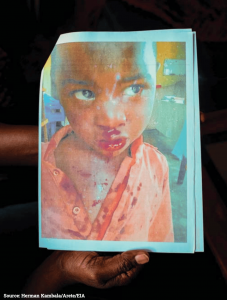
The EIA said its investigation was based on more than 1,200 health records, which showed that since 2023, cases of locals coughing up blood and developing severe respiratory illnesses such as pneumonia and bronchitis have continued to increase.
EIA investigators say sulfur dioxide emissions first affect vulnerable groups such as children. They said persistently high levels of sulfur dioxide meant that over time, the crisis expanded to include teenagers and adults as well.
The agency said it had also commissioned independent air monitoring in the region from September 2024 to January 2025, which showed sulfur dioxide levels “well above international standards”.
Response to survey resultsMine owner China Molybdenum has denied the EIA’s accusations of environmental pollution and said it is committed to operating safely and addressing the concerns of nearby communities.
It claimed monitoring data from late 2024 and early 2025 showed sulfur dioxide levels were within regulatory limits and that there was no clear link between the plant’s expansion and local health concerns.
Still, the report noted that CMOC has displaced more than 12,000 people around the mine amid public anger over a health crisis in the community.
Workers confirm emissions
The EIA said it also conducted interviews with workers at the plant who, contrary to China Molybdenum’s statements, said sulfur dioxide emissions were not a secret.
A former worker at Tenke Fungurume told the agency that the mine’s management regularly vented sulfur dioxide when gas levels were too high.
“Multiple workers further claimed to EIA that the machines would not stop when the sulfur dioxide alarms went off,” the report said. One worker said that was because “it would take too long to restart them.”
“The worker told EIA they saw three subcontractors who were not wearing appropriate personal protective equipment passed out due to sulfur dioxide buildup,” the report states.
China Molybdenum also denied the accusations in a statement, saying “there are no records” to support claims that workers passed out.
The company said the mine “will not tolerate any form of retaliation, pressure or intimidation that prevents workers from taking necessary safety actions.”
Supply related to the world’s largest automaker
The EIA report also noted that major North American pension funds, insurance companies and asset managers have invested in Shanghai and Hong Kong-listed China Molybdenum through BlackRock exchange-traded funds (ETFs).
It also said cobalt supplies from the Tenke Fungurume mine were linked to some of the world’s largest carmakers, including BMW, Mercedes-Benz, Stellantis and Volkswagen.
The EIA noted that at least 67% of TFM’s cobalt hydroxide is sold to China, the world’s major electric vehicle battery supplier, and at least 4% is sold to Europe. CMOC also has ties to CATL, one of China’s largest electric vehicle battery makers and the world’s largest lithium-ion battery maker.
EIA pointed out that the automakers named in the report denied indirectly sourcing cobalt from TFM for the production of electric vehicles.
Mercedes-Benz tell the agency The company “entered into dialogue with TFM based on EIA’s findings,” and the automaker “subsequently engaged in outreach through relevant standards-setting initiatives and its own supply chain.” Their review “did not indicate deficiencies related to sulfur dioxide emissions,” the report said.
Meanwhile, Strantis Confirmed The company, which sources its cobalt through TFM, said a third-party audit partner had uncovered reports of “serious illnesses linked to contamination in the Manomapia area.” The company explained, “Continuing[s] Follow up with TFM to learn about the progress of mitigation efforts. “
PremiCongo’s Bwenda said the EIA report “reveals the human cost of the world’s energy transition and electric vehicle boom as automakers continue to turn a blind eye to their supply chains.”
“If we want the energy transition to be more than a win-lose game, we need transparent traceability of transition minerals, especially cobalt,” he said.
“Under the current situation, our consumption in the northern hemisphere is once again having dire consequences for the southern hemisphere.”
Also read:
China ‘weaponizes bottlenecks’ by restricting exports of key rare earths
Chinese miners accused of covering up major poison spill in Africa – AP
Zambia’s river pollution crisis blamed on Chinese mines – AP
China’s landmines poison Southeast Asian rivers and global food supply
27 rare earth mines discovered in Laos, Mekong River sparks concern
Chinese rare earth mines ‘poisoning’ northern Myanmar – report
Myanmar’s civil war intensifies as China plunders rare earth minerals
China promotes green tech to Africa to defeat Western restrictions
China invests in Africa again, focusing on key energy and minerals
Cobalt miner China Molybdenum loses control of controversial African site
Chinese mining company China Molybdenum ordered to halt Congo exports