The Tamesis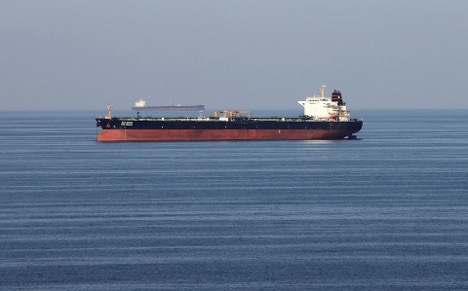
Stocks rebounded in most Asian markets on Thursday after three straight days of slumps caused by war in Iran and elsewhere in the Middle East.
But the threat of a protracted conflict has kept oil prices rising, with analysts warning of more volatility ahead.
Seoul performed well again, with the Kospi soaring as much as 12% as traders A plunge of nearly 20% from the previous two days. This puts the index close to a bear market.
See also: Iran war could hit some of Asia’s biggest economies hard
South Korea’s president on Thursday ordered the activation of a $68 billion stabilization fund as the crisis in the Middle East roiled markets.
Data on U.S. private sector hiring and service sector activity that beat expectations provided some much-needed positive news after stocks rose on Wall Street.
The United States and Israel launched attacks on Iran on Saturday that killed Supreme Leader Ayatollah Ali Khamenei and triggered a wave of retaliatory attacks in the Gulf that has sent global markets into chaos this week.
Tehran also effectively closed the Strait of Hormuz, through which a fifth of the world’s crude oil and large quantities of liquefied natural gas (LNG) are shipped, sending prices soaring.
Both major oil contracts have gained nearly 20% since Friday, raising the prospect of a new surge in inflation and dampening hopes for a rate cut.
Sold off on doubts about rising AI prices
The sell-off in stocks comes as traders question price gains in the technology sector after an artificial intelligence-fueled rally led to multiple all-time highs in multiple markets.
The best performer in Asia is Seoul, which is up about 50% since the start of the year and 76% by 2025, thanks to surges in chip giants Samsung and SK Hynix.
But it was at the forefront of this week’s plunge, falling nearly 19% on Tuesday and Wednesday.
Although the stock recouped most of its losses on Thursday, rising 9.6%, observers remained cautious.
“This move largely reflects technical traders stepping in to buy the dip after the market fell nearly 20% from its peak in just a few days,” said Gerald Gan of Reed Capital Partners.
“It’s unclear whether this marks a true inflection point for further gains or is simply a bear market rally.”
Nikkei rose 1.9%, Taipei rose 2%
Gains were also seen elsewhere in the region, with Tokyo up 1.9% and Taipei up more than 2%.
Gains were also high in Hong Kong, Shanghai, Sydney, Singapore, Wellington, Manila, Mumbai and Bangkok, but most gave back early gains.
Stephen Innes of SPI Asset Management warned: “The real driver remains what triggered the sell-off in the first place: oil.
“The rise in Brent prices and (West Texas Intermediate) climbing to around $70 is not yet a supply crisis, but it is a reminder that energy remains the invisible central bank of the global economy.
“Oil doesn’t just impact commodities. It’s also reshaping interest rate expectations, stock valuations and currency flows.”
He added that traders must weigh geopolitical concerns against data showing continued growth in the United States, the world’s largest economy.
“The rebound we’re seeing is not the end of volatility. The market needs to take a breath before deciding which narrative deserves to be in charge. And right now it’s still oil that’s in charge.”
Concerns about how long the war will last continue to dog people, adding to economic concerns, with Danish shipping giant Maersk saying it would suspend bookings in the Gulf until further notice.
Warship sinks, Tehran denies hope for talks
Tehran denied the New York Times report that it had offered to negotiate with the United States to end the war, Bloomberg reported.
Meanwhile, a U.S. submarine torpedoed and sank an Iranian warship off the coast of Sri Lanka, expanding the war beyond the Middle East.
Oil traders were unmoved by U.S. President Donald Trump’s pledge to protect ships passing through the Strait of Hormuz, which provided a glimmer of support on Wednesday, National Australia Bank’s Ken Crompton added.
“The reality is that it is not feasible to reasonably protect all ships in the area,” he wrote, noting that Yemen’s Houthis have attacked ships many times in the past.
Iran’s Revolutionary Guards claim “complete control” of the strait, and there were reports that more ships were attacked on Wednesday.
Energy intelligence firm Kpler said tanker traffic through the strait fell 90% from last week.
Key data around 0700 GMT
SEOUL – Kospi: up 9.6% to 5,683.90 (close)
TOKYO – Nikkei 225: up 1.9% to 55,278.06 (close)
Hong Kong’s Hang Seng Index: up 0.1% to 25,282.73
Shanghai – Composite Index: up 0.6% to 4,108.57 (close)
West Texas Intermediate crude oil: up 3.6% to $77.38 a barrel
North Sea Brent crude: up 3.2% to $84.01 a barrel
USD/JPY: fell from 157.06 yen to 157.01 yen
NEW YORK – Dow: up 0.5% to 48,739.41 (close)
London – FTSE 100: up 0.8% to 10,567.65 (close)
- Further editing by Jim Pollard, AFP
See also:
Nepal faces AI disinformation ‘onslaught’ ahead of key polls
Vietnam quickly passes Southeast Asia’s first artificial intelligence law
India fuels nuclear ambitions with $1.9b Canadian uranium deal
China ‘weaponizes bottlenecks’ by restricting exports of key rare earths
China’s Xiaomi to set up safety team after fatal electric car crash
Hong Kong exchange tops list of global listings, profits hit record high
China finds ways to combat desertification and turn sand into fertile soil
India delays talks, China says ‘cancel tariffs’ after US ruling
China exploits Trump’s ‘uncertainty’ to dominate global trade